Showing posts with label Acidifying Oceans. Show all posts

Monday, April 6, 2026

Record high ocean temperatures off southern California raise fears of prolonged marine heatwave

The waters of southern California historically warm every few years. But the marine heatwave that started last fall wasn’t caused by tropical currents. Photograph: Kevin Carter/Getty Images

by  

 Researchers warn the high-pressure conditions could disrupt marine life and ecosystems if it continues

For more than a century, shoreline stations operated by the Scripps Institution of Oceanography have measured water temperatures along the California coast. This year, they are flashing a warning sign.

Over the last three months, several stations have repeatedly posted record-breaking daily high temperatures – with the La Jolla station registering temperatures a full 10F above historical average at one point last month.

The waters of southern California historically warm every few years as tropical currents make their way north, a phenomenon known as El Niño. But the marine heatwave that started last fall wasn’t caused by tropical currents. Instead, a high-pressure atmospheric system – think of calm, sunny days – has perched above southern California, warming both air and sea above historic levels. The same phenomenon has helped fuel a ferocious California heatwave on land.


The extended ocean warming has drawn comparisons to “the Blob”, a three-year marine heatwave caused by similar prolonged high-pressure conditions a decade ago that devastated marine life. The next few weeks are likely to determine whether this marine heatwave fizzles out or evolves into something more Blob-like, scientists say.

“The biggest concern is how the year plays out,” Andrew Leising, an oceanographer with the National Oceanic and Atmospheric Administration, said. “We could be looking at much larger impacts next fall and winter, if it stays warm and then it’s followed by a strong El Niño.”


It’s typical in the spring for shifting atmospheric conditions to generate north-westerly winds that push warm surface water back out to the open ocean, allowing cooler water from below to rise to the surface – a phenomenon called upwelling. Upwelling brings nutrient-rich water from the depths to the surface, feeding the phytoplankton that play a crucial role in supporting much of California’s marine life.

Over the last few days, high water temperatures have cooled somewhat, raising the prospect that the heatwave may be dissipating already. It will take more time, however, to know for sure that the heat is clearing.

“The expectation right now is that likely the waters down to even southern California should start cooling a little bit into next month, but it’s not a guaranteed thing,” Leising said. “The concern is the sequence of events and how they unfold.”

Prolonged ocean heat has a devastating impact on phytoplankton and can cause harmful algal blooms. Those changes can wreak havoc on many forms of marine life, from sea lions and dolphins, to shore birds and halibut. The Blob years led to one of the worst Dungeness crab seasons in recent history, said Melissa Carter, a researcher at the UC-San Diego Scripps Institution of Oceanography.

Such heatwaves are becoming more common and lasting longer, partly because of the slow warming of the oceans driven by the climate crisis, and partly because of atmospheric changes that scientists are still struggling to understand.

“The question is what’s causing us to have these extreme warm temperatures?” Carter said. “What are the drivers? That’s what we’re trying to find out.”


What concerns Carter is that once these high-pressure systems establish themselves in an area, they create a “feedback loop” that tends to reinforce warm, calm conditions, making upwelling less likely to occur, she said.

“If these systems do become that strong and persistent, where they come every year, it can have the potential to shut down upwelling,” Carter said. “Everything we think of related to the health of the ecosystems of the west coast could be forever altered.”

The lingering ocean heat offers a few upsides, though they pale in comparison with the costs. The warmer water temperatures bring tuna far closer to shore, making it easier to fish for them. Surfers and swimmers have also enjoyed warmer water through the winter.

“I enjoy being in the water when it’s a marine heatwave,” Carter said. “But our ocean should not be a swimming pool. Nothing can live in a swimming pool. That’s not what we want.”

Saturday, January 10, 2026

‘Profound impacts’: record ocean heat is intensifying climate disasters, data shows. Oceans absorb 90% of global heating, making them a stark indicator of the relentless march of the climate crisis


The extra heat makes hurricanes and typhoons more intense, causes heavier downpours of rain and greater flooding, and results in longer marine heatwaves. Photograph: Michael Probst/AP

by  Environment editor


The world’s oceans absorbed colossal amounts of heat in 2025, setting yet another new record and fuelling more extreme weather, scientists have reported.

More than 90% of the heat trapped by humanity’s carbon pollution is taken up by the oceans. This makes ocean heat one of the starkest indicators of the relentless march of the climate crisis, which will only end when emissions fall to zero. Almost every year since the start of the millennium has set a new ocean heat record.

This extra heat makes the hurricanes and typhoons hitting coastal communities more intense, causes heavier downpours of rain and greater flooding, and results in longer marine heatwaves, which decimate life in the seas. The rising heat is also a major driver of sea level rise via the thermal expansion of seawater, threatening billions of people.


Reliable ocean temperature measurements stretch back to the mid-20th century, but it is likely the oceans are at their hottest for at least 1,000 years and heating faster than at any time in the past 2,000 years.

The atmosphere is a smaller store of heat and more affected by natural climate variations such as the El Niño-La Niña cycle. The average surface air temperature in 2025 is expected to approximately tie with 2023 as the second-hottest year since records began in 1850, with 2024 being the hottest. Last year the planet moved into the cooler La Niña phase of the Pacific Ocean cycle.

“Each year the planet is warming – setting a new record has become a broken record,” said Prof John Abraham at the University of St Thomas in Minnesota, US, and part of the team that produced the new data.

“Global warming is ocean warming,” he said. “If you want to know how much the Earth has warmed or how fast we will warm into the future, the answer is in the oceans.”

The analysis, published in the journal Advances in Atmospheric Sciences, used temperature data collected by a range of instruments across the oceans and collated by three independent teams. They used this data to determine the heat content of the top 2,000 metres of the oceans, where most of the heat is absorbed.

The amount of heat taken up by the ocean is colossal, equivalent to more than 200 times the total amount of electricity used by humans across the world. “Ocean warming continues to exert profound impacts on the Earth system,” the scientists concluded.

Ocean warming is not uniform, with some areas warming faster than others. In 2025, the hottest areas included the tropical and South Atlantic and North Pacific oceans, and the Southern Ocean. In the latter, which surrounds Antarctica, scientists are deeply concerned about a collapse in winter sea ice in recent years.


The North Atlantic and the Mediterranean Sea are also getting warmer, as well as saltier, more acidic and less oxygenated owing to the climate crisis. This is causing “a deep-reaching ocean state change in, making the ocean ecosystems and the life they support more fragile”, the researchers said.

As long as the Earth’s heat continues to increase, ocean heat content will continue to rise and records will continue to fall,” said Abraham. “The biggest climate uncertainty is what humans decide to do. Together, we can reduce emissions and help safeguard a future climate where humans can thrive.”

Tuesday, January 6, 2026

Why the weirdest sea level changes on Earth are happening off the coast of Japan

Fishing boats sail toward a kelp harvest area in the Northern Territories, 3.7 kilometers off Nemuro, Hokkaido, Japan on June 2, 2018. Fish and kombu seaweed harvested in this region are crucial to Japan's food culture, but recent changes in a warm ocean current called the Kuroshio have damaged these fisheries.

Sunday, June 15, 2025

Deadly algal bloom in South Australia’s Coorong an environmental ‘eye opener’, ecologist says


Dead and dying polychaete worms at the southern end of Coorong’s North Lagoon. Photograph: Glen Hill

by 

 Among the dead in the internationally significant wetland are estuarine snails, shore crabs, baby flounder and ‘a thick stew of polychaete worms’


When South Australia’s algal bloom arrived in the Coorong, it stained the water like strong tea before turning it into a slurry of dead worms.

Many had hoped the storm in late May would break up the bloom of Karenia mikimotoi algae, which has killed more than 200 different marine species. Instead, high tides swept the algae into the Coorong, an internationally significant Ramsar wetland at the mouth of the Murray River.

Once there, the algae began “reproducing madly” in the nutrient rich waters of the North Lagoon, according to estuarine ecologist Faith Coleman.

Among the dead were mostly benthic species – estuarine snails, shore crabs, baby flounder and “a thick stew of dead polychaete worms” – a crucial food source for shorebirds and fish.


Levels had declined from their peak but the smell of rotting fish remained, along with algal spores buried in the sediment. “As soon as it warms up again, the likelihood is [the algal bloom will] be back,” Coleman said.

The marine heatwave, a contributing factor to the bloom, persisted off the coast of SA, according to an 11 June update, which showed increases in chlorophyll – an indicator of algae concentrations – along the Coorong coast and western Gulf Saint Vincent.


Fourth generation fisherman Gary Hera-Singh was one of the first to notice the lagoon’s colour turn a “dark, orangey-brown”.

“We had a big storm event, a lot of seawater got pushed around, and this algal bloom found its way into the Coorong and has just created havoc since,” he said, and there were still “massive patches – 100 acres at a time” where the bloom was flourishing.

Hera-Singh has witnessed the health of the Coorong decline in his lifetime, but said in 41 years of fishing the impact of the algal bloom was the worst event he had seen.

The Coorong, a 120km narrow band of water separated by sand dunes from the Southern Ocean, together with lakes Alexandrina and Albert, is considered a wetland of international significance, providing critical habitat for fish, water birds and many threatened species. The North Lagoon – the area affected – is an important nursery for fish such as mulloway and bream.

 Prof Peter Gell, an expert in Ramsar listed wetlands, said the wetlands had degraded over a long period of time, with barrages (structures that control water flow) added in the 1950s, higher nutrient loads and extended periods of reduced flow from the Murray.


Algal blooms were symptoms of broader changes, he said. “Because of this we’re seeing – both offshore and within the Coorong – substantial changes in the food web.”

As a wetland of international significance, the Australian government was obliged to report environmental changes to the Coorong under the Ramsar convention, Gell said, a process that usually triggered restoration efforts.

Federal and state governments were liaising about the situation, including any long-term impacts likely to affect the ecological character of the Coorong, a federal environment department spokesperson said.

“We understand that, given the dynamics of the North Lagoon, it is difficult to dissipate the bloom and it might remain for some time.”

Fresh water may help the situation, Coleman said, given the algae thrived at salinity levels of 18-37 grams per litre. Restoration efforts would help build the resilience of the Coorong and marine areas, she said.

The system was already under pressure, said Dr Nick Whiterod, an ecologist and science program manager at the Coorong Lower Lakes Murray Mouth Research Centre. But the recent drought and unusual algal blooms had been “eye openers” to many people, he said.

Last year, a tropical species of blue-green algal bloomed in Lake Alexandrina for the first time, and had persisted, Whiterod said. Now that karenia mikimotoi had got into the Coorong, there was concern it too would bloom again.

The Coorong was vulnerable to the impacts of climate change, like sea level rise and reduced river flows, he said.

“Ocean temperatures are heating up. It’s creating conditions that are conducive to algal blooms all around the world,” he said. “Our ecosystems are really stressed, we are getting to a period of time where some may not have the capacity to recover.”


Monday, April 24, 2023

Scientists discover why sea urchins are dying off from US to the Caribbean.


A ciliate known as philaster is responsible for the sea urchin die-off. Photograph: Pascal Pochard-Casabianca/AFP/Getty Images. Theguardian.com

Marine biologists at a Florida university say they have solved the mystery of a mass die-off of long-spined sea urchins from the US to the Caribbean.

The scientists blame a microscopic, single-cell parasite for the die-off, which took hold early last year. Affected Diadema antillarum urchins lose their spines and suction, then succumb to disease.

The researchers, from Tampa’s University of South Florida (USF), also suspect the organism, a ciliate known as philaster, might have been responsible for wiping out about 98% of sea urchins in a similar episode in the region in the 1980s.

“I was like, ‘Yes, we have to figure this out,’ because in that 80s die-out, just the loss of this one species of urchin completely changed the fate of coral reefs,” Mya Breitbart, professor of biological oceanography at USF, told the Tampa Bay Times of the day she was invited to research the die-off in March last year.

Breitbart and a team including scientists from Cornell University and the US Geological Survey cracked the case within four months. Their study was published last week in the peer-reviewed journal Science Advances.

They identified the culprit by collecting samples from 23 sites around the Caribbean, including Aruba, the US Virgin Islands and Puerto Rico, and observing organisms attached to the sea urchins, which are known as the “lawnmowers” of coral reefs for their ability to consume decay-causing algae.

They were able to prove philaster was to blame by placing the organism in tanks with healthy, laboratory grown urchins and watching about 60% of the sample die with the same symptoms exhibited in the marine environment.

Breitbart said what surprised them most was the speed at which they were able to home in on the prime suspect.

“All of us on our team have been working on marine diseases for a long time, and this just doesn’t happen. This is really unprecedented to figure it out,” she said.

The cause of the 1980s die-off was not established at the time and may never be known, Breitbart said, because no samples from that outbreak still exist.

But the scientists did identify similarities between the two events, and say the outcome is the same: coral reefs clogged with algae and starved of nutrients, further adding to their precarious state.

Reefs in the Caribbean were already suffering from the fast-spreading and highly contagious stony coral tissue loss disease, scientists warning more than a decade ago that the entire reef system was in danger of collapse.

While there is no known method to eliminate philaster or protect sea urchins from it, Breitbart said, she is hopeful that further research will provide a breakthrough. Her team in Tampa has established a laboratory farm to study the organism, which is not harmful to humans.

“We’re excited to share this information with everyone, from reef managers to additional scientists so we can explore it further and try to stop its spread,” she said.


Saturday, January 7, 2012

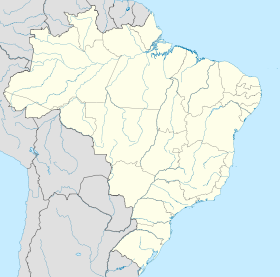
Brazil sea level (Google translate) Nível do mar sobe cada vez mais rápido no litoral norte de São Paulo


São Paulo University research


Registros apontam elevação de 74 centímetros por século.


São Paulo – Sobe cada vez mais rápido o nível do mar no litoral norte de São Paulo, aponta pesquisa coordenada pelo professor do Departamento de Engenharia Hidráulica e Ambiental da Universidade de São Paulo (USP), Paolo Alfredini. Com base nos registros feitos de 1944 a 2007 pela Companhia Docas do Estado de São Paulo, em Santos, Alfredini constatou uma elevação do mar de 74 centímetros por século. Também foi analisada a documentação de outras instituições em Ubatuba, São Sebastião e Caraguatatuba .
Nas últimas décadas, no entanto, o avanço das águas marítimas foi mais rápido. “Nos últimos 20 anos, analisando esses dados, a gente nota que tem havido uma aceleração. Isso aparentemente está ligado ao fato que as temperaturas têm aumentado mais nesse período”, ressaltou o professor. Com isso, a estimativa de Alfredini é que neste século o nível do mar suba cerca de 1 metro.
Um aumento desse nível significa, segundo Alfredini, a perda de 100 metros de praia em áreas com declividades suaves. Essa aproximação das águas pode colocar em risco construções à beira-mar. “A quebra da onda vai ficar muito mais próxima das avenidas, onde existem ocupações urbanas. Vai começar a solapar e erodir muros”, disse. “Tubulações que passem perto da praia, como emissários de esgoto, interceptores de águas pluviais, podem vir a ser descalçados e eventualmente até romper”, completou.
Outro fator que ameaça as construções costeiras, verificado no estudo, é o aumento da altura das ondas nas ressacas e tempestades marítimas, além do aumento da frequência desses fenômenos. “Havendo um recrudescimento das ondas, isso também vai provocar mais erosões [nas praias]”, alertou o pesquisador.
A elevação do nível do mar poderá ainda, segundo Alfredini, causar problemas para o abastecimento de água em algumas cidades. Segundo ele, esse processo tende a causar um aumento no volume de água que se infiltra nos rios. “ Portanto, as tomadas de água para abastecimento público e industrial poderão começar a receber água com maior teor de salinidade. E isso pode começar a complicar ou inviabilizar o tratamento da água”.
Para amenizar esses problemas, o pesquisador aponta a necessidade de preparação das cidades afetadas, com a construção, por exemplo, de obras de defesa costeira. “Tem que ter nesses governos municipais, principalmente, que estão em áreas de extremo risco, consciência de que isso é uma realidade”.

Brazil sea level (Google translate) Nível do mar sobe cada vez mais rápido no litoral norte de São Paulo


São Paulo University research


Registros apontam elevação de 74 centímetros por século.


São Paulo – Sobe cada vez mais rápido o nível do mar no litoral norte de São Paulo, aponta pesquisa coordenada pelo professor do Departamento de Engenharia Hidráulica e Ambiental da Universidade de São Paulo (USP), Paolo Alfredini. Com base nos registros feitos de 1944 a 2007 pela Companhia Docas do Estado de São Paulo, em Santos, Alfredini constatou uma elevação do mar de 74 centímetros por século. Também foi analisada a documentação de outras instituições em Ubatuba, São Sebastião e Caraguatatuba .
Nas últimas décadas, no entanto, o avanço das águas marítimas foi mais rápido. “Nos últimos 20 anos, analisando esses dados, a gente nota que tem havido uma aceleração. Isso aparentemente está ligado ao fato que as temperaturas têm aumentado mais nesse período”, ressaltou o professor. Com isso, a estimativa de Alfredini é que neste século o nível do mar suba cerca de 1 metro.
Um aumento desse nível significa, segundo Alfredini, a perda de 100 metros de praia em áreas com declividades suaves. Essa aproximação das águas pode colocar em risco construções à beira-mar. “A quebra da onda vai ficar muito mais próxima das avenidas, onde existem ocupações urbanas. Vai começar a solapar e erodir muros”, disse. “Tubulações que passem perto da praia, como emissários de esgoto, interceptores de águas pluviais, podem vir a ser descalçados e eventualmente até romper”, completou.
Outro fator que ameaça as construções costeiras, verificado no estudo, é o aumento da altura das ondas nas ressacas e tempestades marítimas, além do aumento da frequência desses fenômenos. “Havendo um recrudescimento das ondas, isso também vai provocar mais erosões [nas praias]”, alertou o pesquisador.
A elevação do nível do mar poderá ainda, segundo Alfredini, causar problemas para o abastecimento de água em algumas cidades. Segundo ele, esse processo tende a causar um aumento no volume de água que se infiltra nos rios. “ Portanto, as tomadas de água para abastecimento público e industrial poderão começar a receber água com maior teor de salinidade. E isso pode começar a complicar ou inviabilizar o tratamento da água”.
Para amenizar esses problemas, o pesquisador aponta a necessidade de preparação das cidades afetadas, com a construção, por exemplo, de obras de defesa costeira. “Tem que ter nesses governos municipais, principalmente, que estão em áreas de extremo risco, consciência de que isso é uma realidade”.

Thursday, July 28, 2011

Sizzle Factor for a Restless Climate


ENJOYING the heat wave?


The answer is probably no if you live in Abilene, Tex., where temperatures have been at or above 100 degrees for 40 days this summer. It’s been a little cooler in Savannah, Ga., where the mercury hit 90 or more for 56 days in a row. Texas, New Mexico and Oklahoma are coping with their driest nine-month stretch since 1895.

Yes, it has been a very hot summer after one of the most extreme-weather springs on record. It’s time to face the fact that the weather isn’t what it used to be.

Every 10 years, the National Oceanic and Atmospheric Administration recalculates what it calls climate “normals,” 30-year averages of temperature and precipitation for about 7,500 locations across the United States. The latest numbers, released earlier this month, show that the climate of the last 10 years was about 1.5 degrees warmer than the climate of the 1970s, and the warmest since the first decade of the last century. Temperatures were, on average, 0.5 degrees warmer from 1981 to 2010 than they were from 1971 to 2000, and the average annual temperatures for all of the lower 48 states have gone up.

For climate geeks like me, the new normals offer a fascinating and disturbing snapshot of a restless climate. The numbers don’t take sides or point fingers. They acknowledge both powerful natural climate fluctuations as well as the steady drumbeat of warming caused by roughly seven billion people trying to live and prosper on a small planet, emitting heat-trapping greenhouse gases in the process.

Even this seemingly modest shift in climate can mean a big change in weather. Shifting weather patterns influence energy demand, affect crop productivity and lead to weather-related disasters. In the United States, in any given year, routine weather events like a hot day or a heavy downpour can cost the economy as much as $485 billion in crop losses, construction delays and travel disruptions, a recent study by the National Center for Atmospheric Research found. In other words, that extra 1.5 degrees might be more than we can afford.

And while the new normals don’t point to a cause, climate science does. Drawing from methods used in epidemiology, a field of climate research called “detection and attribution” tests how human actions like burning fossil fuels affect climate and increase the odds of extreme weather events.

Heat-trapping pollution at least doubled the likelihood of the infamous European heat wave that killed more than 30,000 people during the summer of 2003, according to a study in the journal Nature in 2004. And if we don’t ease our grip on the climate, summers like that one will likely happen every other year by 2040, the study warned. Human actions have warmed the climate on all seven continents, and as a result all weather is now occurring in an environment that bears humanity’s signature, with warmer air and seas and more moisture than there was just a few decades ago, resulting in more extreme weather.

The snapshots of climate history from NOAA can also provide a glimpse of what’s in store locally in the future. Using climate models, we can project what future Julys might look like. For example, by 2050, assuming we continue to pump heat-trapping pollution into our atmosphere at a rate similar to today’s, New Yorkers can expect the number of July days exceeding 90 degrees to double, and those exceeding 95 degrees to roughly triple. Sweltering days in excess of 100 degrees, rare now, will become a regular feature of the Big Apple’s climate in the 2050s.

The next time NOAA calculates its new temperature normals will be in 2021 — when there will be about another billion people on the planet. Lady Gaga may no longer be hot. But the climate almost surely will be.

Heidi Cullen, a scientist at Climate Central, a journalism and research organization, is the author of “The Weather of the Future: Heat Waves, Extreme Storms, and Other Scenes From a Climate-Changed Planet.”


A version of this op-ed appeared in print on July 20, 2011, on page A27 of the New York edition with the headline: Sizzle Factor for a Restless Climate.

Sizzle Factor for a Restless Climate


ENJOYING the heat wave?


The answer is probably no if you live in Abilene, Tex., where temperatures have been at or above 100 degrees for 40 days this summer. It’s been a little cooler in Savannah, Ga., where the mercury hit 90 or more for 56 days in a row. Texas, New Mexico and Oklahoma are coping with their driest nine-month stretch since 1895.

Yes, it has been a very hot summer after one of the most extreme-weather springs on record. It’s time to face the fact that the weather isn’t what it used to be.

Every 10 years, the National Oceanic and Atmospheric Administration recalculates what it calls climate “normals,” 30-year averages of temperature and precipitation for about 7,500 locations across the United States. The latest numbers, released earlier this month, show that the climate of the last 10 years was about 1.5 degrees warmer than the climate of the 1970s, and the warmest since the first decade of the last century. Temperatures were, on average, 0.5 degrees warmer from 1981 to 2010 than they were from 1971 to 2000, and the average annual temperatures for all of the lower 48 states have gone up.

For climate geeks like me, the new normals offer a fascinating and disturbing snapshot of a restless climate. The numbers don’t take sides or point fingers. They acknowledge both powerful natural climate fluctuations as well as the steady drumbeat of warming caused by roughly seven billion people trying to live and prosper on a small planet, emitting heat-trapping greenhouse gases in the process.

Even this seemingly modest shift in climate can mean a big change in weather. Shifting weather patterns influence energy demand, affect crop productivity and lead to weather-related disasters. In the United States, in any given year, routine weather events like a hot day or a heavy downpour can cost the economy as much as $485 billion in crop losses, construction delays and travel disruptions, a recent study by the National Center for Atmospheric Research found. In other words, that extra 1.5 degrees might be more than we can afford.

And while the new normals don’t point to a cause, climate science does. Drawing from methods used in epidemiology, a field of climate research called “detection and attribution” tests how human actions like burning fossil fuels affect climate and increase the odds of extreme weather events.

Heat-trapping pollution at least doubled the likelihood of the infamous European heat wave that killed more than 30,000 people during the summer of 2003, according to a study in the journal Nature in 2004. And if we don’t ease our grip on the climate, summers like that one will likely happen every other year by 2040, the study warned. Human actions have warmed the climate on all seven continents, and as a result all weather is now occurring in an environment that bears humanity’s signature, with warmer air and seas and more moisture than there was just a few decades ago, resulting in more extreme weather.

The snapshots of climate history from NOAA can also provide a glimpse of what’s in store locally in the future. Using climate models, we can project what future Julys might look like. For example, by 2050, assuming we continue to pump heat-trapping pollution into our atmosphere at a rate similar to today’s, New Yorkers can expect the number of July days exceeding 90 degrees to double, and those exceeding 95 degrees to roughly triple. Sweltering days in excess of 100 degrees, rare now, will become a regular feature of the Big Apple’s climate in the 2050s.

The next time NOAA calculates its new temperature normals will be in 2021 — when there will be about another billion people on the planet. Lady Gaga may no longer be hot. But the climate almost surely will be.

Heidi Cullen, a scientist at Climate Central, a journalism and research organization, is the author of “The Weather of the Future: Heat Waves, Extreme Storms, and Other Scenes From a Climate-Changed Planet.”


A version of this op-ed appeared in print on July 20, 2011, on page A27 of the New York edition with the headline: Sizzle Factor for a Restless Climate.

England’s ancient oak trees dying in extreme hot and dry weather. Woodland Trust says trees struggling in drought stress, with older ‘survivors’ disproportionately affected

The Major oak with supporting poles in Sherwood Forest: ‘One of the main reasons that tree died is because of these extreme weather condit...