
Record-Setting Heat Across the U.S. in 2012
The average temperature across the contiguous United States in 2012 was 55.3° (3.2° above normal). This ranks as the warmest year since records began in 1895. by NYtimes


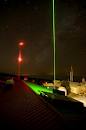
They make no noise. But once an hour, they spit out a number, and for decades, it has been rising relentlessly.
The first machine of this type was installed on Mauna Loa in the 1950s at the behest of Charles David Keeling, a scientist from San Diego. His resulting discovery, of the increasing level of carbon dioxide in the atmosphere, transformed the scientific understanding of humanity’s relationship with the earth. A graph of his findings is inscribed on a wall in Washington as one of the great achievements of modern science.
Yet, five years after Dr. Keeling’s death, his discovery is a focus not of celebration but of conflict. It has become the touchstone of a worldwide political debate over global warming.
When Dr. Keeling, as a young researcher, became the first person in the world to develop an accurate technique for measuring carbon dioxide in the air, the amount he discovered was 310 parts per million. That means every million pints of air, for example, contained 310 pints of carbon dioxide.
By 2005, the year he died, the number had risen to 380 parts per million. Sometime in the next few years it is expected to pass 400. Without stronger action to limit emissions, the number could pass 560 before the end of the century, double what it was before the Industrial Revolution.
The greatest question in climate science is: What will that do to the temperature of the earth?
Scientists have long known that carbon dioxide traps heat at the surface of the planet. They cite growing evidence that the inexorable rise of the gas is altering the climate in ways that threaten human welfare.
Fossil fuel emissions, they say, are like a runaway train, hurtling the world’s citizens toward a stone wall — a carbon dioxide level that, over time, will cause profound changes.
The risks include melting ice sheets, rising seas, more droughts and heat waves, more flash floods, worse storms, extinction of many plants and animals, depletion of sea life and — perhaps most important — difficulty in producing an adequate supply of food. Many of these changes are taking place at a modest level already, the scientists say, but are expected to intensify.
Reacting to such warnings, President George Bush committed the United States in 1992 to limiting its emissions of greenhouse gases, especially carbon dioxide. Scores of other nations made the same pledge, in a treaty that was long on promises and short on specifics.
But in 1998, when it came time to commit to details in a document known as the Kyoto Protocol, Congress balked. Many countries did ratify the protocol, but it had only a limited effect, and the past decade has seen little additional progress in controlling emissions.
Many countries are reluctant to commit themselves to tough emission limits, fearing that doing so will hurt economic growth. International climate talks in Cancún, Mexico, this month ended with only modest progress. The Obama administration, which came into office pledging to limit emissions in the United States, scaled back its ambitions after climate and energy legislation died in the Senate this year.
Challengers have mounted a vigorous assault on the science of climate change. Polls indicate that the public has grown more doubtful about that science. Some of the Republicans who will take control of the House of Representatives in January have promised to subject climate researchers to a season of new scrutiny.
One of them is Representative Dana Rohrabacher, Republican of California. In a recent Congressional hearing on global warming, he said, “The CO2 levels in the atmosphere are rather undramatic.”
But most scientists trained in the physics of the atmosphere have a different reaction to the increase.
“I find it shocking,” said Pieter P. Tans, who runs the government monitoring program of which the Mauna Loa Observatory is a part. “We really are in a predicament here, and it’s getting worse every year.”
As the political debate drags on, the mute gray boxes atop Mauna Loa keep spitting out their numbers, providing a reality check: not only is the carbon dioxide level rising relentlessly, but the pace of that rise is accelerating over time.
“Nature doesn’t care how hard we tried,” Jeffrey D. Sachs, the Columbia University economist, said at a recent seminar. “Nature cares how high the parts per million mount. This is running away.”
A Passion for Precision
Perhaps the biggest reason the world learned of the risk of global warming was the unusual personality of a single American scientist.
Charles David Keeling’s son Ralph remembers that when he was a child, his family bought a new home in Del Mar, Calif., north of San Diego. His father assigned him the task of edging the lawn. Dr. Keeling insisted that Ralph copy the habits of the previous owner, an Englishman who had taken pride in his garden, cutting a precise two-inch strip between the sidewalk and the grass.


They make no noise. But once an hour, they spit out a number, and for decades, it has been rising relentlessly.
The first machine of this type was installed on Mauna Loa in the 1950s at the behest of Charles David Keeling, a scientist from San Diego. His resulting discovery, of the increasing level of carbon dioxide in the atmosphere, transformed the scientific understanding of humanity’s relationship with the earth. A graph of his findings is inscribed on a wall in Washington as one of the great achievements of modern science.
Yet, five years after Dr. Keeling’s death, his discovery is a focus not of celebration but of conflict. It has become the touchstone of a worldwide political debate over global warming.
When Dr. Keeling, as a young researcher, became the first person in the world to develop an accurate technique for measuring carbon dioxide in the air, the amount he discovered was 310 parts per million. That means every million pints of air, for example, contained 310 pints of carbon dioxide.
By 2005, the year he died, the number had risen to 380 parts per million. Sometime in the next few years it is expected to pass 400. Without stronger action to limit emissions, the number could pass 560 before the end of the century, double what it was before the Industrial Revolution.
The greatest question in climate science is: What will that do to the temperature of the earth?
Scientists have long known that carbon dioxide traps heat at the surface of the planet. They cite growing evidence that the inexorable rise of the gas is altering the climate in ways that threaten human welfare.
Fossil fuel emissions, they say, are like a runaway train, hurtling the world’s citizens toward a stone wall — a carbon dioxide level that, over time, will cause profound changes.
The risks include melting ice sheets, rising seas, more droughts and heat waves, more flash floods, worse storms, extinction of many plants and animals, depletion of sea life and — perhaps most important — difficulty in producing an adequate supply of food. Many of these changes are taking place at a modest level already, the scientists say, but are expected to intensify.
Reacting to such warnings, President George Bush committed the United States in 1992 to limiting its emissions of greenhouse gases, especially carbon dioxide. Scores of other nations made the same pledge, in a treaty that was long on promises and short on specifics.
But in 1998, when it came time to commit to details in a document known as the Kyoto Protocol, Congress balked. Many countries did ratify the protocol, but it had only a limited effect, and the past decade has seen little additional progress in controlling emissions.
Many countries are reluctant to commit themselves to tough emission limits, fearing that doing so will hurt economic growth. International climate talks in Cancún, Mexico, this month ended with only modest progress. The Obama administration, which came into office pledging to limit emissions in the United States, scaled back its ambitions after climate and energy legislation died in the Senate this year.
Challengers have mounted a vigorous assault on the science of climate change. Polls indicate that the public has grown more doubtful about that science. Some of the Republicans who will take control of the House of Representatives in January have promised to subject climate researchers to a season of new scrutiny.
One of them is Representative Dana Rohrabacher, Republican of California. In a recent Congressional hearing on global warming, he said, “The CO2 levels in the atmosphere are rather undramatic.”
But most scientists trained in the physics of the atmosphere have a different reaction to the increase.
“I find it shocking,” said Pieter P. Tans, who runs the government monitoring program of which the Mauna Loa Observatory is a part. “We really are in a predicament here, and it’s getting worse every year.”
As the political debate drags on, the mute gray boxes atop Mauna Loa keep spitting out their numbers, providing a reality check: not only is the carbon dioxide level rising relentlessly, but the pace of that rise is accelerating over time.
“Nature doesn’t care how hard we tried,” Jeffrey D. Sachs, the Columbia University economist, said at a recent seminar. “Nature cares how high the parts per million mount. This is running away.”
A Passion for Precision
Perhaps the biggest reason the world learned of the risk of global warming was the unusual personality of a single American scientist.
Charles David Keeling’s son Ralph remembers that when he was a child, his family bought a new home in Del Mar, Calif., north of San Diego. His father assigned him the task of edging the lawn. Dr. Keeling insisted that Ralph copy the habits of the previous owner, an Englishman who had taken pride in his garden, cutting a precise two-inch strip between the sidewalk and the grass.


(Page 2 of 4)
“It took a lot of work to maintain this attractive gap,” Ralph Keeling recalled, but he said his father believed “that was just the right way to do it, and if you didn’t do that, you were cutting corners. It was a moral breach.”
Dr. Keeling was a punctilious man. It was by no means his defining trait — relatives and colleagues described a man who played a brilliant piano, loved hiking mountains and might settle a friendly argument at dinner by pulling an etymological dictionary off the shelf.
But the essence of his scientific legacy was his passion for doing things in a meticulous way. It explains why, even as challengers try to pick apart every other aspect of climate science, his half-century record of carbon dioxide measurements stands unchallenged.
By the 1950s, when Dr. Keeling was completing his scientific training, scientists had been observing the increasing use of fossil fuels and wondering whether carbon dioxide in the air was rising as a result. But nobody had been able to take accurate measurements of the gas.
As a young researcher, Dr. Keeling built instruments and developed techniques that allowed him to achieve great precision in making such measurements. Then he spent the rest of his life applying his approach.
In his earliest measurements of the air, taken in California and other parts of the West in the mid-1950s, he found that the background level for carbon dioxide was about 310 parts per million.
That discovery drew attention in Washington, and Dr. Keeling soon found himself enjoying government backing for his research. He joined the staff of the Scripps Institution of Oceanography, in the La Jolla section of San Diego, under the guidance of an esteemed scientist named Roger Revelle, and began laying plans to measure carbon dioxide around the world.
Some of the most important data came from an analyzer he placed in a government geophysical observatory that had been set up a few years earlier in a remote location: near the top of Mauna Loa, one of the volcanoes that loom over the Big Island of Hawaii.
He quickly made profound discoveries. One was that carbon dioxide oscillated slightly according to the seasons. Dr. Keeling realized the reason: most of the world’s land is in the Northern Hemisphere, and plants there were taking up carbon dioxide as they sprouted leaves and grew over the summer, then shedding it as the leaves died and decayed in the winter.
He had discovered that the earth itself was breathing.
A more ominous finding was that each year, the peak level was a little higher than the year before. Carbon dioxide was indeed rising, and quickly. That finding electrified the small community of scientists who understood its implications. Later chemical tests, by Dr. Keeling and others, proved that the increase was due to the combustion of fossil fuels.
The graph showing rising carbon dioxide levels came to be known as the Keeling Curve. Many Americans have never heard of it, but to climatologists, it is the most recognizable emblem of their science, engraved in bronze on a building at Mauna Loa and carved into a wall at the National Academy of Sciences in Washington.
By the late 1960s, a decade after Dr. Keeling began his measurements, the trend of rising carbon dioxide was undeniable, and scientists began to warn of the potential for a big increase in the temperature of the earth.
Dr. Keeling’s mentor, Dr. Revelle, moved to Harvard, where he lectured about the problem. Among the students in the 1960s who first saw the Keeling Curve displayed in Dr. Revelle’s classroom was a senator’s son from Tennessee named Albert Arnold Gore Jr., who marveled at what it could mean for the future of the planet.
Throughout much of his career, Dr. Keeling was cautious about interpreting his own measurements. He left that to other people while he concentrated on creating a record that would withstand scrutiny.
John Chin, a retired technician in Hawaii who worked closely with Dr. Keeling, recently described the painstaking steps he took, at Dr. Keeling’s behest, to ensure accuracy. Many hours were required every week just to be certain that the instruments atop Mauna Loa had not drifted out of kilter.
The golden rule was “no hanky-panky,” Mr. Chin recalled in an interview in Hilo, Hawaii. Dr. Keeling and his aides scrutinized the records closely, and if workers in Hawaii fell down on the job, Mr. Chin said, they were likely to get a call or letter: “What did you do? What happened that day?”
In later years, as the scientific evidence about climate change grew, Dr. Keeling’s interpretations became bolder, and he began to issue warnings. In an essay in 1998, he replied to claims that global warming was a myth, declaring that the real myth was that “natural resources and the ability of the earth’s habitable regions to absorb the impacts of human activities are limitless.”
Still, by the time he died, global warming had not become a major political issue. That changed in 2006, when Mr. Gore’s movie and book, both titled “An Inconvenient Truth,” brought the issue to wider public attention. The Keeling Curve was featured in both.
by NYtimes


(Page 2 of 4)
“It took a lot of work to maintain this attractive gap,” Ralph Keeling recalled, but he said his father believed “that was just the right way to do it, and if you didn’t do that, you were cutting corners. It was a moral breach.”
Dr. Keeling was a punctilious man. It was by no means his defining trait — relatives and colleagues described a man who played a brilliant piano, loved hiking mountains and might settle a friendly argument at dinner by pulling an etymological dictionary off the shelf.
But the essence of his scientific legacy was his passion for doing things in a meticulous way. It explains why, even as challengers try to pick apart every other aspect of climate science, his half-century record of carbon dioxide measurements stands unchallenged.
By the 1950s, when Dr. Keeling was completing his scientific training, scientists had been observing the increasing use of fossil fuels and wondering whether carbon dioxide in the air was rising as a result. But nobody had been able to take accurate measurements of the gas.
As a young researcher, Dr. Keeling built instruments and developed techniques that allowed him to achieve great precision in making such measurements. Then he spent the rest of his life applying his approach.
In his earliest measurements of the air, taken in California and other parts of the West in the mid-1950s, he found that the background level for carbon dioxide was about 310 parts per million.
That discovery drew attention in Washington, and Dr. Keeling soon found himself enjoying government backing for his research. He joined the staff of the Scripps Institution of Oceanography, in the La Jolla section of San Diego, under the guidance of an esteemed scientist named Roger Revelle, and began laying plans to measure carbon dioxide around the world.
Some of the most important data came from an analyzer he placed in a government geophysical observatory that had been set up a few years earlier in a remote location: near the top of Mauna Loa, one of the volcanoes that loom over the Big Island of Hawaii.
He quickly made profound discoveries. One was that carbon dioxide oscillated slightly according to the seasons. Dr. Keeling realized the reason: most of the world’s land is in the Northern Hemisphere, and plants there were taking up carbon dioxide as they sprouted leaves and grew over the summer, then shedding it as the leaves died and decayed in the winter.
He had discovered that the earth itself was breathing.
A more ominous finding was that each year, the peak level was a little higher than the year before. Carbon dioxide was indeed rising, and quickly. That finding electrified the small community of scientists who understood its implications. Later chemical tests, by Dr. Keeling and others, proved that the increase was due to the combustion of fossil fuels.
The graph showing rising carbon dioxide levels came to be known as the Keeling Curve. Many Americans have never heard of it, but to climatologists, it is the most recognizable emblem of their science, engraved in bronze on a building at Mauna Loa and carved into a wall at the National Academy of Sciences in Washington.
By the late 1960s, a decade after Dr. Keeling began his measurements, the trend of rising carbon dioxide was undeniable, and scientists began to warn of the potential for a big increase in the temperature of the earth.
Dr. Keeling’s mentor, Dr. Revelle, moved to Harvard, where he lectured about the problem. Among the students in the 1960s who first saw the Keeling Curve displayed in Dr. Revelle’s classroom was a senator’s son from Tennessee named Albert Arnold Gore Jr., who marveled at what it could mean for the future of the planet.
Throughout much of his career, Dr. Keeling was cautious about interpreting his own measurements. He left that to other people while he concentrated on creating a record that would withstand scrutiny.
John Chin, a retired technician in Hawaii who worked closely with Dr. Keeling, recently described the painstaking steps he took, at Dr. Keeling’s behest, to ensure accuracy. Many hours were required every week just to be certain that the instruments atop Mauna Loa had not drifted out of kilter.
The golden rule was “no hanky-panky,” Mr. Chin recalled in an interview in Hilo, Hawaii. Dr. Keeling and his aides scrutinized the records closely, and if workers in Hawaii fell down on the job, Mr. Chin said, they were likely to get a call or letter: “What did you do? What happened that day?”
In later years, as the scientific evidence about climate change grew, Dr. Keeling’s interpretations became bolder, and he began to issue warnings. In an essay in 1998, he replied to claims that global warming was a myth, declaring that the real myth was that “natural resources and the ability of the earth’s habitable regions to absorb the impacts of human activities are limitless.”
Still, by the time he died, global warming had not become a major political issue. That changed in 2006, when Mr. Gore’s movie and book, both titled “An Inconvenient Truth,” brought the issue to wider public attention. The Keeling Curve was featured in both.
by NYtimes


Drone footage from 17 September shows the Araguaia River drying up, as severe drought grips parts of Brazil. The country is preparing for ...


