Showing posts with label fishes. Show all posts

Monday, December 2, 2024

“The Blob.” A Warning From a California Marine Heat Wave. An extreme heat wave off California’s coast seemed like an anomaly 10 years ago. But as the ocean warms, the catastrophe may be a glimpse of the future.

Rodeo Beach, Calif., one of the beaches that volunteers survey regularly for wildlife.


This article was produced in partnership with the Pulitzer Center’s Ocean Reporting Network.


They call it “the Blob.”

A decade ago, sea surface temperatures in the Pacific shot up to 11 degrees Fahrenheit hotter than normal. A high pressure system parked over the ocean, and winds that churn cold, nutrient-rich water from the depths to the surface died down. Stagnant, warm water spread across the Northeast Pacific, in a marine heat wave that lasted for three years.

Under the surface, the food web broke down and ecosystems convulsed, at first unseen to humans on shore. But soon, clues washed up.

Dead Cassin’s auklets — small, dark gray seabirds — piled up on West Coast beaches. The auklets were followed by common murres, a slightly bigger black-and-white seabird. The carcasses were knee-deep in places, impossible to miss.

Researchers are still untangling the threads of what happened, and they caution against drawing universal conclusions from a single regional event. But the Blob fundamentally changed many scientists’ understanding of what climate change could do to life in the ocean; 10 years later, the disaster is one of our richest sources of information on what happens to marine life as the temperature rises.


And it is more relevant than ever. Last year, multiple “super-marine heat waves” blanketed parts of the ocean. Averaged together, global sea surface temperatures broke records, often by wide margins, for months in 2023 and 2024. As the climate warms, scientists expect extreme marine heat waves to become more frequent.

The Blob “was a window into what we might see in the future,” said Julia Parrish, a marine ecologist at the University of Washington who runs the Coastal Observation and Seabird Survey Team, a network of volunteers who survey beaches from Northern California to Alaska.

Jan Roletto, a NOAA research ecologist, measured a dead bird on Rodeo Beach.

 Sunflower sea stars in lab at the California Academy of Sciences in San Francisco, where the effects of warming oceans are being studied.

 In a study published last year, Dr. Parrish and her colleagues estimate that the Blob eventually killed millions of seabirds, in waves of starvation.


More recently, researchers undertook a thorough post-mortem of the Blob in the Greater Farallones National Marine Sanctuary, off the California coast.

The sanctuary is one of 17 pockets of U.S. waters protected to varying degrees from development and industry. They are becoming test beds for ways people can try and help marine life — and the human livelihoods that depend on the ocean — adapt to climate change.

This summer, the National Oceanic and Atmospheric Administration published a “condition report” for the Greater Farallones, along with an accompanying climate vulnerability assessment that reveals just how shocking the Blob was for scientists.


A decade ago, marine heat waves were not a phenomenon sanctuary scientists were fully aware of, said Danielle Lipski, a NOAA ecologist who oversaw the condition report.


The foundation species that creates habitat for everything else in the Greater Farallones is bull kelp, a seaweed that grows from the seafloor to the surface in dense forests. Before the Blob, Ms. Lipski and her colleagues hadn’t thought bull kelp would be particularly vulnerable to climate change.

By the time the Blob dissipated, more than 90 percent of Northern California’s kelp forests were gone.

Historically, kelp has had booms and busts, Ms. Lipski said. “We just thought that’s the pattern for kelp — it’ll recover,” she said. “And it hasn’t.” 


Kelp is eaten by sea urchins, which are eaten by sea stars. During the Blob, a deadly disease spread among sea stars, causing urchin populations to explode. Urchins devoured the kelp, leaving behind a much more barren seascape to this day.

“Back in 2014, I think there was this feeling amongst our experts that relative to land ecosystems, the ocean is really resilient,” said Sara Hutto, the climate change coordinator for the Greater Farallones and Cordell Bank sanctuaries.


Ms. Hutto oversaw the new climate vulnerability assessment, in which scientists revised their scores for 17 species and six types of habitat to reflect more vulnerability than previously thought.

“We have no precedent for the rate of change that we’re seeing,” she said.

 A view of the Farallon Islands from a boat in 2021. Credit...Jane Tyska/Digital First Media/East Bay Times, via Getty Images


Life in the Greater Farallones, named for a group of forbidding rocky islands 30 miles off the coast of San Francisco, is ruled by upwelling. Wind mixes layers of the ocean and brings nutrients to the surface, feeding phytoplankton, which in turn feed a rich food web around them. The Greater Farallones are part of a much larger upwelling zone along the West Coast called the California Current Ecosystem.

This ecosystem is so productive that whales, turtles and seabirds migrate thousands of miles to eat there, Ms. Lipski said, from Central America, Hawaii, Indonesia and as far away as New Zealand.

When the Blob struck, far fewer nutrients reached the sea surface where phytoplankton live, and the bottom fell out of the food web. Krill and forage fish populations — the small fish that bigger animals eat — dwindled. Sea stars wasted away. Harmful algae bloomed, spreading toxic domoic acid through the valuable Dungeness crab fishery. Like the auklets and murres, seals and gray whales also starved.


During the Blob, the Greater Farallones actually fared better than other parts of the ocean in a way — some upwelling persisted, in a narrow band close to shore. But that meant animals that couldn’t find food elsewhere flocked to this small area, in a phenomenon called habitat compression. This proved deadly for whales, which found themselves crossing busy shipping lanes, where they were struck by vessels, and fishing grounds where they got tangled in gear.

Although the immediate catastrophe of the Blob ended, hints of chronic change are everywhere.

On a Sunday at the beginning of October, the temperature in San Francisco surpassed 90 degrees Fahrenheit. Hundreds of people crowded the city’s beaches, either enjoying or trying to find relief from the unseasonable heat.

Just beyond the Golden Gate Bridge, the normally choppy waters in the Gulf of the Farallones were still. Common murres — the survivors of the Blob — bobbed on the surface in groups of two and three.
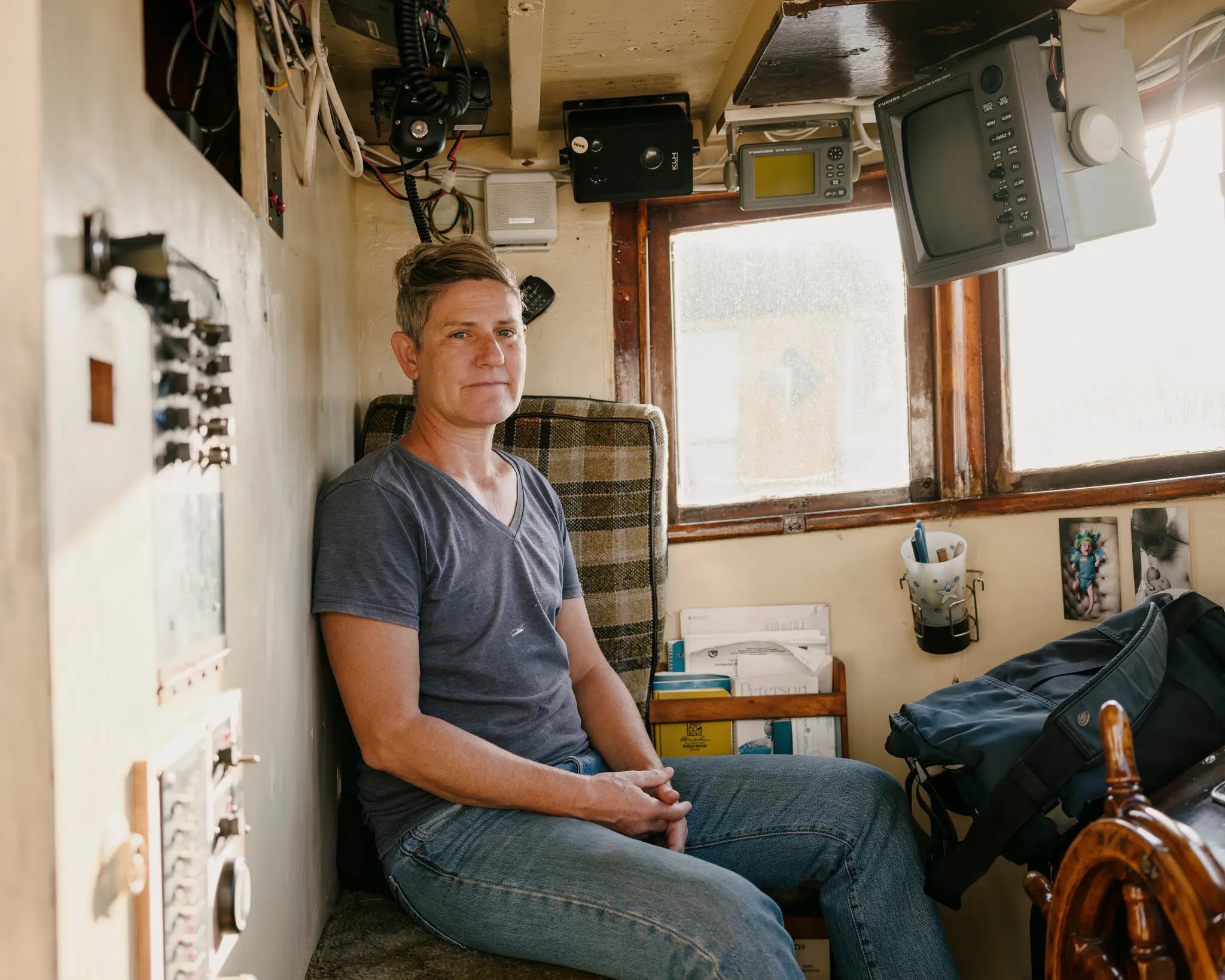
 
Sarah Bates is a salmon boat captain. October is usually a busy time on the waterfront, but now, “it’s kind of a ghost town,” she said.Credit...Ian C. Bates for The New York Times
 
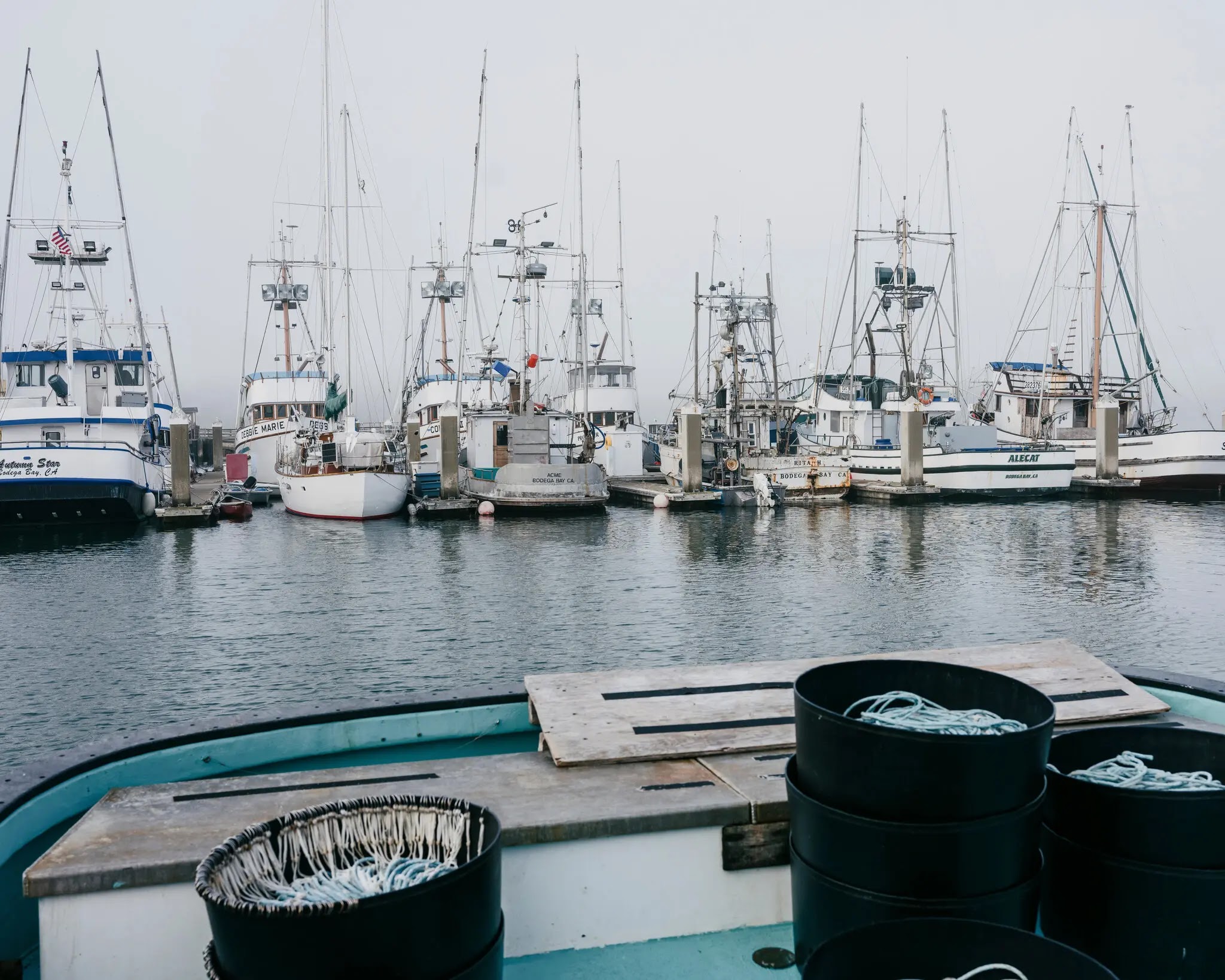
Parked fishing vessels in the Spud Point Marina in Bodega Bay, Calif.
 
 A whale-watching boat passed 30 humpback whales in eight hours. Most were close to shore, a sign of continued habitat compression.


Conspicuously absent from the water were fishing boats.

October is normally the tail end of salmon season, and a busy time on the waterfront. But the next morning, Monday, Fisherman’s Wharf in San Francisco was quiet.

“It’s kind of a ghost town,” said Sarah Bates, a local salmon boat captain, who has seen the past two seasons canceled because of drought.

Ms. Bates holds one of two spots for commercial fishermen on the Greater Farallones National Marine Sanctuary’s advisory council, and appreciates the scientific research done in the sanctuary.

Marine sanctuaries are rare slices of ocean where people carefully watch what’s happening underneath the surface, and as a result scientists can catch the signal of climate change sooner, said Zachary Cannizzo, NOAA’s climate coordinator for marine protected areas nationwide.


In hindsight, Ms. Bates views the Blob differently.

At the time, she said, “it didn’t feel like it was the new normal, it just felt like it was an anomaly.”

But now, she continued, “it’s becoming clear that was just sort of the leading edge of changing ocean patterns.”

This change affects multiple fisheries. California’s crab fishing season has been delayed year after year, first to avoid toxic domoic acid from harmful algal blooms and now to avoid entanglements with whales.

Richard Ogg, a crab boat captain based in the small town of Bodega Bay, holds the other spot on the Greater Farallones council.

“We see current changes, we see color changes, we know temperatures are different, we see species shift,” Mr. Ogg said.


 Clockwise from top left: Richard Ogg, a crab boat captain; black cod caught by Mr. Ogg; Rebecca Johnson, who directs the Center for Biodiversity and Community Science at the California Academy of Sciences; purple sea urchins growing in a lab at the institution.


He wants fishermen to be able to convey these observations from the water to scientists, to help model and predict the future of the marine ecosystem. (One early example is the Habitat Compression Index, a tool recently developed by NOAA scientists to predict humpback whale movements months in advance based on sea surface temperatures.)

Everyone who studies and works in this region of the ocean — the scientists, the volunteers, the whale watch crews, the fishermen — is grappling in their own ways with the upheaval of the recent past and the uncertain future.

Rebecca Johnson, who directs the Center for Biodiversity and Community Science at the California Academy of Sciences, explained the value of getting as many people as possible to pool their observations of the changing environment.

Dr. Johnson helped create Snapshot Cal Coast, a program that recruits hundreds of Californians each June to document the species they see along the coast. This year, the effort yielded a rare sighting of a sunflower sea star — a critically endangered species that all but disappeared during the Blob.


More data from more people and places means better-informed decisions on conservation measures and fisheries management, Dr. Johnson said. And the people contributing this data become better connected to their environment.

Like Anne Kelley, a retired French lecturer and longtime bird watcher recruited to join Beach Watch, a sister program to the University of Washington’s that is run by NOAA.

Ms. Kelley walks her assigned beaches each month, tallying every living and dead thing.

It’s normal to come across occasional carcasses, she said. What wasn’t normal was finding scores of dead seabirds at once — as she did during the Blob. In her dozen years of meticulously bearing witness to changes along the coast, Ms. Kelley said, “the die-offs are the things that you really remember.”

Anne Kelley, a volunteer with Beach Watch, taking a survey on Rodeo Beach.

Rachael Karm, studying kelp as part of a restoration project.


For the past decade, restoration efforts in the Greater Farallones have focused on controlling the purple urchin population. Some bull kelp has come back, but slowly. Scientists are now trying to speed up recovery by planting lab-grown kelp within the sanctuary, in hopes that these individuals will reseed larger forests.

The caretakers of this pioneering kelp showed off their handiwork recently at the Bodega Marine Laboratory, an isolated facility perched on a cliff over the ocean, an hour and a half north of San Francisco. About 30 long, brownish-green strands of seaweed tumbled in concrete tanks of water outside, glinting in the sun.

Julieta Gómez and Rachael Karm entered graduate school in 2020 at Sonoma State University. During school, they harvested bull kelp on body boards from the few remnant patches in the region, and began painstaking experiments to coax the kelp to grow under artificial conditions. Today, Ms. Gómez is a kelp restoration specialist at the Greater Farallones Association, and Ms. Karm works for her former adviser at Sonoma State.

They have a clear affection for their charges, which represent so much loss — and now hope — for the region’s changing ecosystem.

This year was a turning point for their project, with the first successful out-planting taking place in July. They hope to get the sanctuary’s bull kelp population back to a stable point where minimal intervention is needed. But the two young scientists, who began their careers in a post-Blob world, recognize there will be challenges ahead.

 “Together we can just continue chipping away at these different questions and hopefully build something that is successful, is resilient to further climate change,” Ms. Karm said. “Because that’s something that’s huge. If temperatures are just going to continue warming, what are we going to do?”

Tuesday, June 11, 2024

(Martianization) - Mass fish death in Mexico's Chihuahua State blamed on severe drought


Tuesday, December 12, 2023

Martianization, Isolados pela seca, produtores de guaraná passam fome na Amazônia


Ribeirinhos criam frangos para driblar falta de peixe prolongada por estiagem extrema na Amazônia 


MAUÉS (AM)

Não há mercados no Alto Urupadi, região de comunidades ribeirinhas no município amazonense de Maués. Para comer, as centenas de famílias que ali vivem recorrem a quatro fontes: o rio, que lhes fornece o peixe; a floresta, onde caçam e colhem frutos; a roça, onde plantam mandioca e outros tubérculos; e os comércios do centro da cidade, localizados a horas de distância de barco.

Todas essas alternativas foram prejudicadas pela estiagem histórica que atingiu o Amazonas neste ano de 2023, tão severa que matou botos, secou rios, tingiu o céu de fumaça e deixou as 62 cidades do estado em situação de emergência.


O clima extremo levou insegurança alimentar a populações tradicionais como as do Alto Urupadi, que lidam com a escassez de água e comida mesmo vivendo na região com maior biodiversidade do planeta.

"Este rio era muito farto", diz o líder comunitário José Cristo de Oliveira, 48, citando uma infinidade de peixes que costumavam pescar por ali: jaraqui, bodó, pirarucu, curimbatá, tucunaré, acará, tambaqui, caratinga, pacu.

Agora, o rio raso e excessivamente quente espantou muitas espécies de perto da margem, e os pescadores precisam ir longe em busca da refeição de suas famílias.

Video

A falta de profundidade da água também atrapalha a locomoção até a cidade. Só embarcações pequenas navegam, e mesmo assim por rotas alternativas, o que multiplica o tempo de viagem, o gasto com combustível e o preço dos poucos produtos à venda em locais próximos. Um frango chega a custar R$70 e uma lata de sardinha, R$12.

Para piorar, o sol intenso secou as plantações e, como os frutos só nascem na época de chuvas, os animais que poderiam ser caçados ainda não deram as caras por ali.

"Muita coisa que nós plantamos nós não colhemos por causa do verão forte. Fizemos outro roçado, mas morreu a metade. Agora estamos replantando de novo", conta Aleandra Sá Pimentel, 34, moradora da comunidade de São Sebastião.

Os homens do povoado saem para pescar antes do nascer do sol. Eles jogam a rede, cutucam a lama do fundo do rio com o remo buscando algum tucunaré ou acará que possa ter se escondido, mudam de lugar para ver se têm mais sorte. Dependendo da quantidade que conseguem, terão almoço e janta ou só uma das duas refeições.

Mãe de sete filhos, Aleandra prioriza o prato das crianças. "Antes de dormir, tento fazer um mingau ou uma sopinha. Se não comerem nada, eles ficam se queixando, dói o estômago."

Quem tira sua sobrevivência da floresta e dos rios já está acostumado com a alternância dos períodos de seca (de maio a outubro) e cheia (de janeiro a abril). O calendário alimentar dos ribeirinhos segue esse ritmo, com maior abundância de peixes na estiagem e de frutos e caça na época de chuvas.

O período de conexão entre essas estações é o mais crítico, já que a pesca fica mais difícil e os frutos ainda não vingaram nem atraíram animais. Geralmente isso dura um mês, mas essa transição vem se prolongando.

"No ano passado foram 60 dias. Neste ano eles deixaram de pescar dois meses atrás e a seca continua. Isso cria uma lacuna na principal proteína da dieta, que é o pescado", explica Cloves Pereira, professor da Faculdade de Ciências Agrárias da UFAM (Universidade Federal do Amazonas).

Devido à confluência de fenômenos como o El Niño, as altas temperaturas do Atlântico Norte e o aquecimento global, os rios continuaram a secar quando já deveriam estar enchendo.

"Nesse calendário ecológico, onde vão se sucedendo as atividades produtivas, a água é uma referência. E quando isso é modificado, os povos tradicionais são os primeiros a sentir o impacto", afirma Pereira.

Para Pereira, se essas populações não criarem estratégias de adaptação para extremos climáticos, podem até ser obrigadas a migrar, deixando o território onde vivem há gerações e que ajudam a preservar.

TERRA DO GUARANÁ

Com 61 mil habitantes espalhados por uma área 25 vezes maior do que a cidade de São Paulo, Maués é tido como o berço do guaraná. A frutinha, famosa por parecer um olho, foi domesticada há séculos pelos indígenas Sateré Mawés, com métodos de cultivo e conservação usados até hoje.


Apesar de ter sido superado pela Bahia na quantidade produzida, Maués se orgulha de ter um guaraná de qualidade, beneficiado artesanalmente. Fotos, desenhos e esculturas da fruta são onipresentes por ali.

O símbolo da cidade, porém, não passou incólume pela seca. Além de terem perdido uma parte da safra devido ao calor, muitos agricultores não conseguiram transportar seu produto até o centro, o que prejudicou sua principal fonte de renda no ano.

"O guaraná precisa de sol para produzir flor e fruto. Mas na floresta ele fica mais protegido e o solo segura a umidade. Fora da floresta, com o sol tão forte, a planta morre", explica o engenheiro florestal Eric Brosler, que cultiva guaraná em Maués.

"Toda nossa produção está no galpão, e aí o dinheiro não entra", diz José Cristo, que é presidente da Associação dos Agricultores Familiares do Alto Urupadi (AAFAU). Ele calcula que os 60 produtores do grupo devem colher a metade das 30 toneladas do grão de guaraná que vendem "em um ano bom".

Na busca de segurança para sobreviver às intempéries, eles se esforçam para agregar valor ao produto local. A eliminação de atravessadores, a exportação e a certificação orgânica são algumas estratégias. "Nosso guaraná é de qualidade. Ele demora mais a produzir, mas tem sustentabilidade por anos", diz Cristo. "O processo é todo artesanal. É a nossa cultura e a gente não quer perder."

FRANGOS NA FLORESTA

Outra forma de adaptação ao clima extremo é a busca de autossuficiência na produção de alimentos. Eles implementaram um viveiro de mudas e até uma criação de frangos, que se tornam uma opção ao peixe em tempos difíceis.

Construído em 2022, o aviário-escola tem 170 animais e é mantido por um grupo de mulheres, que foram treinadas em técnicas de criação e abate por especialistas da UFAM. O projeto surgiu após uma visita do chef David Hertz, fundador da ONG Gastromotiva, a Maués.

"Cheguei lá no dia 25 de dezembro de 2021 e a primeira pergunta que eu fiz foi como tinha sido o Natal. Eles falaram: ‘Não teve Natal, não tem comida’. Nosso jantar foi dois ovos cozidos com bolacha salgada, arroz e duas latas de sardinha que levamos. Mesmo assim foi uma cena muito festiva, que me marcou", conta.

Hertz, que atua no combate à fome há anos, não imaginava encontrar tamanha escassez na Amazônia. Ele se uniu ao Instituto Acariquara, que já era seu parceiro local em um projeto de cozinhas solidárias. A ONG atua no Alto Urupadi desde 2006, com apoio ao associativismo e ao desenvolvimento agrícola.

O aviário foi uma escolha dos próprios ribeirinhos. A ideia é que ele se torne autossustentável, com a produção local de ração e a venda de uma parte dos frangos para o PNAE (Programa Nacional de Alimentação Escolar). Também está nos planos a criação de uma granja de galinhas poedeiras.

"Começamos com o frango de abate para suprir a emergência imediata, que é a fome. Depois eles podem montar a granja, a chocadeira. O objetivo é fazer o ciclo completo lá", afirma Ademar Vasconcelos, diretor executivo do Acariquara.

"As soluções para a Amazônia as próprias comunidades já têm. A universidade entra com a assistência técnica", completa.

O Natal de 2022 foi mais farto em São Sebastião. Os frangos foram repartidos para as famílias e uma parte foi usada em um sopão comunitário.

Para Hertz, é o mínimo que os moradores do Alto Urupadi merecem. "Quando bem alimentados e com autonomia financeira, eles podem fazer todas as escolhas e continuar cuidando da floresta", afirma. "A ação contra a mudança climática tem que começar com o cuidado com as pessoas. São eles os defensores daquela terra."

A causa 'Fome de quê? Soluções que inspiram' conta com o apoio da VR e da Rede Folha de Empreendedores Socioambientais.


Tuesday, October 17, 2023

Brazil - Seca no Amazonas: Rio Negro atinge menor nível em 121 anos


O Serviço Geológico do Brasil alerta que os impactos da seca devem ser sentidos até o próximo ano e afetam diretamente as populações ribeirinhas e a economia regional

O Rio Negro, do Amazonas, atingiu 13,59 metros — o menor nível em 121 anos, quando as medições começaram a ser realizadas, em 1902. O menor registro desde então tinha sido captado em 24 de outubro de 2010. Os dados foram divulgados nesta segunda-feira (16/10), pelo Porto de Manaus. O estado passa por uma seca história, com impacto na distribuição de alimentos e água. Além da estiagem, Amazonas também vive uma onda de queimadas.

O Serviço Geológico do Brasil alerta que os impactos da seca devem ser sentidos até o próximo ano. "Os níveis dos rios muito baixos e consequentemente suas vazões reduzidas tem potencial de gerar diversos impactos na região, por exemplo sobre: abastecimento; navegação; estabilidade geológica local, em razão dos fenômenos de terras caídas ocasionados pela diminuição muito rápida dos níveis de águas; e processos ecológicos, levando à mortandade de peixes em razão do reduzido espaço para circulação, elevação da carga orgânica e também das temperaturas das águas", diz a empresa governamental, vinculada ao Ministério de Minas e Energia.

Ainda segundo o órgão, esses impactos afetam diretamente as populações ribeirinhas e a economia regional. O governo do Amazonas tem adotado uma série de ações emergenciais para acolher a população e minimizar os danos. Entre as providências já adotadas pela Defesa Civil do estado estão a capacitação de agentes municipais e estaduais, entrega de purificadores coletivos de água, emissão de alertas e orientações para a população e demais entes públicos.

‘We have lost everything’: extreme rainfall across Asia brings flash floods and typhoons

  Bangladesh is one of several countries in the region to experience heavy rains and flash floods. Photograph: Rayhan Ahmed/Zuma Press Wir...