Showing posts with label Water Supply. Show all posts

Thursday, July 9, 2026

UK swelters in third heatwave of the year as western Europe counts cost of hottest-ever June. Britain expands heat alerts while estimates suggest June’s death toll could surpass 20,000 across continent

People shield themselves from the sun at the Victoria Memorial outside Buckingham Palace in London. Photograph: Vuk Valcic/Sopa Images/Shutterstock


by   and

The UK is sweltering through the peak of its third heatwave of the year as countries around Europe struggle to recover from an early onslaught of baking summer heat.

Punishing temperatures pushed higher by fossil fuel pollution have broken records across the continent in recent weeks. Western Europe experienced its hottest June on record, scientists confirmed on Thursday, accompanied by high global ocean temperatures that could cause “mass-mortality events” for some species.

The UK Health Security Agency (UKHSA) on Thursday expanded amber heat health alerts to cover all regions of England except the north-east, meaning significant impacts are likely across health and social care services owing to the high temperatures.


The UK Met Office said high temperatures would remain through much of next week, which could make the heatwave one of the longest lasting since the 1976 heatwave that killed 250 people. On Thursday temperatures surpassed 35C (95F) in Surrey, falling short of the provisional high of 37.7C recorded at Lingwood, Strumpshaw Hill, in Norfolk on 26 June.

The Met Office said Thursday was the eighth day this year where temperatures had surpassed 34C, breaking the previous records from 2020 and 1976 by one day.

Friederike Otto, a professor of climate science at Imperial College London, said the climate crisis was making every heatwave hotter, with events such as this month’s heatwave more likely to occur.

“The heat we have seen this summer is only possible because of the 1.4C of climate change we have to date, due to the burning of fossil fuels,” she said.

Otto said it was misleading to use the term “new normal” when describing this year’s scorching summer heat. “The climate we have today is not stable and continues to warm as long as we continue to burn fossil fuels. As a result, what is ‘normal’ keeps shifting and we’re likely to see much hotter heatwaves like this one in the years to come.”

 Many countries across Europe are still reckoning with the fallout from the last heatwave. On Thursday, Belgium’s public science institute said its June heat was “exceptionally deadly”, with 1,747 excess deaths, while the Robert Koch Institute reported 5,120 heat-related deaths in Germany this summer. Early academic estimates suggest the death toll across the continent could be higher than 20,000.

A firefighter sprays water on spectators watching the sixth stage of the Tour de France between Pau and Gavarnie-Gèdre in the French Pyrenees. Photograph: Loïc Venance/AFP/Getty Images

In France, where a nuclear reactor reportedly shut down in high heat on Thursday, scientists said the transformation of homes from “thermal kettles” into decent housing was a public health imperative.

France’s high council on climate, an independent body responsible for evaluating government climate action, urged policymakers to improve housing stock and make the creation of shaded green spaces an integral part of urban regeneration. In hospitals, care homes and schools, it recommended installing shutters, shade structures, ceiling fans, cooling systems, and fixed air-conditioning units.

The annual report, which is in its eighth edition, found France was not ready for the dangerous consequences of climate breakdown and said current policies were insufficient to avoid a sharp increase in risk.

A boy rests inside the Roman theatre in Arles, France. Photograph: Xinhua/Shutterstock

The scientists lamented the slowdown in climate action and called for a consolidated plan to phase out fossil fuels. “The cost of inaction is much higher than the cost of the transition,” the authors wrote, “which makes unilateral decarbonisation by major economies a rational choice that brings considerable welfare gains for societies”.

The NHS in England has said it is facing a “summer onslaught”, with the heatwave and the World Cup to blame. Average A&E attendances exceeded 80,000 for the first time ever in June, a new daily attendance record.

The NHS national medical director, Prof Frankie Swords, said the figures showed that summer was putting the NHS under just as much pressure as winter. South Central ambulance service NHS foundation trust said during the June heatwave there was a 118% increase in the number of times 999 emergency call takers directed members of the public to collect a nearby defibrillator for someone in suspected cardiac arrest.

More than 1,000 schools across the UK were either closed or partially closed during the June heatwave, and some schools have taken similar measures this week as they struggled to cope in poorly insulated buildings.


Water companies have reported increased demand, with a hosepipe ban already in force for South East Water customers in parts of Kent. Hosepipe restrictions are also being introduced for about 1 million Southern Water customers across Hampshire and the Isle of Wight from Friday.

Supermarkets across the UK have struggled to keep their fridge and freezer units running in the extreme heat, with many shoppers finding empty shelves at their local store and a hastily erected sign apologising for the inconvenience.

Rupert Ashby, the chief executive of the British Frozen Food Federation, said the trade association heard from a number of members who had encountered problems, and shops with older fridge-freezer units were being worst affected.

In older models, the refrigeration cycle components that pump out hot air are typically stored outside the building and are designed to work in ambient temperature. In an extreme heat event they do not work as efficiently, as they cannot pump the heat away.

 
Signs on blinds covering fridges in the chilled food aisle of a Sainsbury’s supermarket in England. Photograph: Justin Tallis/AFP/Getty Images
 
 
 “These systems just weren’t designed to deal with this type of temperature because, historically, we rarely had it,” Ashby said. “But a major supermarket chain is probably looking at hundreds of millions of pounds to replace all its older units because they have so many.”

Phil Pluck, the chief executive of the Cold Chain Federation, said 50% of cold warehouses in the UK were more than 20 years old with old refrigeration systems, and the hot weather had massively increased energy usage and pressure on the system.

“As an industry, we are finding ourselves under more and more pressure,” he said. “I think we’ve got to admit that our climate is now clearly in crisis, and one of the things that will have to change will be our access to food via retail outlets. It will look different.”

He said open fridge-freezers in supermarkets would become less common, and standard practice would shift to using Perspex doors to keep heat out. Some supermarkets have installed pull-down blinds on their fridge units to help keep food cool.

 Additional reporting Jessica Murray

Sunday, November 30, 2025

Revealed: Europe’s water reserves drying up due to climate breakdown. " Changes in Earth’s gravitational field ".


Parched land at Cueva de Las Niñas reservoir in the island of Gran Canaria, Spain, in March 2025. Photograph: Borja Suárez/Reuters

 Exclusive: UCL scientists find large swathes of southern Europe are drying up, with ‘far-reaching’ implications

by  

 Changes in Earth’s gravitational field

Vast swathes of Europe’s water reserves are drying up, a new analysis using two decades of satellite data reveals, with freshwater storage shrinking across southern and central Europe, from Spain and Italy to Poland and parts of the UK.

Scientists at University College London (UCL), working with Watershed Investigations and the Guardian, analysed 2002–24 data from satellites, which track changes in Earth’s gravitational field.

Because water is heavy, shifts in groundwater, rivers, lakes, soil moisture and glaciers show up in the signal, allowing the satellites to effectively “weigh” how much water is stored.

The findings reveal a stark imbalance: the north and north-west of Europe – particularly Scandinavia, parts of the UK and Portugal – have been getting wetter, while large swathes of the south and south-east, including parts of the UK, Spain, Italy, France, Switzerland, Germany, Romania and Ukraine, have been drying out.


Climate breakdown can be seen in the data, the scientists say. “When we compare the total terrestrial water storage data with climate datasets, the trends broadly correlate,” said Mohammad Shamsudduha, professor of water crisis and risk reduction at UCL.

It should be a “wake-up call” for politicians still sceptical about cutting emissions, said Shamsudduha. “We’re no longer talking about limiting warming to 1.5C, we’re likely heading toward 2C above preindustrial levels, and we’re now witnessing the consequences.”

Doctoral researcher Arifin isolated groundwater storage from the total terrestrial water data and found that trends in these more resilient water bodies mirrored the overall picture, confirming that much of Europe’s hidden freshwater reserves are being depleted.

Trends in the UK are mixed. “Overall, the west is getting wetter while the east is becoming drier and that signal is getting stronger,” said Shamsudduha.

“Although total rainfall may be stable, or even slightly increasing, the pattern is changing. We’re seeing heavier downpours and longer dry spells, especially in summer.”

Groundwater is seen as more climate-resilient than surface water but heavy summer downpours often mean more water is lost to runoff and flash flooding, while the winter groundwater recharge season may be shortening, he said.

“In south-east England, where groundwater supplies about 70% of public water, these shifting rainfall patterns could pose serious challenges.”

The total amount of water taken from surface and groundwater across the EU between 2000 and 2022 decreased, according to European Environment Agency data, but groundwater abstractions increased by 6%, attributed to public water supply (18%) and farming (17%).

It is a critical resource: across member states, groundwater accounted for 62% of the total public water supply and 33% of agricultural water demands during 2022.

A spokesperson for the European Commission said its water resilience strategy “aims to help member states adapt their water resource management to climate change and to address man-made pressures”.

The strategy aims to build a “water-smart economy” and is paired with a commission recommendation on water efficiency, which calls for improving efficiency by “at least 10% until 2030”. With leakage levels varying from 8% to 57% across the bloc, the commission says cutting pipe losses and modernising infrastructure will be crucial.

Hannah Cloke, professor of hydrology at the University of Reading, said: “It’s distressing to see this long-term trend, because we’ve seen some very large droughts recently and we’re constantly hearing that this winter we might have less than usual rainfall and we’re already in drought.

“Next spring and summer, if we don’t get the rainfall we need, there will be severe consequences for us here in England. We will face severe water restrictions and that will make everybody’s life very difficult.”

The Environment Agency has already warned England to prepare for drought continuing into 2026 unless there is significant rain over autumn and winter.

The water minister, Emma Hardy, said there is “increasing pressure on our water resources. That is why this government is taking decisive action, including the development of nine new reservoirs to help secure long-term water resilience.”

But simply “promising very large reservoirs that won’t come online for a few decades is not going to solve the problem immediately,” said Cloke.

“We should be focusing on water reuse, using less water in the first place, separating drinking water from those recycled waters that we could use, using nature-based solutions, and thinking about the way that we’re building developments,” she said.

“We’re just not doing these things fast enough to keep pace with these long-term trends.”


Europe’s drying trend will have “far-reaching” impacts, hitting food security, farming and water-dependent ecosystems, especially groundwater-fed habitats,” according to Shamsudduha. Spain’s shrinking reserves, he said, could directly affect the UK, which relies heavily on Spain and other European countries for fruit and produce.

The kinds of climate impacts long seen across the global south, from south Asia to Africa and the Middle East, are now “much closer to home”, with climate change “clearly affecting Europe itself”.

“We need to accept that climate change is real, it’s happening and it’s affecting us,” Shamsudduha said, calling for better water management and openness to “new, even unconventional” ideas, including widespread rainwater harvesting in countries such as the UK.

Globally, drying hotspots are emerging across the Middle East, Asia, South America, along the US west coast and across swathes of Canada, with Greenland, Iceland and Svalbard also showing dramatic drying trends.

In Iran, Tehran is closing in on “day zero” when no tap water is available, and water rationing is being planned. The country’s president, Masoud Pezeshkian, has said that if rationing fails, Tehran may have to be evacuated.

Changes in Earth’s gravitational field 

Thursday, October 17, 2024

Crise hídrica global ameaça produção de alimentos

Criança palestina carrega galão de água em Gaza, em maio de 2024. Mais de mil crianças com menos de 5 anos de idade morrem todos os dias por causa de água imprópria e falta de saneamento.


California is experiencing droughts which may affect 5C students, if they haven’t already. (Courtesy: Shutter Theory)

 Relatório considerado histórico pede ações urgentes em nível mundial, alertando para efeitos de uma persistente má gestão dos recursos hídricos somada às mudanças climáticas.


Mais da metade da produção mundial de alimentos pode estar em risco até 2050 se medidas urgentes contra a crise global de água não forem adotadas, alertou um grupo de líderes e especialistas em um relatório publicado nesta quinta-feira (17/10).

"Quase 3 bilhões de pessoas e mais da metade da produção mundial de alimentos estão agora em áreas onde o armazenamento total de água tende a diminuir", diz o relatório produzido pela Comissão Global sobre a Economia da Água (GCEW, na sigla em inglês).

Intitulada A economia da água: valorizar o ciclo hidrológico como um bem comum global, a análise alerta que a crise hídrica pode levar a uma redução média de 8% no Produto Interno Bruto (PIB) em países de alta renda até 2050 e de até 15% em países de baixa renda.

Os declínios econômicos seriam consequência "dos efeitos combinados das mudanças nos padrões de precipitação e do aumento das temperaturas devido às mudanças climáticas, juntamente com o declínio do armazenamento total de água e a falta de acesso a água limpa e saneamento".

A GCEW considera que "a utilização destrutiva da terra e a persistente má gestão dos recursos hídricos se juntaram ao agravamento da crise climática para colocar o ciclo global da água sob uma pressão sem precedentes".

Em hidrologia, o chamado ciclo da água ou ciclo hidrológico refere-se à troca contínua de água entre a atmosfera, a água do solo, águas superficiais, subterrâneas e das plantas.

"Pela primeira vez na história da humanidade, estamos desequilibrando o ciclo global da água. Já não podemos confiar na chuva, a fonte de toda a água doce, devido às alterações climáticas e de uso da terra causadas pela humanidade, que prejudicam a base do bem-estar humano e da economia mundial", afirma Johan Rockström, diretor do Instituto de Potsdam de Pesquisa sobre Impactos Climáticos (PIK) e um dos cinco copresidentes da GCEW.

Relatório "histórico"

A Comissão Global sobre a Economia da Água foi criada pela Holanda em 2022, com base no trabalho de dezenas de cientistas e economistas de renome, com o objetivo de formar uma visão abrangente sobre o estado dos sistemas hidrológicos globais e sua gestão.

O relatório de 194 páginas publicado nesta quinta é o maior estudo global a analisar os vários aspectos da crise da água e sugerir soluções. O documento, que a comissão classifica de "histórico", argumenta que as abordagens existentes ocasionaram a crise da água, por não levarem em conta o seu valor para a economia e a preservação dos ecossistemas.  

Embora a água seja frequentemente percebida como "um presente abundante da natureza", o relatório enfatiza que ela é escassa e cara para transportar.

Em julho de 2010, a Assembleia Geral das Nações Unidas reconheceu o direito de todas as pessoas ao acesso a água suficiente para uso pessoal e doméstico, o que equivaleria a entre 50 e 100 litros por dia. A GCEW, no entanto, afirma que essa quantidade foi subestimada e sustenta que "uma vida digna – incluindo nutrição e consumo adequados – requer um mínimo de cerca de 4.000 litros por pessoa por dia".


Água como bem comum global

Os especialistas apelaram para que o ciclo da água seja considerado um "bem comum global", o que exige uma "colaboração através de fronteiras e culturas", e para uma transformação na governança da água em todos os níveis.

"Os custos envolvidos nessas ações são muito pequenos em comparação ao dano que a inação contínua causará às economias e à humanidade", destacaram os especialistas.

Para enfrentar a crise, é necessária uma "nova economia da água", baseada num "pensamento mais ousado e integrado e numa reformulação da estrutura das políticas", defende a comissão.

"Só podemos resolver esta crise se pensarmos em termos muito mais amplos sobre como governamos a água. Reconhecendo as interações da água com as alterações climáticas e a biodiversidade. Mobilizando todas as nossas ferramentas econômicas e financiamento público e privado para inovar e investir na água. Pensando e agindo multilateralmente", resume outro copresidente da GCEW, o líder de Singapura, Tharman Shanmugaratnam.

Do fim de subsídios a dietas de origem vegetal

Entre outras medidas, o documento da GCEW defende a eliminação de subsídios prejudiciais em setores de uso intensivo de água. "Precisamos vincular a precificação da água a subsídios apropriados", disse Ngozi Okonjo-Iweala, Diretora-Geral da Organização Mundial do Comércio (OMC) e copresidente da GCEW.

A primeira missão, segundo a comissão, deverá ser o lançamento de uma revolução nos sistemas alimentares, o que incluiria o uso da microirrigação (técnica de irrigação que consiste na aplicação de água de forma precisa e controlada) na agricultura e a mudança progressiva "de dietas de origem animal para dietas de origem vegetal".

A GCEW recomenda também que sejam conservados e restaurados habitats naturais essenciais para preservar a umidade nos solos e plantas, que retorna e circula pela atmosfera e gera chuva. 

"Nenhuma comunidade ou economia será poupada"

O relatório apela ainda pela proteção dos mais pobres e vulneráveis. "A crise global da água atinge primeiro, e de forma mais dura, os mais vulneráveis. Mais de mil crianças com menos de 5 anos de idade morrem todos os dias por causa de água imprópria e falta de saneamento", diz o relatório.

"No entanto, nenhuma comunidade ou economia será poupada das consequências de um ciclo da água desregulado — resultado de nossas ações coletivas ao longo de décadas. O mais perigoso é que falharemos no combate às mudanças climáticas se falharmos na gestão da água", alerta o texto.


Friday, June 2, 2023

Arizona Limits Construction Around Phoenix as Its Water Supply Dwindles - NYtiems.com


 In what could be a glimpse of the future as climate change batters the West, officials ruled there’s not enough groundwater for projects already approved.

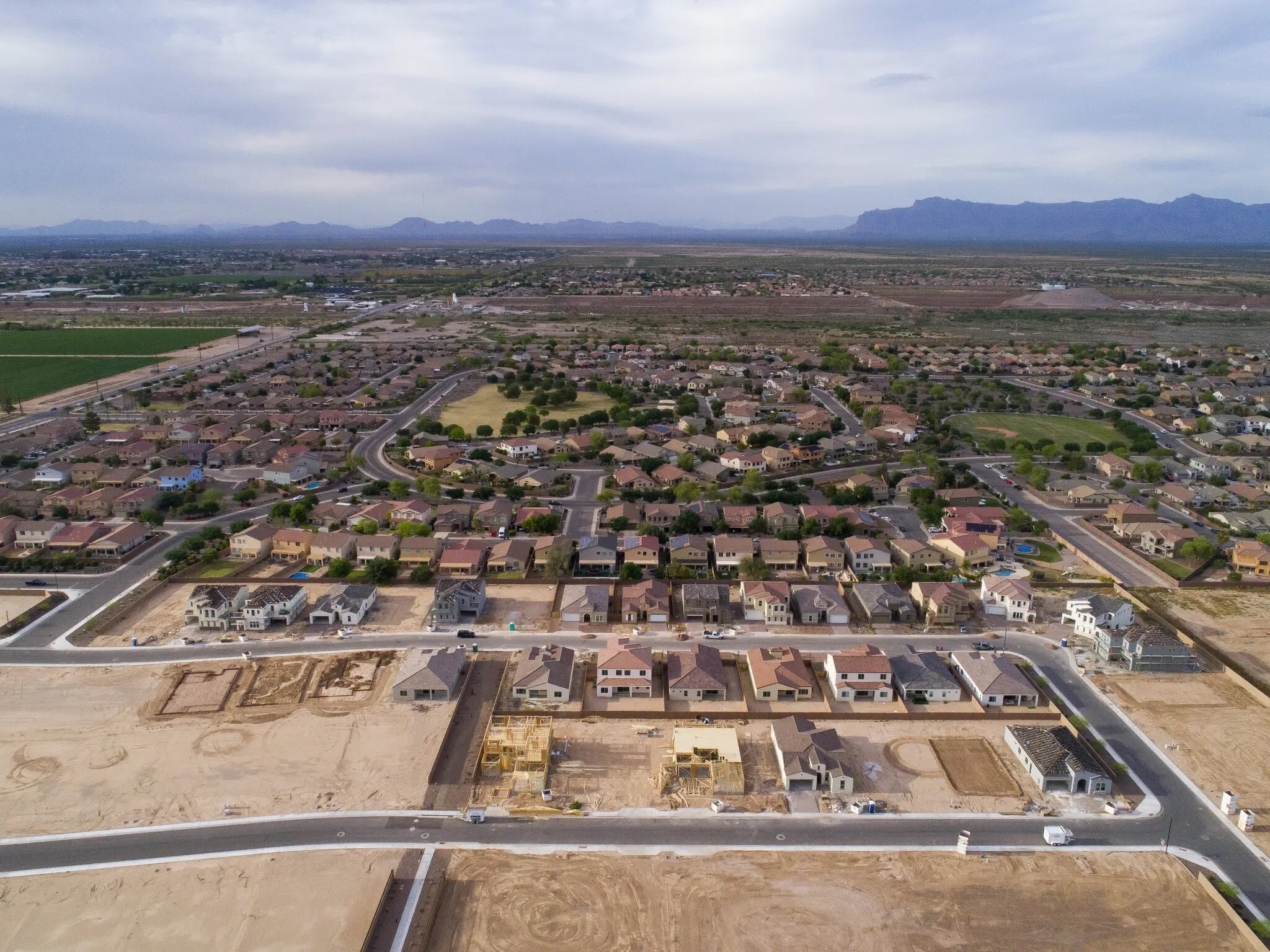
Queen Creek, Ariz., a suburb of Phoenix, is projected to grow to 175,000 people from its current 75,000 — if it can find enough water.Credit...Rebecca Noble for The New York Times

Christopher Flavelle and

Christopher Flavelle reported from Washington and Jack Healy from Phoenix.


 Arizona has determined that there is not enough groundwater for all of the housing construction that has already been approved in the Phoenix area, and will stop developers from building some new subdivisions, a sign of looming trouble in the West and other places where overuse, drought and climate change are straining water supplies.


Link to Article - NYtimes.com - https://www.nytimes.com/2023/06/01/climate/arizona-phoenix-permits-housing-water.html

Dead trees and searing-hot benches: Rome’s multimillion-dollar cooling piazza shows the challenges of brutal heat

Tourists shield themselves from the sun near the Pantheon in Rome on July 10, 2026.  Xinhua News Agency/Getty Images by   Barbie Latza Nadea...