Showing posts with label Permafrost will be impossible to stop. Show all posts

Monday, November 3, 2025

Alaska's permafrost meltdown


The Arctic has warmed four times faster than anywhere else on the planet, and today’s newsletter takes you to Alaska for a firsthand view. There, researchers are racing to understand what’s happening to permafrost and the 1.4 trillion tons of carbon it stores. Nothing less than the fate of the climate hangs in the balance.


Extreme science on top of the world

By Danielle Bochove

On the last day of August, as the High North summer tips to autumn, I found myself balancing on the gunnels of a 10-foot inflatable Achilles raft bouncing across whitecaps scudding the Beaufort Sea. The temperature was barely above freezing, the sun fickle. 

It's a short ride but the only dry way to get me, lacking hip-waders, to a waterlogged patch of tundra beside one of Hilcorp Alaska’s massive oil pads where the team of scientists from Woods Hole, Massachusetts, I’ve embedded with will be gathering data all week. (The boat serves another purpose, which I’ll get to.)

Doing climate research under the shadow of an oil rig is ironic, to say the least, but in this part of the world, there’s no other option. Alaska's Prudhoe Bay oil fields are the largest in North America. Once you travel north to Deadhorse — a "town" that exists solely to serve the vast oil production complex — it’s the end of the road unless you can get permission from one of the oil companies to access the land they lease on the edge of the Arctic Ocean for fossil fuel extraction.

The scientists take a soil sample at the edge of a Beaufort Sea lagoon. Photographer: Nathaniel Wilder


The work on this scientific project is multifaceted, but the common denominator is saltwater. As sea levels rise and storms get more violent, the ocean is washing over the tundra with increasing frequency.

The team is studying knock-on effects, including the impact that inundation may be having on permafrost. The frozen layer of mineral soil, rock and undecomposed organic material stretches across millions of acres and contains roughly 1.4 trillion tons of carbon. Understanding how fast it’s thawing is key to gauging how much previously frozen carbon is being released into the atmosphere, and ultimately the state of the global carbon budget.

The days were long — we were up at 6 a.m. and often couldn’t make it back to camp before the kitchen closed — but the scientists stayed deeply focused on their work. In fact, they were so intense I found myself doubting whether any of them would even notice if one of the polar bears in the area wandered by.

I learned about their experiments, but I also learned that scanning the horizon for polar bears 10 hours a day strains the eyes as well as the nerves. I felt better when the project lead, Julia Guimond, told me she has polar bear dreams before every expedition — and worse when the team’s veteran, Jim McClelland, said that’s because two years ago, a polar bear pawed through their equipment while they ran and escaped in the boat. (In addition to transporting reporters, it serves as a bear escape vehicle.) 

Happily, this trip was bear-free.

Julia Guimond pulls a stake from a Beaufort Sea lagoon. Photographer: Nathaniel Wilder


Among the many images indelibly etched in my memory is one of Guimond plunging her shoulders beneath the frigid water of No Point Creek, feeling for the underwater equipment she installed back in July. With her orange toque and dripping bare arms, she looked like a character on some yet-to-be-created Alaska reality TV show.

It might not be a bad backup plan. The state of scientific funding in the US is dire right now, with widespread cuts by the Trump administration. The stakes are particularly high for Alina Spera and Liz Elmstrom, the younger postdoctoral researchers on this trip, whose careers depend on landing funding that can act as a launchpad for their own research.

“It’s not the easiest career path,” Elmstrom told me one evening, but there’s no work that makes her happier.

On our last day in the field, it’s not hard to see why. The sun came out, coats came off, and with the bulk of the work done, we paused to marvel at the weather. I took my first five-minute ‘’tundra nap” and we all enjoyed a packed lunch on the beach.

Noticing that his fingers are clean after being caked in grime from gathering core samples, McClelland deadpanned, “I likely ate some 1000-year-old dirt.”

It’s a moment of levity before one last afternoon push. And then it’s time to pack the samples in coolers, load them on trucks and scrub the boat.

The contents of those coolers are now back in Massachusetts, undergoing months of analysis. As more pieces of the permafrost carbon sink puzzle are filled in, the magnitude of the challenge the world faces will become clear. If more of this vast store of carbon starts to leak into the atmosphere, the climate will heat up to still more dangerous levels.

And the permafrost is just one natural carbon sink within the vast carbon budget. Follow our series looking at the entire system in the coming months, starting with this one.

Friday, September 20, 2024

‘Red Flags’ on Climate: U.S. Methane Emissions Keep Climbing (see permafrost)

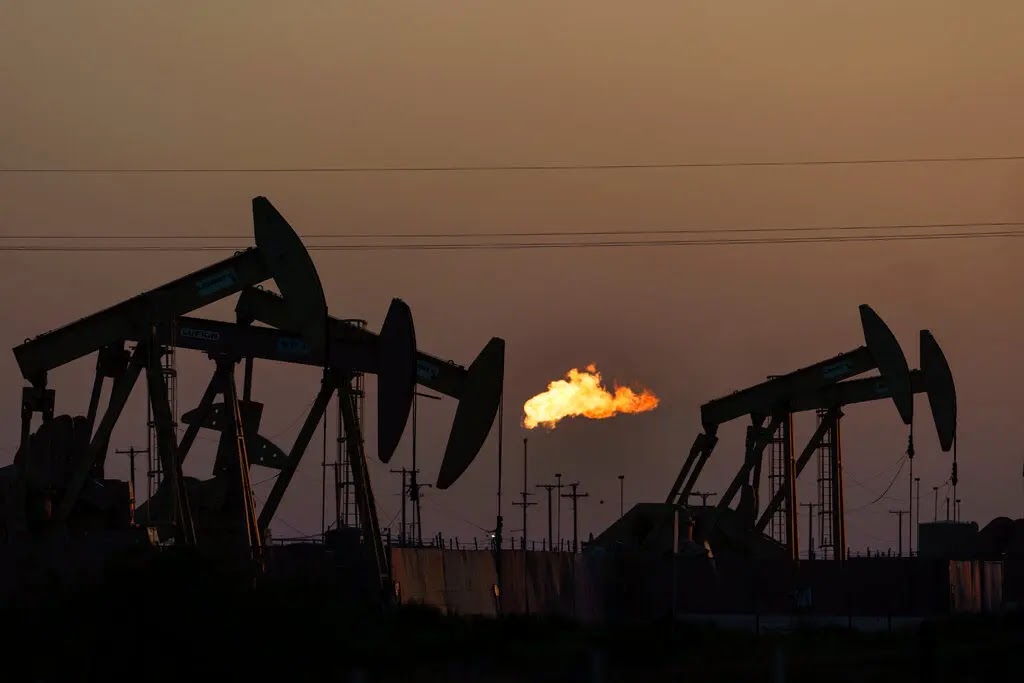
The concentration of methane in the atmosphere is now more than two-and-a-half times greater than preindustrial levels.Credit...David Goldman/Associated Press


The United States’ booming fossil-fuel industry continues to emit more and more planet-warming methane into the atmosphere, new research showed, despite a U.S.-led effort to encourage other countries to cut emissions globally.

Methane is among the most potent greenhouse gases, and “one of the worst performers in our study is the U.S., even though it was an instigator of the Global Methane Pledge,” said Antoine Halff, the co-founder of Kayrros, the environmental data company issuing the report. “Those are red flags.”

Much of the world’s efforts to combat climate change focus on reducing carbon dioxide emissions, which result largely from the burning of fossil fuels like coal, oil and gas, and whose heat-trapping particles can linger in the atmosphere for hundreds of years. But methane’s effects on the climate — which have earned it the moniker “super pollutant” — have become better appreciated recently, with the advent of more advanced leak-detection technology, including satellites.

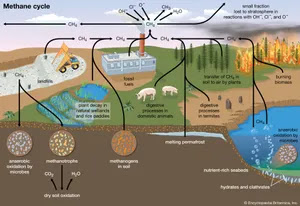
Unlike carbon dioxide, methane emissions don’t derive from consumption, but rather from production and transportation of the gas, which is the main component of what is commonly known as natural gas. Methane can leak from storage facilities, pipelines and tankers, and is also often deliberately released. Methane is also released from livestock and landfills, and occurs naturally in wetlands.


 Kayrros focused on fossil fuel facilities, where the practices of “venting,” or the intentional release of large quantities of methane, and “flaring,” which is when it is intentionally burned off, are both common. Kayrros used satellite data combined with artificial intelligence analysis of the data to draw its conclusions.


The concentration of methane in the atmosphere is now more than two-and-a-half times as much as preindustrial levels, and more than half of the world’s methane emissions are man-made.

Its presence in the atmosphere dissipates in roughly 12 years, a relatively short span of time, but numerous studies point to its heat-trapping effects as being as much as 80 or more times stronger than carbon dioxide’s. That means it can have more immediate consequences for the climate.

In 2021, the United States was among the first signers and promoters of the Global Methane Pledge, which set a target of reducing global, man-made methane emissions by 30 percent from 2020 levels within a decade. The pledge has been signed by 158 countries.

 “2030 is rapidly approaching, though, and emissions are still being released in huge amounts,” said Mr. Halff. “This seems in large part because oil and gas production is surging both in the U.S. and elsewhere.”


President Biden’s signature climate legislation, the Inflation Reduction Act, includes billions of dollars in funding for methane emission-reduction strategies.

According to to the Environmental Protection Agency, the rule could result in the elimination of “more than the annual emissions from 28 million gasoline cars” and “a nearly 80 percent reduction below the future methane emissions expected without the rule.”

The American fossil fuel sector today emits less methane per unit of energy than in years past. However, production has ramped up so significantly that methane emissions overall have increased. The United States is now, by far, the world’s leading gas producer and exporter.


China is the world’s largest emitter of both carbon dioxide and methane, and has not signed the pledge. John Podesta, the U.S. climate envoy, recently traveled to Beijing to meet with China’s top climate negotiators and the two countries agreed to co-host a summit on methane coinciding with this year’s main climate summit in Azerbaijan in November, raising hopes that China might sign this year.

The Kayrros report includes findings from 13 fossil fuel basins across the world, including in three countries that haven’t signed the pledge: Algeria, Iran and South Africa. In those three countries, methane emissions rose even more steeply than in signatory countries.

“It shows the pledge has influence,” said Jutta Paulus, a member of the European Union Parliament from the German Green party who was recently the bloc’s rapporteur on greenhouse gas emissions. She also noted that “many of the fixes are within reach. Leak detection and repair, management of abandoned facilities, they aren’t impossible. In fact, many of them can be done at almost no cost.”

The European Union introduced a regulation this summer that drafts all its member states into a process of studying their own methane emissions and setting targets for reducing them. Perhaps more significantly, starting in 2029, it will apply the same stringent caps on emissions to its imports, including of gas from countries that haven’t signed the pledge, like Algeria. In 2030, the E.U. would begin imposing fines on imports above a certain emissions threshold.

Australia and Turkmenistan were the only two countries in the study that saw major reductions in methane emissions. Australia’s success was likely related to policies aimed at limiting the intentional release of gas during coal production, Mr. Halff said. Turkmenistan, which in many cases operates leaky, decades-old Soviet gas infrastructure, has begun a process of updating its facilities.


Sunday, January 29, 2012

“It’s a rapid and catastrophic way you could completely change everything.” As Permafrost Thaws, Scientists Study the Risks


Temperature Rising

As Permafrost Thaws, Scientists Study the Risks

Katey M. Walter Anthony, a scientist, investigated a plume of methane, a greenhouse gas, at an Alaskan lake. Dr. Walter Anthony is a leading researcher in studying the escape of methane. More Photos »


FAIRBANKS, Alaska — A bubble rose through a hole in the surface of a frozen lake. It popped, followed by another, and another, as if a pot were somehow boiling in the icy depths.

Every bursting bubble sent up a puff of methane, a powerful greenhouse gas generated beneath the lake from the decay of plant debris. These plants last saw the light of day 30,000 years ago and have been locked in a deep freeze — until now.

“That’s a hot spot,” declared Katey M. Walter Anthony, a leading scientist in studying the escape of methane. A few minutes later, she leaned perilously over the edge of the ice, plunging a bottle into the water to grab a gas sample.

It was another small clue for scientists struggling to understand one of the biggest looming mysteries about the future of the earth.

Experts have long known that northern lands were a storehouse of frozen carbon, locked up in the form of leaves, roots and other organic matter trapped in icy soil — a mix that, when thawed, can produce methane and carbon dioxide, gases that trap heat and warm the planet. But they have been stunned in recent years to realize just how much organic debris is there.

A recent estimate suggests that the perennially frozen ground known as permafrost, which underlies nearly a quarter of the Northern Hemisphere, contains twice as much carbon as the entire atmosphere.

Temperatures are warming across much of that region, primarily, scientists believe, because of the rapid human release of greenhouse gases. Permafrost is warming, too. Some has already thawed, and other signs are emerging that the frozen carbon may be becoming unstable.

“It’s like broccoli in your freezer,” said Kevin Schaefer, a scientist at the National Snow and Ice Data Center in Boulder, Colo. “As long as the broccoli stays in the freezer, it’s going to be O.K. But once you take it out of the freezer and put it in the fridge, it will thaw out and eventually decay.”

If a substantial amount of the carbon should enter the atmosphere, it would intensify the planetary warming. An especially worrisome possibility is that a significant proportion will emerge not as carbon dioxide, the gas that usually forms when organic material breaks down, but as methane, produced when the breakdown occurs in lakes or wetlands. Methane is especially potent at trapping the sun’s heat, and the potential for large new methane emissions in the Arctic is one of the biggest wild cards in climate science.

Scientists have declared that understanding the problem is a major priority. The United States Department of Energy and the European Union recently committed to new projects aimed at doing so, and NASA is considering a similar plan. But researchers say the money and people devoted to the issue are still minimal compared with the risk.

For now, scientists have many more questions than answers. Preliminary computer analyses, made only recently, suggest that the Arctic and sub-Arctic regions could eventually become an annual source of carbon equal to 15 percent or so of today’s yearly emissions from human activities.

But those calculations were deliberately cautious. A recent survey drew on the expertise of 41 permafrost scientists to offer more informal projections. They estimated that if human fossil-fuel burning remained high and the planet warmed sharply, the gases from permafrost could eventually equal 35 percent of today’s annual human emissions.

The experts also said that if humanity began getting its own emissions under control soon, the greenhouse gases emerging from permafrost could be kept to a much lower level, perhaps equivalent to 10 percent of today’s human emissions.

Even at the low end, these numbers mean that the long-running international negotiations over greenhouse gases are likely to become more difficult, with less room for countries to continue burning large amounts of fossil fuels.

In the minds of most experts, the chief worry is not that the carbon in the permafrost will break down quickly — typical estimates say that will take more than a century, perhaps several — but that once the decomposition starts, it will be impossible to stop.

A troubling trend has emerged recently: Wildfires are increasing across much of the north, and early research suggests that extensive burning could lead to a more rapid thaw of permafrost.


(Page 2 of 4)

“Even if it’s 5 or 10 percent of today’s emissions, it’s exceptionally worrying, and 30 percent is humongous,” said Josep G. Canadell, a scientist in Australia who runs a global program to monitor greenhouse gases. “It will be a chronic source of emissions that will last hundreds of years.”

Rise and Fall of Permafrost

Standing on a bluff the other day, overlooking an immense river valley, A. David McGuire, a scientist from the University of Alaska, Fairbanks, sketched out two million years of the region’s history. It was the peculiar geology of western North America and eastern Siberia, he said, that caused so much plant debris to get locked in an ice box there.

These areas were not covered in glaciers during the last ice age, but the climate was frigid, with powerful winds. The winds and rivers carried immense volumes of silt and dust that settled in the lowlands of Alaska and Siberia.

A thin layer of this soil thawed on top during the summers and grasses grew, capturing carbon dioxide. In the bitter winters, grass roots, leaves and even animal parts froze before they could decompose. Layer after layer of permafrost built up.

At the peak of the ice age, 20,000 years ago, the frozen ground was more extensive than today, stretching deep into parts of the lower 48 states that were not covered by ice sheets. Climate-change contrarians like to point to that history, contending that any melting of permafrost and ice sheets today is simply the tail end of the ice age.

Citing permafrost temperatures for northern Alaska — which, though rising rapidly, remain well below freezing — an organization called the Center for the Study of Carbon Dioxide and Global Change claimed that permafrost is in “no more danger of being wiped out any time soon than it was in the days of our great-grandparents.”

But mainstream scientists, while hoping the breakdown of permafrost will indeed be slow, reject that argument. They say the climate was reasonably stable for the past 10,000 years or so, during the period when human civilization arose. Now, as people burn immense amounts of carbon in the form of fossil fuels, the planet’s temperature is rising, and the Arctic is warming twice as fast. That, scientists say, puts the remaining permafrost deposits at risk.

For several decades, researchers have been monitoring permafrost temperatures in hundreds of boreholes across the north. The temperatures have occasionally decreased in some regions for periods as long as a decade, but the overall trend has been a relentless rise, with temperatures now increasing fastest in the most northerly areas.

Thawing has been most notable at the southern margins. Across huge areas, including much of central Alaska, permafrost is hovering just below the freezing point, and is expected to start thawing in earnest as soon as the 2020s. In northern Alaska and northern Siberia, where permafrost is at least 12 degrees Fahrenheit below freezing, experts say it should take longer.

“Even in a greenhouse-warmed world, it will still get cold and dark in the Arctic in the winter,” said Mark Serreze, director of the snow and ice data center in Boulder.

Scientists need better inventories of the ancient carbon. The best estimate so far was published in 2009 by a Canadian scientist, Charles Tarnocai, and some colleagues. They calculated that there was about 1.7 trillion tons of carbon in soils of the northern regions, about 88 percent of it locked in permafrost. That is about two and a half times the amount of carbon in the atmosphere.

Philippe Ciais, a leading French scientist, wrote at the time that he was “stunned” by the estimate, a large upward revision from previous calculations.

“If, in a warmer world, bacteria decompose organic soil matter faster, releasing carbon dioxide,” Dr. Ciais wrote, “this will set up a positive feedback loop, speeding up global warming.”


(Page 3 of 4)

As a young researcher at the University of Alaska, Fairbanks, she wanted to figure out how much of that gas was escaping from lakes in areas of permafrost thaw. She was doing field work in Siberia in 2000, scattering bubble traps around various lakes in the summer, but she got almost nothing.

Plumes of Methane

Katey Walter Anthony had been told to hunt for methane, and she could not find it.

Then, that October, the lakes froze over. Plumes of methane that had been hard to spot on a choppy lake surface in summer suddenly became more visible.

“I went out on the ice, this black ice, and it looked like the starry night sky,” Dr. Walter Anthony said. “You could see these bubble clusters everywhere. I realized — ‘aha!’ — this is where all the methane is.”

When organic material comes out of the deep freeze, it is consumed by bacteria. If the material is well-aerated, bacteria that breathe oxygen will perform the breakdown, and the carbon will enter the air as carbon dioxide, the primary greenhouse gas. But in areas where oxygen is limited, like the bottom of a lake or wetland, a group of bacteria called methanogens will break down the organic material, and the carbon will emerge as methane.

Scientists are worried about both gases. They believe that most of the carbon will emerge as carbon dioxide, with only a few percent of it being converted to methane. But because methane is such a potent greenhouse gas, the 41 experts in the recent survey predicted that it would trap about as much heat as the carbon dioxide would.

Dr. Walter Anthony’s seminal discovery was that methane rose from lake bottoms not as diffuse leaks, as many scientists had long assumed, but in a handful of scattered, vigorous plumes, some of them capable of putting out many quarts of gas per day. In certain lakes they accounted for most of the emerging methane, but previous research had not taken them into consideration. That meant big upward revisions were probably needed in estimates of the amount of methane lakes might emit as permafrost thawed.

Most of the lakes Dr. Walter Anthony studies were formed by a peculiar mechanism. Permafrost that is frozen hard supports the ground surface, almost the way a concrete pillar supports a building. But when thaw begins, the ground sometimes turns to mush and the entire land surface collapses into a low-lying area, known as a thermokarst. A lake or wetland can form there, with the dark surface of the water capturing the sun’s heat and causing still more permafrost to thaw nearby.

Near thermokarst locations, trees often lean crazily because their roots are disturbed by the rapid changes in the underlying landscape, creating “drunken forests.” And the thawing, as it feeds on itself, frees up more and more ancient plant debris.

One recent day, in 11-degree weather, Dr. Walter Anthony and an assistant, Amy Strohm, dragged equipment onto two frozen thermokarst lakes near Fairbanks. The fall had been unusually warm and the ice was thin, emitting thunderous cracks — but it held. In spots, methane bubbled so vigorously it had prevented the water from freezing. Dr. Walter Anthony, six months pregnant, bent over one plume to retrieve samples.

“This is thinner ice than we like,” she said. “Don’t tell my mother-in-law! My own mother doesn’t know.”

Dr. Walter Anthony had already run chemical tests on the methane from one of the lakes, dating the carbon molecules within the gas to 30,000 years ago. She has found carbon that old emerging at numerous spots around Fairbanks, and carbon as old as 43,000 years emerging from lakes in Siberia.

“These grasses were food for mammoths during the end of the last ice age,” Dr. Walter Anthony said. “It was in the freezer for 30,000 to 40,000 years, and now the freezer door is open.”

Scientists are not sure yet whether thermokarst lakes will become more common throughout the Arctic in a warming climate, a development that could greatly accelerate permafrost thaw and methane production. But they have already started to see increases in some regions, including northernmost Alaska.


(Page 4 of 4)

“We expect increased thermokarst activity could be a very strong effect, but we don’t really know,” said Guido Grosse, another scientist at the University of Alaska, Fairbanks. He is working with Dr. Walter Anthony on precision mapping of thermokarst lakes and methane seeps, in the hope that the team can ultimately use satellites and aerial photography to detect trends.

With this kind of work still in the early stages, researchers are worried that the changes in the region may already be outrunning their ability to understand them, or to predict what will happen.

When the Tundra Burns

One day in 2007, on the plain in northern Alaska, a lightning strike set the tundra on fire.

Historically, tundra, a landscape of lichens, mosses and delicate plants, was too damp to burn. But the climate in the area is warming and drying, and fires in both the tundra and forest regions of Alaska are increasing.

The Anaktuvuk River fire burned about 400 square miles of tundra, and work on lake sediments showed that no fire of that scale had occurred in the region in at least 5,000 years.

Scientists have calculated that the fire and its aftermath sent a huge pulse of carbon into the air — as much as would be emitted in two years by a city the size of Miami. Scientists say the fire thawed the upper layer of permafrost and set off what they fear will be permanent shifts in the landscape.

Up to now, the Arctic has been absorbing carbon, on balance, and was once expected to keep doing so throughout this century. But recent analyses suggest that the permafrost thaw could turn the Arctic into a net source of carbon, possibly within a decade or two, and those studies did not account for fire.

“I maintain that the fastest way you’re going to lose permafrost and release permafrost carbon to the atmosphere is increasing fire frequency,” said Michelle C. Mack, a University of Florida scientist who is studying the Anaktuvuk fire. “It’s a rapid and catastrophic way you could completely change everything.”

The essential question scientists need to answer is whether the many factors they do not yet understand could speed the release of carbon from permafrost — or, possibly, slow it more than they expect.

For instance, nutrients released from thawing permafrost could spur denser plant growth in the Arctic, and the plants would take up some carbon dioxide. Conversely, should fires like the one at Anaktuvuk River race across warming northern landscapes, immense amounts of organic material in vegetation, soils, peat deposits and thawed permafrost could burn.

Edward A. G. Schuur, a University of Florida researcher who has done extensive field work in Alaska, is worried by the changes he already sees, including the discovery that carbon buried since before the dawn of civilization is now escaping.

“To me, it’s a spine-tingling feeling, if it’s really old carbon that hasn’t been in the air for a long time, and now it’s entering the air,” Dr. Schuur said. “That’s the fingerprint of a major disruption, and we aren’t going to be able to turn it off someday.”

“It’s a rapid and catastrophic way you could completely change everything.” As Permafrost Thaws, Scientists Study the Risks


Temperature Rising

As Permafrost Thaws, Scientists Study the Risks

Katey M. Walter Anthony, a scientist, investigated a plume of methane, a greenhouse gas, at an Alaskan lake. Dr. Walter Anthony is a leading researcher in studying the escape of methane. More Photos »


FAIRBANKS, Alaska — A bubble rose through a hole in the surface of a frozen lake. It popped, followed by another, and another, as if a pot were somehow boiling in the icy depths.

Every bursting bubble sent up a puff of methane, a powerful greenhouse gas generated beneath the lake from the decay of plant debris. These plants last saw the light of day 30,000 years ago and have been locked in a deep freeze — until now.

“That’s a hot spot,” declared Katey M. Walter Anthony, a leading scientist in studying the escape of methane. A few minutes later, she leaned perilously over the edge of the ice, plunging a bottle into the water to grab a gas sample.

It was another small clue for scientists struggling to understand one of the biggest looming mysteries about the future of the earth.

Experts have long known that northern lands were a storehouse of frozen carbon, locked up in the form of leaves, roots and other organic matter trapped in icy soil — a mix that, when thawed, can produce methane and carbon dioxide, gases that trap heat and warm the planet. But they have been stunned in recent years to realize just how much organic debris is there.

A recent estimate suggests that the perennially frozen ground known as permafrost, which underlies nearly a quarter of the Northern Hemisphere, contains twice as much carbon as the entire atmosphere.

Temperatures are warming across much of that region, primarily, scientists believe, because of the rapid human release of greenhouse gases. Permafrost is warming, too. Some has already thawed, and other signs are emerging that the frozen carbon may be becoming unstable.

“It’s like broccoli in your freezer,” said Kevin Schaefer, a scientist at the National Snow and Ice Data Center in Boulder, Colo. “As long as the broccoli stays in the freezer, it’s going to be O.K. But once you take it out of the freezer and put it in the fridge, it will thaw out and eventually decay.”

If a substantial amount of the carbon should enter the atmosphere, it would intensify the planetary warming. An especially worrisome possibility is that a significant proportion will emerge not as carbon dioxide, the gas that usually forms when organic material breaks down, but as methane, produced when the breakdown occurs in lakes or wetlands. Methane is especially potent at trapping the sun’s heat, and the potential for large new methane emissions in the Arctic is one of the biggest wild cards in climate science.

Scientists have declared that understanding the problem is a major priority. The United States Department of Energy and the European Union recently committed to new projects aimed at doing so, and NASA is considering a similar plan. But researchers say the money and people devoted to the issue are still minimal compared with the risk.

For now, scientists have many more questions than answers. Preliminary computer analyses, made only recently, suggest that the Arctic and sub-Arctic regions could eventually become an annual source of carbon equal to 15 percent or so of today’s yearly emissions from human activities.

But those calculations were deliberately cautious. A recent survey drew on the expertise of 41 permafrost scientists to offer more informal projections. They estimated that if human fossil-fuel burning remained high and the planet warmed sharply, the gases from permafrost could eventually equal 35 percent of today’s annual human emissions.

The experts also said that if humanity began getting its own emissions under control soon, the greenhouse gases emerging from permafrost could be kept to a much lower level, perhaps equivalent to 10 percent of today’s human emissions.

Even at the low end, these numbers mean that the long-running international negotiations over greenhouse gases are likely to become more difficult, with less room for countries to continue burning large amounts of fossil fuels.

In the minds of most experts, the chief worry is not that the carbon in the permafrost will break down quickly — typical estimates say that will take more than a century, perhaps several — but that once the decomposition starts, it will be impossible to stop.

A troubling trend has emerged recently: Wildfires are increasing across much of the north, and early research suggests that extensive burning could lead to a more rapid thaw of permafrost.


(Page 2 of 4)

“Even if it’s 5 or 10 percent of today’s emissions, it’s exceptionally worrying, and 30 percent is humongous,” said Josep G. Canadell, a scientist in Australia who runs a global program to monitor greenhouse gases. “It will be a chronic source of emissions that will last hundreds of years.”

Rise and Fall of Permafrost

Standing on a bluff the other day, overlooking an immense river valley, A. David McGuire, a scientist from the University of Alaska, Fairbanks, sketched out two million years of the region’s history. It was the peculiar geology of western North America and eastern Siberia, he said, that caused so much plant debris to get locked in an ice box there.

These areas were not covered in glaciers during the last ice age, but the climate was frigid, with powerful winds. The winds and rivers carried immense volumes of silt and dust that settled in the lowlands of Alaska and Siberia.

A thin layer of this soil thawed on top during the summers and grasses grew, capturing carbon dioxide. In the bitter winters, grass roots, leaves and even animal parts froze before they could decompose. Layer after layer of permafrost built up.

At the peak of the ice age, 20,000 years ago, the frozen ground was more extensive than today, stretching deep into parts of the lower 48 states that were not covered by ice sheets. Climate-change contrarians like to point to that history, contending that any melting of permafrost and ice sheets today is simply the tail end of the ice age.

Citing permafrost temperatures for northern Alaska — which, though rising rapidly, remain well below freezing — an organization called the Center for the Study of Carbon Dioxide and Global Change claimed that permafrost is in “no more danger of being wiped out any time soon than it was in the days of our great-grandparents.”

But mainstream scientists, while hoping the breakdown of permafrost will indeed be slow, reject that argument. They say the climate was reasonably stable for the past 10,000 years or so, during the period when human civilization arose. Now, as people burn immense amounts of carbon in the form of fossil fuels, the planet’s temperature is rising, and the Arctic is warming twice as fast. That, scientists say, puts the remaining permafrost deposits at risk.

For several decades, researchers have been monitoring permafrost temperatures in hundreds of boreholes across the north. The temperatures have occasionally decreased in some regions for periods as long as a decade, but the overall trend has been a relentless rise, with temperatures now increasing fastest in the most northerly areas.

Thawing has been most notable at the southern margins. Across huge areas, including much of central Alaska, permafrost is hovering just below the freezing point, and is expected to start thawing in earnest as soon as the 2020s. In northern Alaska and northern Siberia, where permafrost is at least 12 degrees Fahrenheit below freezing, experts say it should take longer.

“Even in a greenhouse-warmed world, it will still get cold and dark in the Arctic in the winter,” said Mark Serreze, director of the snow and ice data center in Boulder.

Scientists need better inventories of the ancient carbon. The best estimate so far was published in 2009 by a Canadian scientist, Charles Tarnocai, and some colleagues. They calculated that there was about 1.7 trillion tons of carbon in soils of the northern regions, about 88 percent of it locked in permafrost. That is about two and a half times the amount of carbon in the atmosphere.

Philippe Ciais, a leading French scientist, wrote at the time that he was “stunned” by the estimate, a large upward revision from previous calculations.

“If, in a warmer world, bacteria decompose organic soil matter faster, releasing carbon dioxide,” Dr. Ciais wrote, “this will set up a positive feedback loop, speeding up global warming.”


(Page 3 of 4)

As a young researcher at the University of Alaska, Fairbanks, she wanted to figure out how much of that gas was escaping from lakes in areas of permafrost thaw. She was doing field work in Siberia in 2000, scattering bubble traps around various lakes in the summer, but she got almost nothing.

Plumes of Methane

Katey Walter Anthony had been told to hunt for methane, and she could not find it.

Then, that October, the lakes froze over. Plumes of methane that had been hard to spot on a choppy lake surface in summer suddenly became more visible.

“I went out on the ice, this black ice, and it looked like the starry night sky,” Dr. Walter Anthony said. “You could see these bubble clusters everywhere. I realized — ‘aha!’ — this is where all the methane is.”

When organic material comes out of the deep freeze, it is consumed by bacteria. If the material is well-aerated, bacteria that breathe oxygen will perform the breakdown, and the carbon will enter the air as carbon dioxide, the primary greenhouse gas. But in areas where oxygen is limited, like the bottom of a lake or wetland, a group of bacteria called methanogens will break down the organic material, and the carbon will emerge as methane.

Scientists are worried about both gases. They believe that most of the carbon will emerge as carbon dioxide, with only a few percent of it being converted to methane. But because methane is such a potent greenhouse gas, the 41 experts in the recent survey predicted that it would trap about as much heat as the carbon dioxide would.

Dr. Walter Anthony’s seminal discovery was that methane rose from lake bottoms not as diffuse leaks, as many scientists had long assumed, but in a handful of scattered, vigorous plumes, some of them capable of putting out many quarts of gas per day. In certain lakes they accounted for most of the emerging methane, but previous research had not taken them into consideration. That meant big upward revisions were probably needed in estimates of the amount of methane lakes might emit as permafrost thawed.

Most of the lakes Dr. Walter Anthony studies were formed by a peculiar mechanism. Permafrost that is frozen hard supports the ground surface, almost the way a concrete pillar supports a building. But when thaw begins, the ground sometimes turns to mush and the entire land surface collapses into a low-lying area, known as a thermokarst. A lake or wetland can form there, with the dark surface of the water capturing the sun’s heat and causing still more permafrost to thaw nearby.

Near thermokarst locations, trees often lean crazily because their roots are disturbed by the rapid changes in the underlying landscape, creating “drunken forests.” And the thawing, as it feeds on itself, frees up more and more ancient plant debris.

One recent day, in 11-degree weather, Dr. Walter Anthony and an assistant, Amy Strohm, dragged equipment onto two frozen thermokarst lakes near Fairbanks. The fall had been unusually warm and the ice was thin, emitting thunderous cracks — but it held. In spots, methane bubbled so vigorously it had prevented the water from freezing. Dr. Walter Anthony, six months pregnant, bent over one plume to retrieve samples.

“This is thinner ice than we like,” she said. “Don’t tell my mother-in-law! My own mother doesn’t know.”

Dr. Walter Anthony had already run chemical tests on the methane from one of the lakes, dating the carbon molecules within the gas to 30,000 years ago. She has found carbon that old emerging at numerous spots around Fairbanks, and carbon as old as 43,000 years emerging from lakes in Siberia.

“These grasses were food for mammoths during the end of the last ice age,” Dr. Walter Anthony said. “It was in the freezer for 30,000 to 40,000 years, and now the freezer door is open.”

Scientists are not sure yet whether thermokarst lakes will become more common throughout the Arctic in a warming climate, a development that could greatly accelerate permafrost thaw and methane production. But they have already started to see increases in some regions, including northernmost Alaska.


(Page 4 of 4)

“We expect increased thermokarst activity could be a very strong effect, but we don’t really know,” said Guido Grosse, another scientist at the University of Alaska, Fairbanks. He is working with Dr. Walter Anthony on precision mapping of thermokarst lakes and methane seeps, in the hope that the team can ultimately use satellites and aerial photography to detect trends.

With this kind of work still in the early stages, researchers are worried that the changes in the region may already be outrunning their ability to understand them, or to predict what will happen.

When the Tundra Burns

One day in 2007, on the plain in northern Alaska, a lightning strike set the tundra on fire.

Historically, tundra, a landscape of lichens, mosses and delicate plants, was too damp to burn. But the climate in the area is warming and drying, and fires in both the tundra and forest regions of Alaska are increasing.

The Anaktuvuk River fire burned about 400 square miles of tundra, and work on lake sediments showed that no fire of that scale had occurred in the region in at least 5,000 years.

Scientists have calculated that the fire and its aftermath sent a huge pulse of carbon into the air — as much as would be emitted in two years by a city the size of Miami. Scientists say the fire thawed the upper layer of permafrost and set off what they fear will be permanent shifts in the landscape.

Up to now, the Arctic has been absorbing carbon, on balance, and was once expected to keep doing so throughout this century. But recent analyses suggest that the permafrost thaw could turn the Arctic into a net source of carbon, possibly within a decade or two, and those studies did not account for fire.

“I maintain that the fastest way you’re going to lose permafrost and release permafrost carbon to the atmosphere is increasing fire frequency,” said Michelle C. Mack, a University of Florida scientist who is studying the Anaktuvuk fire. “It’s a rapid and catastrophic way you could completely change everything.”

The essential question scientists need to answer is whether the many factors they do not yet understand could speed the release of carbon from permafrost — or, possibly, slow it more than they expect.

For instance, nutrients released from thawing permafrost could spur denser plant growth in the Arctic, and the plants would take up some carbon dioxide. Conversely, should fires like the one at Anaktuvuk River race across warming northern landscapes, immense amounts of organic material in vegetation, soils, peat deposits and thawed permafrost could burn.

Edward A. G. Schuur, a University of Florida researcher who has done extensive field work in Alaska, is worried by the changes he already sees, including the discovery that carbon buried since before the dawn of civilization is now escaping.

“To me, it’s a spine-tingling feeling, if it’s really old carbon that hasn’t been in the air for a long time, and now it’s entering the air,” Dr. Schuur said. “That’s the fingerprint of a major disruption, and we aren’t going to be able to turn it off someday.”

‘We have lost everything’: extreme rainfall across Asia brings flash floods and typhoons

  Bangladesh is one of several countries in the region to experience heavy rains and flash floods. Photograph: Rayhan Ahmed/Zuma Press Wir...