Showing posts with label AAA AFRICA. Show all posts

Friday, November 28, 2025

Africa’s forests transformed from carbon sink to carbon source, study finds. Alarming shift since 2010 means planet’s three main rainforest regions now contribute to climate breakdown


A logging truck deep in the jungle of Cameroon in central Africa. Researchers said urgent action was needed to save the world’s great natural climate stabilisers. Photograph: imageBroker.com/Alamy

by  


Africa’s forests have turned from a carbon sink into a carbon source, according to research that underscores the need for urgent action to save the world’s great natural climate stabilisers.

The alarming shift, which has happened since 2010, means all of the planet’s three main rainforest regions – the South American Amazon, south-east Asia and Africa – have gone from being allies in the fight against climate breakdown to being part of the problem.

Human activity is the primary cause of the problem. Farmers are clearing more land for food production. Infrastructure projects and mining are exacerbating the loss of vegetation and global heating – caused by the burning of gas, oil and coal – thereby degrading the resilience of ecosystems.


Scientists found that between 2010 and 2017, African forests lost approximately 106bn kg of biomass per year, which is equivalent to the weight of about 106m cars. The worst affected were the tropical moist broadleaf forests in Democratic Republic of Congo, Madagascar and parts of west Africa

The study, published on Friday in Scientific Reports, was led by researchers at the National Centre for Earth Observation at the Universities of Leicester, Sheffield and Edinburgh. Using satellite data and machine learning, they tracked more than a decade of changes in the amount of carbon stored in trees and woody vegetation.


They discovered that Africa gained carbon between 2007 and 2010, but since then widespread forest loss has tipped the balance so the continent is contributing more CO2 into the atmosphere.

The authors said the results show that urgent action is needed to stop forest loss or the world risks losing one of its most important natural carbon buffers. They say that Brazil has launched an initiative, the Tropical Forest Forever Facility (TFFF), which aims to mobilise more than $100bn (£76bn) for forest protection by paying countries to leave their forests untouched.

So far, however, only a handful of nations have invested a total of $6.5bn in the initiative.

Prof Heiko Balzter, a senior author and director of the Institute for Environmental Futures at the University of Leicester, said the study showed the importance of scaling up the TFFF rapidly.


“Policymakers ought to respond by putting better safeguards in place to protect the world’s tropical forests,” Balzter said.

“Four years ago, at Cop26 in Glasgow, world leaders declared their intention to end global deforestation by 2030. But progress is not being made fast enough. The new TFFF is intended to pay forested nations for keeping their trees rooted in the ground. It is a way for governments and private investors to counteract the drivers of deforestation, such as mining for minerals and metals, and agricultural land take. But more countries need to pay into it to make it work.”

Thursday, May 22, 2025

EU’s ‘chocolate crisis’ worsened by climate breakdown, researchers warn. Cocoa one of six commodities vulnerable to environmental threats in ‘extremely worrying picture’ for food resilience

Most of the EU’s cocoa imports come from west African countries facing overlapping climate and biodiversity risks. Photograph: Sodiq Adelakun/Reuters


Europe environment correspondent


Climate breakdown and wildlife loss are deepening the EU’s “chocolate crisis”, a report has argued, with cocoa one of six key commodities to come mostly from countries vulnerable to environmental threats.

More than two-thirds of the cocoa, coffee, soy, rice, wheat and maize brought into the EU in 2023 came from countries that are not well prepared for climate change, according to the UK consultants Foresight Transitions.

For three of the commodities – cocoa, wheat and maize – two-thirds of imports came from countries whose biodiversity was deemed not to be intact, the analysis found.

The researchers said the damage to food production by climate breakdown was made worse by a decline in biodiversity that has left farms less resilient.


“These aren’t just abstract threats,” said the lead author of the report, Camilla Hyslop. “They are already playing out in ways that negatively affect businesses and jobs, as well as the availability and price of food for consumers, and they are only getting worse.”

The researchers mapped trade data from Eurostat on to two rankings of environmental security to assess the level of exposure for three staple foods and three critical inputs into the EU’s food system.

They used a ranking of climate readiness from the Notre Dame Global Adaptation Index, which combines a country’s vulnerability to climate damages with its access to financial and institutional support, and a ranking of biodiversity intactness from the UK Natural History Museum, which compares the current abundance of wild species to pre-modern levels.

They found the majority of imports came from countries they ranked “low-medium” on the climate scale and “low-medium” or “medium” on the biodiversity scale.


Some food products were particularly exposed. The EU imported 90% of its maize from countries with low-medium climate readiness and 67% from countries with medium or lower biodiversity intactness, the report found.

For cocoa, a key ingredient in the chocolate industry that Europe does not grow itself, the import exposure was 96.5% for climate preparedness and 77% on the biodiversity scale, the report found.

The industry is already struggling with rises in the price of sugar, driven in part by extreme weather events, and supply shortages of cocoa. Most of its cocoa comes from west African countries facing overlapping climate and biodiversity risks.

The report, which was commissioned by the European Climate Foundation, argued that large chocolate manufacturers should invest in climate adaptation and biodiversity protection in cocoa-growing countries.

“This is not an act of altruism or ESG [sustainable finance], but rather a vital derisking exercise for supply chains,” the authors wrote. “Ensuring farmers are in their supply chains paid a fair price for their produce would allow them to invest in the resilience of their own farms.”


Paul Behrens, an environmental researcher at the University of Oxford and author of a textbook on food and sustainability, who was not involved in the research, said the findings painted an “extremely worrying picture” for food resilience.

“Policymakers like to think of the EU as food-secure because it produces quite a lot of its own food,” he said. “But what this report shows is that the EU is vulnerable to climate and biodiversity risks in some vital food supply chains.”

The report found coffee, rice and soy had fewer risks overall but noted hotspots of concern. Uganda, which provided 10% of the EU’s coffee in 2023, had low climate preparedness and low-medium biodiversity intactness, the report found.

Joseph Nkandu, founder of the National Union of Coffee Agribusinesses and Farm Enterprises in Uganda, called for more access to international climate finance to help farmers become more resilient in the face of worsening weather.

“The weather in Uganda is no longer predictable,” he said. “Heatwaves, prolonged dry spells and erratic rains are withering our coffee bushes and damaging production.”

Marco Springmann, a food researcher at the University of Oxford, who was not involved in the research, said a shift to healthier and more sustainable diets would be needed for food systems to withstand climate shocks.

“About a third of grains and basically all imported soy is used to feed animals,” he said. “Aiming to make those supply chains more resilient therefore misses the point that this supports the very products that are to a large degree responsible for what is being tried to protect from.”


Thursday, April 24, 2025

A Planned E.U. Rule Has Coffee Growers in Ethiopia Scrambling

Farmers gathered ripe coffee cherries in the Sidama region of Ethiopia. Credit...Maheder Haileselassie/Reuters
 
The measure will require geolocation data to show that beans aren’t linked to deforestation. Farmers say they need more time to prepare.
 

Farmers in Africa that produce some of the world’s most prized coffee are in a scramble to comply with new European Union environmental rules that require them to document the origin of every shipment of beans.

The new measure, coming into force at the end of this year, is designed to prevent deforestation driven by agricultural expansion. To comply, farmers must provide geolocation data to show that their coffee was not grown on land where forests have recently been cut down.

After Dec. 31, any producers that cannot will lose access to the vast European market.

Europe consumes more coffee than any country or bloc in the world and experts say the new rule, formally known as the E.U. Deforestation Regulation, is a potentially powerful tool to promote sustainable agriculture and prevent forest destruction.

But it also represents what some are calling a “green squeeze” that imposes heavy burdens on millions of small farmers in developing countries that have contributed the least to climate change, and tests ability of policymakers to balance the needs of people and the needs of nature.

“Of course data is very important to us, but what we are just saying is we need support,” said Dejene Dadi, head of the Oromia Coffee Farmers Cooperative Union. “It’s very challenging and costly and we don’t have any help.”

Mr. Dadi said his group, the largest coffee growers’ cooperative in Ethiopia, with more than half a million members based in the central part of the country, probably could not prepare all its farms by the deadline without additional support.

Trainers have traversed the Oromia region for more than a year, collecting coordinates for maps and helping farmers with new technology. As of March, they had mapped 24,000 farms. European officials will verify shipments by cross-checking current geolocation data against base line satellite images and forest cover maps.

Mr. Dadi said the cost of mapping one farm was about $4.50. The cost of training is partly covered by a grant form the International Trade Center, a joint agency of the United Nations and the World Trade Organization that was created to help poor countries expand trade.

Ethiopia is the top coffee producer in Africa, and the crop accounts for about 35 percent of the country’s revenue. The arabica variety, smooth and mild with fruity and nutty notes, originated in the country’s southwestern highlands. More than a third of Ethiopia’s coffee goes to Europe.

Coffee accounts for about 35 percent of the Ethiopia’s revenue.Credit...Syspeo/SIPA, via Shutterstock


According to a French government report last year, E.U. consumption is responsible for 44 percent of coffee-related deforestation worldwide. Another report, by the World Resources Institute, an environmental group, found that nearly two million hectares of forest cover had been replaced by coffee plantations between 2001 and 2025. Indonesia, Brazil and Peru recorded some of the highest deforestation rates in that period.

Global leaders pledged in 2021 at a climate summit in Glasgow to end deforestation by 2030. The agreement underscored a growing awareness of the role of nature in tackling the climate crisis. Intact forests are natural storehouses of planet-warming carbon, keeping it out of the atmosphere, where, as carbon dioxide, it speeds warming by trapping the sun’s heat. When forests are cleared, those areas switch to releasing greenhouse gases. It also harms the forest’s biodiversity, its variety of life, by disrupting habitat.

The new E.U. rule also covers cattle, cocoa, palm oil, rubber and other crops. Coffee shipments without proper mapping data can be rejected or confiscated, and the importer can be fined.

But some experts say the measure is being implemented without the necessary support for farmers.

Jodie Keane, an economist at ODI Global, a research organization based in London, said the European Union and major coffee chains should do more to help small farmers.

“We all want to prevent deforestation,” Ms. Keane said. “But if you’re going to apply that standard to rural producers, you’re going to have to provide a lot of outreach, sensitization, you’re going to have to invest in learning how to do things differently so that they don’t just get dropped from the supply chain.”

Etelle Higonet, founder of Coffee Watch, a monitoring group, echoed that. “These are some of the richest companies in the world,” she said of European coffee chains. “Of course they could afford to do this.”

In an email, Johannes Dengler, a managing partner at Alois Dallmayr, one of the best-known coffee brands in Germany, acknowledged that the new rule was an “enormous challenge” for Ethiopia. He said Dallmayr was developing systems to assure compliance and was “working closely with our partners to find viable solutions.”

The office of the European Union commissioner for trade and economic security did not respond to requests for comment. In a news release on April 15 the bloc said that, based on feedback from partner countries, it had allocated 86 million euros, or about $97 million, to support compliance efforts.

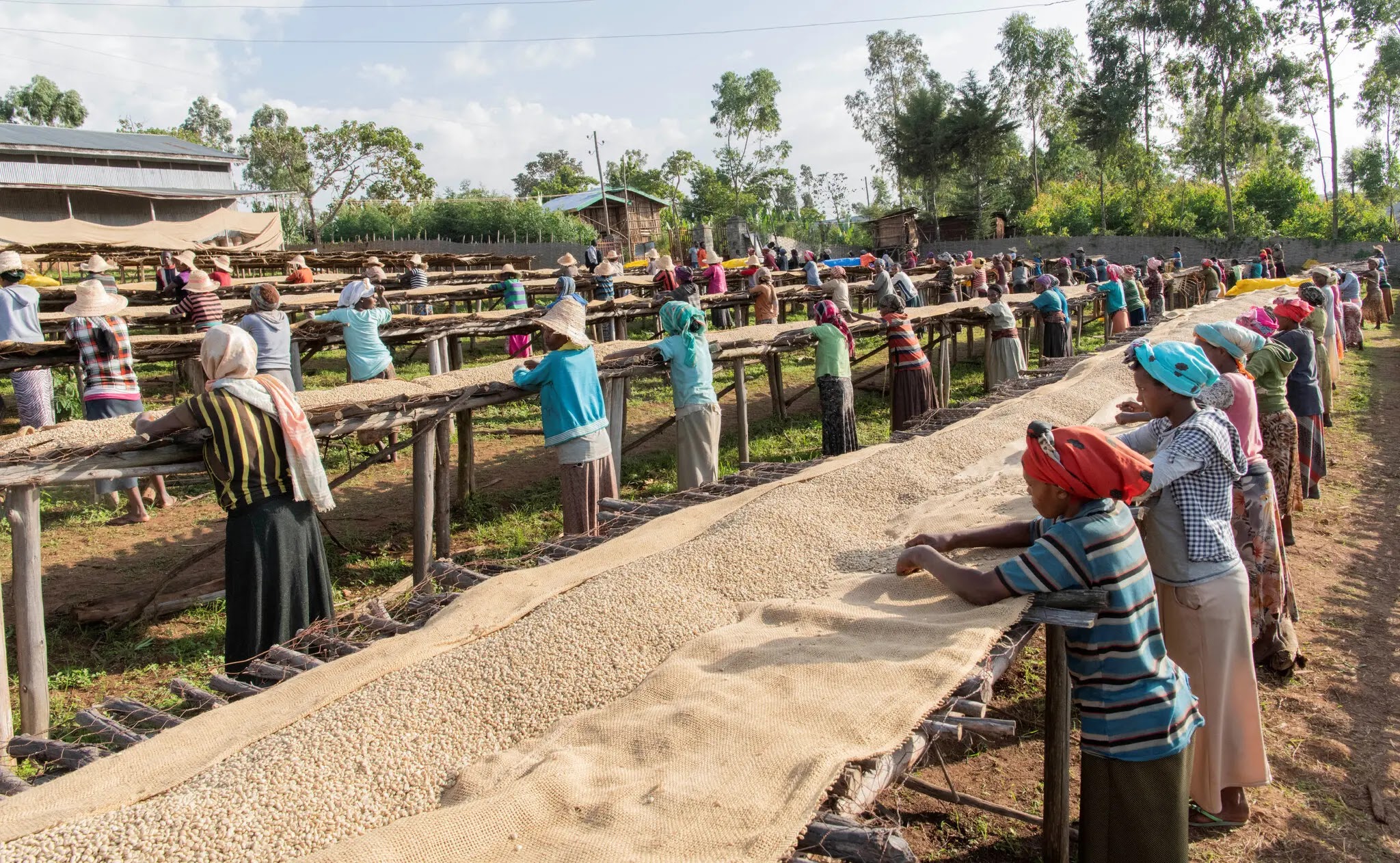
Ethiopian coffee farmers take pride in their high-quality beans, a result of exceptional heirloom varieties, high altitudes and traditional farming practices.

In the southwestern Jimma Highlands, farmers like Zinabu Abadura say most growers follow a longstanding unwritten rule against cutting trees.

Mr. Abadura, who sells directly to informal middlemen, said his farm has not yet been mapped. Most farmers in his area live off their coffee proceeds and cannot afford disruptions or additional expenses. “Life will be difficult,” when the new European rule comes into force, he said.

Farm workers prepared coffee beans for roasting at a cooperative in Sidama.Credit...Maheder Haileselassie/Reuters


But while the new E.U. standards could reorder the Ethiopian coffee sector, analysts say, they probably will not halt sales.

Countries like China offer alternative, less-rigid markets. And Ethiopians themselves are big coffee drinkers. Hospitality is incomplete without a coffee ceremony, where hosts roast, grind and brew beans in front of their guests. About half of the country’s yearly coffee production stays at home.

But Tsegaye Anebo, who heads the Sidama Coffee Union, which represents 70,000 farmers, said pivoting to new markets would be disruptive in the short term. He noted that his region’s Sidamo variety, distinctive for its fruity tones, was a favorite in wealthy Europe. And that means premium prices.

Giving up on the E.U. market, he said, is not an option.

“We need the E.U.,” Mr. Anebo said. “But they also need us because they can’t find our coffee anywhere.”

Munira Abdelmenan contributed reporting.

Wednesday, July 24, 2024

Deslizamentos de terra na Etiópia deixam ao menos 229 mortos


 Segundo deslizamento foi o mais trágico e levou a vida de quem foi prestar socorro aos primeiros atingidos


Desastre começou no domingo à noite, em zona rural ao sul do país; segundo deslocamento de terra na segunda-feira de manhã vitimou equipes de resgate e famílias em busca de sobreviventes e desaparecidos.


Pelo menos 229 pessoas morreram após deslizamentos de terra no distrito de Gofa, no sul da Etiópia, iniciados na noite de domingo (21/07), informaram as autoridades locais.

A tragédia aconteceu em uma área rural, montanhosa e isolada, a mais de 450 quilômetros da capital etíope, Adis Abeba, após fortes chuvas atingirem a região.

Na manhã da segunda-feira, moradores e a polícia se reuniram no local para tentar salvar as vítimas do primeiro deslizamento. Foi então que um segundo deslizamento aconteceu, e as pessoas que estavam ali morreram, informou Kassahun Abayneh, porta-voz do distrito de Gofa.

Meskir Mitku, administrador-geral do distrito, afirmou à emissora estatal etíope que mulheres, crianças e policiais locais estão entre os mortos. "O número de mortos aumentou depois que as pessoas que vieram resgatar também ficaram presas", lamentou.

À medida que a buscas continuam, o número de vítimas dos dois deslizamentos ainda pode mudar, disse à agência Reuters um funcionário do governo, nesta terça-feira (23/07).

"Ainda estamos cavando"

Imagens publicadas pela administração local mostram pessoas desenterrando corpos com pás e com as mãos, carregando corpos em macas improvisadas, alguns embrulhados em plástico.

"Inicialmente, quatro famílias foram afetadas pelo deslizamento de terra e, posteriormente, as famílias da área foram mobilizadas para salvar vidas", disse à AFP Firaol Bekele, diretor na Comissão Etíope de Gestão de Risco de Desastres.

"Estamos em forte solidariedade com o povo e o governo da Etiópia, à medida que os esforços de resgate continuam para encontrar desaparecidos e ajudar os deslocados", disse o presidente da União Africana, Moussa Faki Mahamat, na rede social X.

O chefe da Organização Mundial da Saúde, Tedros Adhanom Ghebreyesus, que é etíope, disse que uma equipe da OMS foi enviada para apoiar os afetados pela tragédia.

A Etiópia, segundo país mais populoso da África, com cerca de 120 milhões de pessoas, é altamente vulnerável a catástrofes climáticas, incluindo inundações e secas.

"À medida que a região continua a enfrentar os duros impactos das mudanças climáticas, pedimos a todos que se mantenham vigilantes e sigam protocolos de segurança para proteger vidas e prevenir futuras tragédias", disse Workneh Gebeyehu, secretário executivo da Autoridade Intergovernamental para o Desenvolvimento, bloco comercial regional.

sf/ra (Reuters, AFP)


Tuesday, September 12, 2023

Tempestade deixa 2.000 mortos, 10.000 desaparecidos e cria “cidade fantasma” na Líbia


Número de mortos por tempestade na Líbia sobe para 5.200. 


Tempestade Daniel cruzou o Mediterrâneo e causou enchentes na Líbia Reuters 


Hamdi AlkhshaliMostafa SalemKareem El Damanhouryda CNN


Cerca de 2.000 pessoas morreram e 10.000 estão desaparecidas após as chuvas provocadas pela tempestade Daniel causarem o rompimento de duas barragens no nordeste da Líbia, fazendo com que a água fluísse para áreas já inundadas.

“O número de mortos é enorme e cerca de 10.000 estão desaparecidos”, disse Tamer Ramadan, chefe da delegação da Federação Internacional das Sociedades da Cruz Vermelha e do Crescente Vermelho (FICV) na Líbia, durante uma conferência de imprensa em Genebra, nesta terça-feira (12).

Cerca de 6.000 pessoas estão desaparecidas só na cidade de Derna, disse Othman Abduljalil, ministro da Saúde do governo apoiado pelo parlamento oriental da Líbia, à TV Almasar da Líbia.


Abduljalil, ministro da Saúde do governo apoiado pelo parlamento oriental da Líbia, visitou Derna, a cidade mais atingida do país, na segunda-feira (12), descrevendo partes dela como uma “cidade fantasma”.

“A situação [em Derna] era catastrófica. Os corpos continuam espalhados em muitos lugares”, disse Abduljalil à TV Almasar da Líbia.

“Há famílias ainda presas dentro de suas casas e há vítimas sob os escombros. Presumo que as pessoas tenham sido arrastadas para o mar e amanhã (terça-feira) de manhã encontraremos muitas delas”, disse ele.

Derna é apenas uma área afetada pelas inundações que varreram várias cidades no nordeste do país, na costa do Mar Mediterrâneo.

A chuva é o resultado de um sistema muito forte de baixa pressão que provocou inundações catastróficas na Grécia na semana passada e deslocou-se para o Mediterrâneo antes de se transformar num ciclone tropical conhecido como Medicane (do inglês, furacão do Mediterrâneo). O sistema climático é semelhante às tempestades tropicais e furacões no Atlântico ou aos tufões no Pacífico.

Anteriormente, a Cruz Vermelha da Líbia estimou que mais de 300 pessoas morreram em Derna, de acordo com uma publicação nas redes sociais.

Ahmed Mismari, porta-voz do Exército Nacional da Líbia (LNA), baseado no leste, disse que duas barragens ruíram sob a pressão das inundações.

“Como consequência, três pontes foram destruídas. A água corrente levou bairros inteiros, acabando por depositá-los no mar”, disse ele.

O chefe da autoridade de Emergência e Ambulâncias da Líbia, Osama Aly, disse à CNN que após o rompimento da barragem “toda a água foi direcionada para uma área perto de Derna, que é uma área costeira montanhosa”.

As casas nos vales foram arrastadas por fortes correntes lamacentas que transportavam veículos e detritos, acrescentou. As linhas telefônicas na cidade também caíram, complicando os esforços de resgate, disse Aly, com os trabalhadores impossibilitados de entrar em Derna devido à forte destruição.

Aly disse que as autoridades não previram a escala do desastre.

“As condições meteorológicas não foram bem estudadas, os níveis da água do mar e das chuvas [não foram estudados], as velocidades do vento, não houve evacuação de famílias que poderiam estar no caminho da tempestade e nos vales”, disse Aly.

“A Líbia não estava preparada para uma catástrofe como esta. Nunca testemunhou esse nível de catástrofe antes. Admitimos que houve deficiências, embora esta seja a primeira vez que enfrentamos esse nível de catástrofe”, disse Aly ao canal Al Hurra anteriormente.

Mismari, porta-voz do LNA, disse que as inundações afetaram várias cidades, incluindo Al-Bayda, Al-Marj, Tobruk, Takenis, Al-Bayada e Battah, bem como a costa oriental até Benghazi.


‘Inundações sem precedentes’

A Líbia, um país de seis milhões de habitantes, está dividida entre facções em conflito desde 2014, após a revolta de 2011 apoiada pela Otan contra Muammar Gadhafi.

O chefe do governo apoiado pelo parlamento oriental da Líbia, Osama Hamad, descreveu a situação como “catastrófica e sem precedentes”, de acordo com um relatório da organização de notícias estatal Agência de Notícias da Líbia (LANA).

Imagens compartilhadas nas redes sociais mostraram carros submersos, prédios desabados e torrentes de água correndo pelas ruas.

Hospitais na cidade oriental de Bayda foram evacuados após graves inundações causadas por chuvas causadas por uma forte tempestade, conforme mostraram vídeos compartilhados pelo Centro Médico de Bayda no Facebook.

“As Nações Unidas na Líbia acompanham de perto a emergência causada pelas condições meteorológicas severas na região oriental do país”, disse a Missão de Apoio das Nações Unidas na Líbia numa publicação no X, anteriormente chamado de Twitter.

Vários países enviaram as suas condolências e ofereceram ajuda à Líbia enquanto as equipas de resgate lutam para encontrar sobreviventes sob os escombros e escombros.

Aviões turcos que entregam ajuda humanitária chegaram à Líbia, segundo a Autoridade de Gestão de Emergências da Turquia (AFAD) nesta terça-feira (12).

O presidente turco, Recep Tayyip Erdogan, disse que o país enviaria 168 equipes de busca e resgate e ajuda humanitária para Benghazi, segundo a agência de notícias estatal Anadoulu Agency na terça-feira.

A Embaixada dos EUA na Líbia disse no X, que estava em “contato próximo com as Nações Unidas e com as autoridades na Líbia para determinar a rapidez com que podemos levar a assistência onde é mais necessária”.

O presidente dos Emirados Árabes Unidos, Zayed Al Nahyan, ordenou o envio de ajuda e equipes de busca e resgate, ao mesmo tempo que oferece suas condolências às pessoas afetadas pela catástrofe, informou a agência de notícias estatal.


Tuesday, October 18, 2022

Nigeria floods: 'Overwhelming' disaster leaves more than 600 people dead


By Ishaq Khalid & Elsa Maishman
BBC News, Abuja & London

Recent flooding in Nigeria has become an "overwhelming" disaster, and many states were not properly prepared for them despite warnings, the minister for disaster management has said.

More than 600 people have died in the worst flooding the West African nation has seen in a decade.

Some 1.3 million people have been displaced, and more than 200,000 homes have been destroyed.

Flooding is expected to continue until the end of November.

Nigeria is used to seasonal flooding, but this year has been significantly worse than usual.

The government has said unusually heavy rains and climate change are to blame.

 The emergency release of excess water from dams both in Nigeria and in neighbouring Cameroon was another key factor causing devastating flooding.

Experts also say poor planning and infrastructure have exacerbated the damage.


Since the flooding began in early summer, large swathes of farmland have been destroyed.

There are concerns about increased spread of disease, and food and fuel supplies have also been disrupted.

In a press conference on Sunday, Nigeria's minister for humanitarian affairs and disaster management, Sadiya Umar Farouk, called on local authorities to evacuate people living in the most high-risk areas.

Authorities are already providing food and other support to those affected, she said.

She added that despite ''concerted efforts'' and early warnings, many state governments "did not prepare" for the flooding.

The disaster has affected 27 of Nigeria's 36 states.

Part of the problem is that people return to their homes on flood plains each year after the water levels subside.

Many do not have the means to relocate.

Nigeria's economy has been battered in the past year, with inflation at an all-time high and many communities struggling to cope.

The World Food Programme and the UN's Food and Agriculture Organisation said last month that Nigeria was among six countries facing a high risk of catastrophic levels of hunger.

Nigeria's meteorological agency has warned that the flooding could continue until the end of November in some states in the south of the country, including Anambra, Delta, Rivers, Cross River and Bayelsa.

Tuesday, June 8, 2010

China's 'land grab' could be a development opportunity for African agriculture


by Doug Saunders

What if Beijing’s ‘invasion’ could be a major development opportunity for farmers in Africa?

In the fertile lands south of the Sahara, the huge green apparitions have become an increasingly familiar sight. After crossing the long stretches of the dun-coloured wasteland and the tiny, emaciated peasant plots that make up much of Africa’s countryside, you’re suddenly confronted with a huge expanse of green, robust crops doused in modern irrigation, worked with tractors and scattered with scores of field workers.

Here is the most visible face of Beijing’s powerful presence in Africa. Virtually unnoticed by people outside, Chinese companies have spent the past two years accumulating millions of hectares of African farmland.

Since 2008, when worldwide food shortages and a boom in biofuels suddenly made farming an attractive target for investment again, at least 20 million hectares – and possibly as much as 100 million – have been leased by foreigners (actual buying is rare) in Africa. On one hand, you can see the appeal: Africa has the cheapest arable land in the world, valued at an average of $800 a hectare.

Many of these deals are being done by China – how much, we don’t know, because record-keeping is sketchy. Persian Gulf countries and Europeans are also making big agricultural investments in Africa, but China’s getting the attention because it’s moved in with so much money and because it’s a poor and authoritarian developing country whose motives and methods are widely distrusted.

Indeed, if you picked up an African newspaper this week, you’d likely have seen cries of protest at this Chinese incursion, one that’s being portrayed as an “African land grab” and a “new scramble for Africa” – both references to Europe’s catastrophic colonial theft of African resources in the past two centuries. A coalition of activist groups has organized to fight such deals and keep the land in African hands.

But it’s worth taking a second look. People see the Chinese as moving into Africa, kicking poor farmers off their land, and growing food to be shipped back to China for domestic consumption. This seems unlikely, however. China already produces far more food than it needs, and its agricultural productivity is increasing. What it does have is $2-trillion (U.S.) in foreign-exchange reserves that it realizes it ought to invest more widely. African farms are a great bargain for investors who don’t mind risk; they can be turned into high-output and, therefore, high-profit operations.

Scholars who’ve examined China’s Africa policy have found not a desire for immediate returns but a longer-term interest in developing the continent’s infrastructure, training, management and investment to the point that yields will be far higher.

This happens to be exactly what African farms need. Whether someone from another continent can deliver it is an open question, but we shouldn’t be so quick to assume the worst.

Hunger and malnutrition afflict most of Africa’s countries, which, despite having some of the most fertile land in the world, are net importers of food. This is purely a matter of productivity. In crops such as corn, African farms are typically producing between 30 and 60 bushels a hectare; North American and European farms get 120 to 160 bushels from the same hectare because of better technology and investment.

We have just lived through a 15-year period during which per capita African food production fell by 8 per cent, while it increased in Asia by more than 25 per cent. If what happened in Europe a century ago and what’s happening in Asia now can be made to happen in Africa, then one of the world’s most serious problems could be solved.

The only major analysis of foreign farm investment in Africa was recently completed by Lorenzo Cotula and his colleagues at the London-based International Institute for Environment and Development. Titled Land Grab or Development Opportunity, it found that, on the whole, there can be much more of the latter than the former if the deals are done right.

The result could be something like the shift that transformed European farming a century and a half ago: a move from hand-to-mouth subsistence farming to commercial farming that produces five times more food, employs many more people at far better wages than peasant earnings, and puts an end to rural poverty, which is currently the world’s largest killer of people.

Ugandan development economist Dick Kamuganga found that, if deals with foreigners are made to contract out the farming itself to local small-hold farmers (a practice that economists generally agree produces higher yields anyway), the result could “deliver the investment capital, technical know-how, jobs to local farmers and predictable food security for Africa.” If it takes a Chinese invasion to do it, it still might be worth it.

China's 'land grab' could be a development opportunity for African agriculture


by Doug Saunders

What if Beijing’s ‘invasion’ could be a major development opportunity for farmers in Africa?

In the fertile lands south of the Sahara, the huge green apparitions have become an increasingly familiar sight. After crossing the long stretches of the dun-coloured wasteland and the tiny, emaciated peasant plots that make up much of Africa’s countryside, you’re suddenly confronted with a huge expanse of green, robust crops doused in modern irrigation, worked with tractors and scattered with scores of field workers.

Here is the most visible face of Beijing’s powerful presence in Africa. Virtually unnoticed by people outside, Chinese companies have spent the past two years accumulating millions of hectares of African farmland.

Since 2008, when worldwide food shortages and a boom in biofuels suddenly made farming an attractive target for investment again, at least 20 million hectares – and possibly as much as 100 million – have been leased by foreigners (actual buying is rare) in Africa. On one hand, you can see the appeal: Africa has the cheapest arable land in the world, valued at an average of $800 a hectare.

Many of these deals are being done by China – how much, we don’t know, because record-keeping is sketchy. Persian Gulf countries and Europeans are also making big agricultural investments in Africa, but China’s getting the attention because it’s moved in with so much money and because it’s a poor and authoritarian developing country whose motives and methods are widely distrusted.

Indeed, if you picked up an African newspaper this week, you’d likely have seen cries of protest at this Chinese incursion, one that’s being portrayed as an “African land grab” and a “new scramble for Africa” – both references to Europe’s catastrophic colonial theft of African resources in the past two centuries. A coalition of activist groups has organized to fight such deals and keep the land in African hands.

But it’s worth taking a second look. People see the Chinese as moving into Africa, kicking poor farmers off their land, and growing food to be shipped back to China for domestic consumption. This seems unlikely, however. China already produces far more food than it needs, and its agricultural productivity is increasing. What it does have is $2-trillion (U.S.) in foreign-exchange reserves that it realizes it ought to invest more widely. African farms are a great bargain for investors who don’t mind risk; they can be turned into high-output and, therefore, high-profit operations.

Scholars who’ve examined China’s Africa policy have found not a desire for immediate returns but a longer-term interest in developing the continent’s infrastructure, training, management and investment to the point that yields will be far higher.

This happens to be exactly what African farms need. Whether someone from another continent can deliver it is an open question, but we shouldn’t be so quick to assume the worst.

Hunger and malnutrition afflict most of Africa’s countries, which, despite having some of the most fertile land in the world, are net importers of food. This is purely a matter of productivity. In crops such as corn, African farms are typically producing between 30 and 60 bushels a hectare; North American and European farms get 120 to 160 bushels from the same hectare because of better technology and investment.

We have just lived through a 15-year period during which per capita African food production fell by 8 per cent, while it increased in Asia by more than 25 per cent. If what happened in Europe a century ago and what’s happening in Asia now can be made to happen in Africa, then one of the world’s most serious problems could be solved.

The only major analysis of foreign farm investment in Africa was recently completed by Lorenzo Cotula and his colleagues at the London-based International Institute for Environment and Development. Titled Land Grab or Development Opportunity, it found that, on the whole, there can be much more of the latter than the former if the deals are done right.

The result could be something like the shift that transformed European farming a century and a half ago: a move from hand-to-mouth subsistence farming to commercial farming that produces five times more food, employs many more people at far better wages than peasant earnings, and puts an end to rural poverty, which is currently the world’s largest killer of people.

Ugandan development economist Dick Kamuganga found that, if deals with foreigners are made to contract out the farming itself to local small-hold farmers (a practice that economists generally agree produces higher yields anyway), the result could “deliver the investment capital, technical know-how, jobs to local farmers and predictable food security for Africa.” If it takes a Chinese invasion to do it, it still might be worth it.

Saturday, May 15, 2010

Zimbabue vai produzir etanol para exportação


O Zimbabue pretende se tornar o maior produtor de cana-de-açúcar da África, produzindo um bilhão de litros de etanol por ano até o final da próxima década e, consequentemente, exportando o biocombustível para outros países do continente africano. As informações são do grupo zimbabueano Boabab Energy, responsável pelo projeto.

Eduardo Leão de Sousa, diretor executivo da União da Indústria de Cana-de-Açúcar (Unica), confirma que o Zimbábue tem potencial para se tornar um dos maiores produtores de cana-de-açúcar no mundo. "Assim como o Brasil, o Zimbábue e a maioria dos países africanos possuem condições agroclimáticas muito boas para a produção de cana", destaca.

Dados do estudo Global Agro-Ecological Zones Assessment: Methodology and Results, avalisam os argumentos. De acordo com o trabalho desenvolvido pelo pesquisador austríaco Günther Fischer, ligado ao Instituto Internacional de Análise de Sistemas Aplicados (IIASA, em inglês) em parceria com a Organização das Nações Unidas para a Agricultura e a Alimentação (FAO), o potencial de área agricultável para a produção de cana no continente africano é de 81 milhões de hectares. Ou seja, dez vezes a área total utilizada no Brasil para a cultura da cana atualmente.

Para consolidar o mercado de biocombustíveis no Zimbábue, alcançando um equilíbrio entre a produção e o consumo, o diretor executivo da UNICA ressalta "a importância da criação de um ambiente regulatório, além dos investimentos nas técnicas e tecnologias de plantio. A mistura mandatória de etanol na gasolina seria um bom começo".

Esta também seria uma medida importante para ajudar a transformar o etanol em commodity global. "Com um numero cada vez maior de países fabricando etanol, diminuirá o risco de uma eventual falta de oferta do produto no mercado internacional em decorrência de problemas climáticos ocorridos em outros países, que prejudiquem a safra de cana e a produção de etanol, por exemplo", explica Sousa.

O Boabab Energy informa que, em dez anos, o destino mais provável das exportações de etanol zimbabueano será a África do Sul. Dados da empresa indicam que o mercado sul-africano deverá consumir anualmente cerca de 760 milhões de litros de etanol. Isso, graças à política daquele país que determina a mistura de 8% de etanol aos combustíveis fósseis, derivados do petróleo.

O projeto de produção de um combustível renovável no Zimbábue terá duas etapas. Inicialmente será criada uma área de 12 mil hectares (ha) de cana no estado de Chisumbanje, região sudeste do país. Posteriormente, as plantações de cana serão expandidas para 40 mil ha. O volume de investimento total previsto no projeto será de US$ 220 milhões. As informações são União da União da Indústria de Cana-de-Açúcar (Unica).

Zimbabue vai produzir etanol para exportação


O Zimbabue pretende se tornar o maior produtor de cana-de-açúcar da África, produzindo um bilhão de litros de etanol por ano até o final da próxima década e, consequentemente, exportando o biocombustível para outros países do continente africano. As informações são do grupo zimbabueano Boabab Energy, responsável pelo projeto.

Eduardo Leão de Sousa, diretor executivo da União da Indústria de Cana-de-Açúcar (Unica), confirma que o Zimbábue tem potencial para se tornar um dos maiores produtores de cana-de-açúcar no mundo. "Assim como o Brasil, o Zimbábue e a maioria dos países africanos possuem condições agroclimáticas muito boas para a produção de cana", destaca.

Dados do estudo Global Agro-Ecological Zones Assessment: Methodology and Results, avalisam os argumentos. De acordo com o trabalho desenvolvido pelo pesquisador austríaco Günther Fischer, ligado ao Instituto Internacional de Análise de Sistemas Aplicados (IIASA, em inglês) em parceria com a Organização das Nações Unidas para a Agricultura e a Alimentação (FAO), o potencial de área agricultável para a produção de cana no continente africano é de 81 milhões de hectares. Ou seja, dez vezes a área total utilizada no Brasil para a cultura da cana atualmente.

Para consolidar o mercado de biocombustíveis no Zimbábue, alcançando um equilíbrio entre a produção e o consumo, o diretor executivo da UNICA ressalta "a importância da criação de um ambiente regulatório, além dos investimentos nas técnicas e tecnologias de plantio. A mistura mandatória de etanol na gasolina seria um bom começo".

Esta também seria uma medida importante para ajudar a transformar o etanol em commodity global. "Com um numero cada vez maior de países fabricando etanol, diminuirá o risco de uma eventual falta de oferta do produto no mercado internacional em decorrência de problemas climáticos ocorridos em outros países, que prejudiquem a safra de cana e a produção de etanol, por exemplo", explica Sousa.

O Boabab Energy informa que, em dez anos, o destino mais provável das exportações de etanol zimbabueano será a África do Sul. Dados da empresa indicam que o mercado sul-africano deverá consumir anualmente cerca de 760 milhões de litros de etanol. Isso, graças à política daquele país que determina a mistura de 8% de etanol aos combustíveis fósseis, derivados do petróleo.

O projeto de produção de um combustível renovável no Zimbábue terá duas etapas. Inicialmente será criada uma área de 12 mil hectares (ha) de cana no estado de Chisumbanje, região sudeste do país. Posteriormente, as plantações de cana serão expandidas para 40 mil ha. O volume de investimento total previsto no projeto será de US$ 220 milhões. As informações são União da União da Indústria de Cana-de-Açúcar (Unica).

Saturday, April 3, 2010

Angola approves biofuel law


Angola's parliament has approved a law meant to support biofuel production, as the government tries to diversify the economy which currently depends on oil, national radio said.

"Biofuels will create jobs and a renewable supply of energy for the future," oil minister Jose Botelho de Vasconcelos told parliament, in remarks broadcast on radio.

The law sets out rules for producing biofuels and regulates the role of foreigners in the industry.

Agriculture Minister Afonso Pedro Kanga noted concerns that developping biofuels could harm Angola's efforts to revive food crops, after most of the nation's farms were abandoned during the 27-year civil war that ended in 2002.

He told the lawmakers that only "marginal" lands would be allowed to produce biofuels, saying the most fertile lands would be reserved for food production.

The UN Food and Agriculture Office last year voiced concern about foreign investors leasing African lands to produce crops for export, at the expense of water and food supplies for locals.

Under the new law, foreign companies that invest in biofuels will have to ensure that the local populations have access to water, basic services and medical care.

Foreign firms will also be required to sell a portion of their biofuels to the state oil company Sonangol to supply the local market.

Although Angola vies with Nigeria as Africa's top oil producer, it does not refine enough fuel to meet the national demand.

Angola approves biofuel law


Angola's parliament has approved a law meant to support biofuel production, as the government tries to diversify the economy which currently depends on oil, national radio said.

"Biofuels will create jobs and a renewable supply of energy for the future," oil minister Jose Botelho de Vasconcelos told parliament, in remarks broadcast on radio.

The law sets out rules for producing biofuels and regulates the role of foreigners in the industry.

Agriculture Minister Afonso Pedro Kanga noted concerns that developping biofuels could harm Angola's efforts to revive food crops, after most of the nation's farms were abandoned during the 27-year civil war that ended in 2002.

He told the lawmakers that only "marginal" lands would be allowed to produce biofuels, saying the most fertile lands would be reserved for food production.

The UN Food and Agriculture Office last year voiced concern about foreign investors leasing African lands to produce crops for export, at the expense of water and food supplies for locals.

Under the new law, foreign companies that invest in biofuels will have to ensure that the local populations have access to water, basic services and medical care.

Foreign firms will also be required to sell a portion of their biofuels to the state oil company Sonangol to supply the local market.

Although Angola vies with Nigeria as Africa's top oil producer, it does not refine enough fuel to meet the national demand.

Europeans fish for biofuels in Senegal


Embarking on research for our new Senegal briefings, I wondered whether the mellifluous French language might bring a touch of poetry to the clumsy phraseology of the Millennium Development Goals or the National Adaptation Programmes of Action.

It doesn’t – and I’ll spare you the Gallic tongue-twisters. Instead I invite you to grapple with Le Programme National Biocarburant and La Grande Offensive Agricole pour la Nourriture et l’Abondance. These are the concurrent but somewhat contradictory government policies for rural economic development in Senegal.

The octogenarian president, Abdoulaye Wade, doesn’t go in for incremental strategies. Not for nothing is there a section on the front page of his government’s website reserved for Grands Projets.

Inspired by the Brazilian model, Senegal seized on Biocarburant in 2006 as an escape route from crippling fuel import bills. The biofuels plan envisaged that an average of 1,000 hectares in every rural district would be planted with jatropha.

Such was the scale of this ambition that some analysts forecast that Senegal could become a net exporter of fuel. There was talk of African countries forming a “green OPEC”.

Of course that was at the height of the craze for biofuels for which Senegal was by no means the only addict. Within months commodity markets took fright at the idea of food-for-fuel and prices rocketed. Dakar was convulsed in riots as the poor could no longer afford to eat.

Again influenced by radical ideology emerging from South America, in 2008 President Wade moved on to La Grande Offensive, another incredibly ambitious plan. At that time importing 60% of its food needs, Senegal was to be transformed to self-sufficiency by 2015.

This laudable vision has not been supported by the logical step of snuffing out the jatropha initiative. On the contrary, President Wade retains his missionary zeal. Visiting Brazil less than a year ago, he pronounced that, under the leadership of Senegal, “biofuels are going to provoke a revolution in Africa.”

A UK company, Crest Global Green Energy, has signed a deal with the Senegal government to access 100,000 hectares for production and export of biodiesel. A Norwegian company, Agro-Africa, is eyeing up a staggering 200,000 hectares.

These two contracts alone would accomplish almost the whole of the original 2006 target. Any reassurance that jatropha will be confined to marginal land is surely the thin end of the wedge. If the plant offers a return from poor quality land, I can see no mechanism for preventing farmers from seeking even greater returns at the expense of their food crops.

The Europeans have already devastated Senegal’s fishing grounds. Now they’re threatening to trawl the arable land. They need biodiesel to meet the EU target for 10% of transport fuels to be renewable by 2020.

Senegal is not Brazil. Attempting the trick of food self-sufficiency in parallel with biofuel exports is a risky gamble for a country ranked 166 in the UN Human Development Index.

There’s some comfort that jatropha biodiesel is not yet a fully convincing technology for industrial volume. But if the oil price edges towards $100 a barrel, investment in new research will lurch forward.

Europeans fish for biofuels in Senegal


Embarking on research for our new Senegal briefings, I wondered whether the mellifluous French language might bring a touch of poetry to the clumsy phraseology of the Millennium Development Goals or the National Adaptation Programmes of Action.

It doesn’t – and I’ll spare you the Gallic tongue-twisters. Instead I invite you to grapple with Le Programme National Biocarburant and La Grande Offensive Agricole pour la Nourriture et l’Abondance. These are the concurrent but somewhat contradictory government policies for rural economic development in Senegal.

The octogenarian president, Abdoulaye Wade, doesn’t go in for incremental strategies. Not for nothing is there a section on the front page of his government’s website reserved for Grands Projets.

Inspired by the Brazilian model, Senegal seized on Biocarburant in 2006 as an escape route from crippling fuel import bills. The biofuels plan envisaged that an average of 1,000 hectares in every rural district would be planted with jatropha.

Such was the scale of this ambition that some analysts forecast that Senegal could become a net exporter of fuel. There was talk of African countries forming a “green OPEC”.

Of course that was at the height of the craze for biofuels for which Senegal was by no means the only addict. Within months commodity markets took fright at the idea of food-for-fuel and prices rocketed. Dakar was convulsed in riots as the poor could no longer afford to eat.

Again influenced by radical ideology emerging from South America, in 2008 President Wade moved on to La Grande Offensive, another incredibly ambitious plan. At that time importing 60% of its food needs, Senegal was to be transformed to self-sufficiency by 2015.

This laudable vision has not been supported by the logical step of snuffing out the jatropha initiative. On the contrary, President Wade retains his missionary zeal. Visiting Brazil less than a year ago, he pronounced that, under the leadership of Senegal, “biofuels are going to provoke a revolution in Africa.”

A UK company, Crest Global Green Energy, has signed a deal with the Senegal government to access 100,000 hectares for production and export of biodiesel. A Norwegian company, Agro-Africa, is eyeing up a staggering 200,000 hectares.

These two contracts alone would accomplish almost the whole of the original 2006 target. Any reassurance that jatropha will be confined to marginal land is surely the thin end of the wedge. If the plant offers a return from poor quality land, I can see no mechanism for preventing farmers from seeking even greater returns at the expense of their food crops.

The Europeans have already devastated Senegal’s fishing grounds. Now they’re threatening to trawl the arable land. They need biodiesel to meet the EU target for 10% of transport fuels to be renewable by 2020.

Senegal is not Brazil. Attempting the trick of food self-sufficiency in parallel with biofuel exports is a risky gamble for a country ranked 166 in the UN Human Development Index.

There’s some comfort that jatropha biodiesel is not yet a fully convincing technology for industrial volume. But if the oil price edges towards $100 a barrel, investment in new research will lurch forward.

French winemakers forecast 30-year low harvest after severe drought and heat

  The extreme heat of the summer weather in France has caused grapes to wilt and be scalded. Photograph: sportpoint/Alamy by   Kim Willsher...