Showing posts with label drinking water supply. Show all posts

Wednesday, January 21, 2026

The world has entered a new era of ‘water bankruptcy’ with irreversible consequences


Meyil sinkhole in Karapinar in the central Anatolian province of Konya, Turkey, on June 24, 2024. Sinkholes have increased in recent years due to drought and overuse of groundwater. Yasin Akgul/AFP/Getty Images

 By 

The world has entered “an era of global water bankruptcy” with irreversible consequences, according to a new United Nations report.

Regions across the world are afflicted by severe water problems: Kabul may be on course to be the first modern city to run out of water. Mexico City is sinking at a rate of around 20 inches a year as the vast aquifer beneath its streets is over-pumped. In the US Southwest, states are locked in a continual battle over the how to share the shrinking water of the drought-stricken Colorado River.

The global situation is so severe that terms like “water crisis” or “water stressed” fail to capture its magnitude, according to the report published Tuesday by the United Nations University and based on a study in the journal Water Resources. 


“If you keep calling this situation a crisis, you’re implying that it’s temporary. It’s a shock. We can mitigate it,” said Kaveh Madani, director of the UN University’s Institute for Water, Environment and Health, and the report’s author.

With bankruptcy, while it’s still vital to fix and mitigate where possible, “you also need to adapt to a new reality… to new conditions that are more restrictive than before,” he told CNN. 

A girl with canisters of water from a water truck, on September 17, 2025 in Kabul, Afghanistan. The city of six million people could run out water by 2030, some experts say.


The concept of water bankruptcy works like this: Nature provides income in the form of rain and snow, but the world is spending more than it receives — extracting from its rivers, lakes, wetlands and underground aquifers at a much faster rate than they are replenished, putting us in debt. Climate change-fueled heat and drought are compounding the problem, reducing available water.

The result is shrinking rivers and lakes, dried-up wetlands, declining aquifers, crumbling land and sinkholes, the creep of desertification, a dearth of snow and melting glaciers. 


The statistics in the report are stark: more than 50% of the planet’s large lakes have lost water since 1990, 70% of major aquifers are in long-term decline, an area of wetlands almost the size of the European Union has been erased over the past 50 years, and glaciers have shrunk 30% since 1970. Even in places where water systems are less strained, pollution is reducing the amount available for drinking.

“Many regions are living beyond their hydrological means” and it’s impossible now to return to conditions that used to exist, Madani said.

It brings human consequences: nearly 4 billion people face water scarcity for at least one month every year. 

Remnants of a boat sit on the dry bed of Lake Urmia in northwestern Iran on December 19, 2025. The lake has shrunk due to drought, river damming and extensive groundwater extraction. Morteza Aminoroayayi/Middle East Images/AFP/Getty Images


Yet, instead of recognizing the problem and adjusting consumption, water is taken for granted and “credit lines keep increasing,” Madani said.

He referred to cities like Los Angeles, Las Vegas and Tehran, where expansion and development have been encouraged, despite limited water supplies. “Everything looks right until it’s not,” and then it’s too late, Madani said.

Some regions are affected more severely, the report noted. The Middle East and North Africa grapple with high water stress and extreme climate vulnerability. 


Parts of South Asia are experiencing chronic declines in water due to groundwater-dependent farming and ballooning urban populations.

The US Southwest is another a hotspot, according to the report. Madani pointed to the Colorado River, where water sharing agreements are based on an environmental situation that no longer exists. Drought has shrunk the river, but it’s not a temporary crisis, he said, “it’s a permanent new condition, and we have less water than before.” 

The Hoover Dam along the Colorado River on March 14, 2025 in Boulder City, Nevada. Kevin Carter/Getty Images


The findings are alarming, but recognizing water bankruptcy can help countries move from short term emergency thinking to long-term strategies to reduce irreversible damage, Madani said.

The report calls for a series of actions, including transforming farming — by far the biggest global user of water — through shifting crops and more efficient irrigation; better water monitoring using AI and remote sensing; reducing pollution; and increasing protection for wetlands and groundwater. 


Water could also be a “bridge in a fragmented world,” as an issue able to transcend political differences, the report authors wrote. “We are seeing more and more countries appreciating the value of it and the importance of it, and that’s what makes me hopeful,” Madani said.

The report’s call to action “rightly centres on long-term recovery as opposed to firefighting water crises,” wrote Richard Allan, a climate science professor at the University of Reading, who was not involved in the research. Limiting the climate change will also be vital to ensuring enough water for people and ecosystems, he told CNN.

Jonathan Paul, associate professor in geoscience at Royal Holloway University, said the report “lays bare, in unambiguous terms, humankind’s mistreatment of water.” But he said the concept of global water bankruptcy is “overstated,” even if many areas are expressing acute water stress.

Madani wants the report to spur action. “By acknowledging the reality of water bankruptcy, we can finally make the hard choices that will protect people, economies, and ecosystems. The longer we delay, the deeper the deficit grows.”

Wednesday, January 14, 2026

The western US is in a snow drought, raising fears for summer water supplies

Snowboarders and skiers stand at the summit of Keystone ski resort in Keystone, Colorado, on December 16, 2025. Hyoung Chang/The Denver Post/Getty Images

 By 

Brad Riesenberg has worked in the winter sports industry for more than 20 years, and he’s never seen a winter with such paltry snowfall and mild temperatures as he has this season.

Riesenberg, who is an owner at Backcountry Snowmobiling in Park City, Utah, said customers have been canceling their tours due to a lack of snow. Snowmobiling requires a thick snowpack at lower elevations in order to be viable, Riesenberg pointed out.

“We’ve lost lots and lots of money and it’s been pretty tough,” he said. “This is up there with some of the worst [winters], if not the worst.” 


Utah is in a snow drought and it’s not alone: Much of the vast, mountainous West is missing its lifeblood — fueled by record-hot temperatures so far this winter. California’s Sierra Nevada Mountains, only recently pasted with heavy snow from atmospheric river storms, are the exception.

And while this is an immediate problem for businesses and active outdoors fans, experts are also worried about bigger implications in the near future.

If the trend continues, it could deepen the West’s long drought, aggravating already contentious negotiations about allocating water along the Colorado River. It could also heighten wildfire risks and reduce water supplies in other areas well beyond the Colorado River Basin.

While there is some snow in the Colorado Rockies, many observing stations that are part of the SNOTEL snow condition monitoring network show record to near-record low levels, below anything seen since the winter of 1980-81, when some of these stations were first installed, said Russ Schumacher, Colorado’s state climatologist. 


“There’s not really anywhere in Colorado that’s doing really well,” Schumacher said. Poor snowfall seasons have happened in the state before, but a “persistent ridge of high pressure” across the West has kept both cold air and snowstorms at bay, he said.

For example, Schumacher said the average temperature in Fort Collins, Colorado, during December blew away the previous record and was equal to the average temperature for the month of March. He said the warmth is dominating weather conversations in the region.

“You can’t not notice when December feels like March,” he said. 


Conditions could turn around in time for a thicker snowpack to yield plenty of spring runoff. But in order to do so, and reach even average snowpack conditions by March, the region would have to see a consistent period of storminess and colder temperatures, lasting on the order of weeks to months, neither of which are currently in the forecast, Schumacher noted.

“The concerns are there for sure, because you don’t want to be sitting at a record low in January, but the end state is not locked in yet,” he said. “Another dry year doesn’t bode well for the Colorado River System.” 


Schumacher’s counterparts in Utah and Arizona are also warily eyeing medium-range weather forecasts for any signs of a change in the weather pattern that would signal an improvement in their water outlook as well.

Erinanne Saffell, the Arizona state climatologist, said Phoenix and Tucson had their hottest Decembers on record, and typically snowy places such as Flagstaff have also been unusually warm and dry. She acknowledged the poor start to the snow season but said there is still time to build up more snow cover. Although, like Schumacher, she noted it would take a significant weather pattern shift to avoid intensifying the region’s long-running drought.

“So we still have January, February and March to get through,” she said, noting that there has been a recent, multi-year trend toward building up a higher snowpack in March.

“We’ll just keep watching this.”

Friday, June 2, 2023

Arizona Limits Construction Around Phoenix as Its Water Supply Dwindles - NYtiems.com


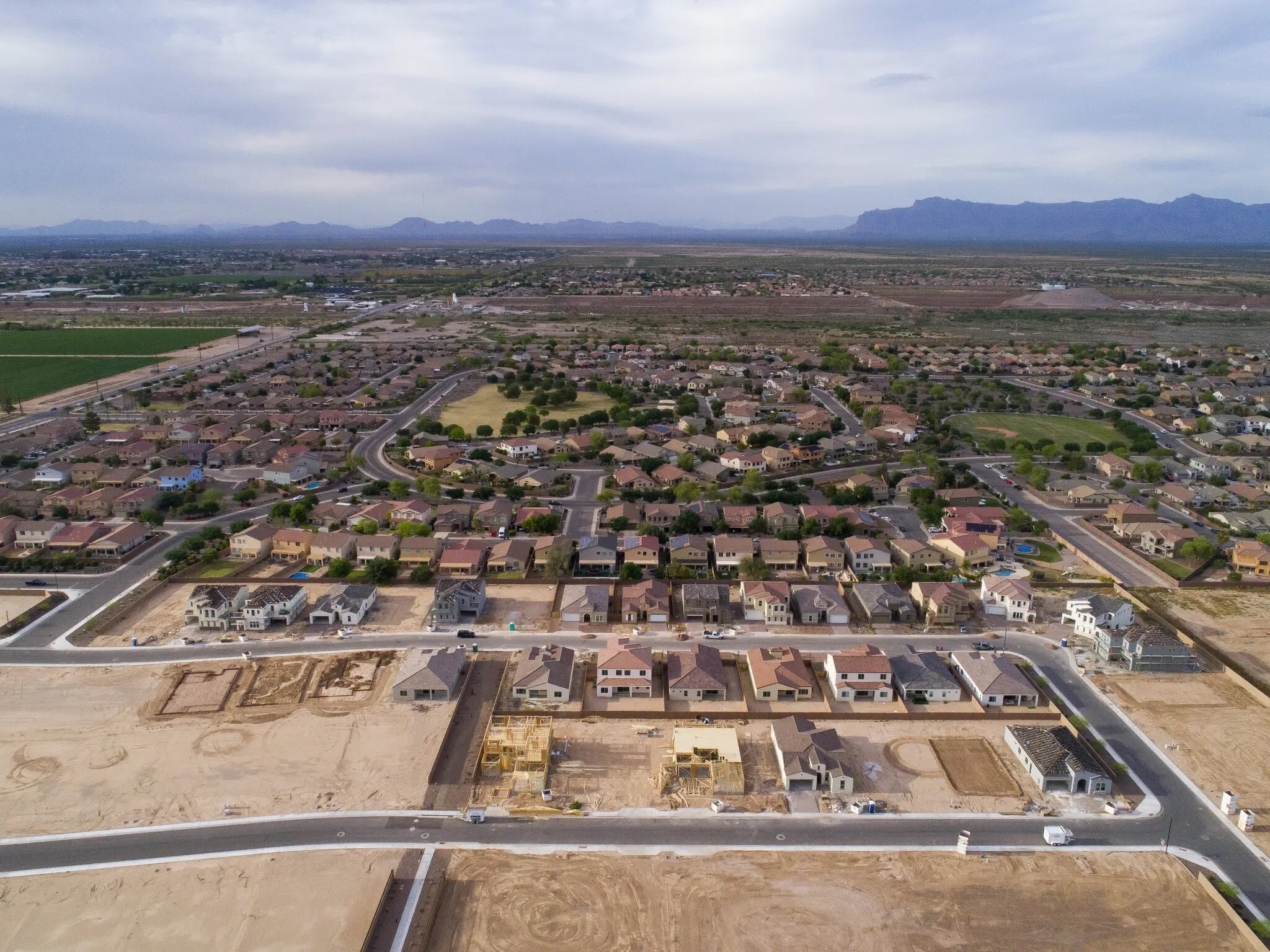
 In what could be a glimpse of the future as climate change batters the West, officials ruled there’s not enough groundwater for projects already approved.

Queen Creek, Ariz., a suburb of Phoenix, is projected to grow to 175,000 people from its current 75,000 — if it can find enough water.Credit...Rebecca Noble for The New York Times

Christopher Flavelle and

Christopher Flavelle reported from Washington and Jack Healy from Phoenix.


 Arizona has determined that there is not enough groundwater for all of the housing construction that has already been approved in the Phoenix area, and will stop developers from building some new subdivisions, a sign of looming trouble in the West and other places where overuse, drought and climate change are straining water supplies.


Link to Article - NYtimes.com - https://www.nytimes.com/2023/06/01/climate/arizona-phoenix-permits-housing-water.html

Friday, October 21, 2022

There's Something in the Water in Virginia. Before You Say 'Yuck,' Wait.


Elena Shao

Virginia doesn’t have a megadrought like some parts of the United States, but it has water problems all the same: Homes and businesses in the Hampton Roads region, in the southeastern corner of the state, are drawing groundwater out faster than it can be replenished. The situation has gotten so bad that the earth is sinking in some places.

Officials, though, think they might have found a solution in the sewers. Every day, the region’s sanitation system takes 1 million gallons of treated wastewater and pumps it back into the Potomac Aquifer, a major source of drinking water for the area. And there are plans to increase that to 100 million gallons in the coming years.

Around the country, cities and towns are increasingly turning to treated wastewater to augment their supplies of drinking water. The number of drinking-water reuse projects has quadrupled over the past two decades, according to data collected by the National Alliance for Water Innovation, a research program funded by the U.S. Department of Energy.

“It is now necessary for us to consider options that would, in previous generations, be considered unthinkable,” said Michael Kiparsky, director of the Wheeler Water Institute at the University of California, Berkeley.

In the case of coastal Virginia, the goal is to stabilize groundwater to address two increasingly urgent problems. First, underground water depletion has led the ground to slowly sink and collapse in some places.

Homes and industries in the area draw around 155 million gallons of groundwater each day. Natural replenishment is much slower in confined aquifers like the Potomac, where layers of impermeable clays and rocks beneath the surface make it hard for rainwater to seep back into the ground.

Even if people stopped drawing groundwater today, it could still take thousands of years for the aquifer to refill, said Mark Bennett, who runs the Virginia and West Virginia Water Science Center for the U.S. Geological Survey.

Meanwhile, without enough water to help support the ground, underlying sediments fall in on themselves and the surface collapses.

The second big problem is that, as more and more freshwater gets pumped out, the loss of pressure has left the aquifer vulnerable to saltwater contamination as denser seawater encroaches underground.

In low-lying coastal areas like Hampton Roads, climate change exacerbates that problem. That’s because as temperatures rise, ocean water expands in volume, causing sea levels to rise. And, glaciers on land melt at a faster rate, adding even more water to the oceans.

That all leads to increased flood risk and helps saltwater intrude into freshwater sources.

A number of cities in the Hampton Roads region, like Virginia Beach and Norfolk, are less than 10 feet above sea level on average. Sea levels have already risen nearly 18 inches in the region in the past century, according to data from the National Oceanic and Atmospheric Administration.

In response to the growing threats, the Hampton Roads Sanitation District, which manages wastewater in the region, began taking a more direct approach to groundwater replenishment in 2018 with a project called the Sustainable Water Initiative for Tomorrow, or SWIFT.

Although other water authorities around the country, such as the Orange County Water District in California, have injected treated wastewater into underground aquifers to serve as barriers against seawater intrusion, the project was the first effort to do so in Virginia.

In fact, the state had no regulatory framework in place to oversee the underground injection of water. So, the sanitation district had to push for legislation to create oversight — an unusual situation, Kiparsky said, because you rarely see water districts asking for more regulation.

Today, the district’s sewage systems capture wastewater and send it through wastewater treatment plants to remove nutrients and bacteria.

Then, each day at the SWIFT research center in Suffolk, Virginia, 1 million gallons of that water goes through additional treatment that disinfects, filters out harmful contaminants and viruses, and brings the water up to drinking quality. The advanced treatment plant also adjusts things like acidity and dissolved oxygen levels so the water is appropriate for the aquifer.

It is essentially a “tricked-out drinking water plant,” said Charles Bott, the district’s director of water technology and research.

The treated water goes into the Potomac Aquifer via a recharge well 12 inches in diameter that releases it at intermittent levels between 500 and 1,400 feet below the surface. The aquifer acts as an environmental buffer, essentially providing another level of treatment as the water filters slowly through the soils, a process that can remove some viruses and micropollutants.

By 2032, the district expects to treat and pump up to 100 million gallons of wastewater each day into the aquifer that would otherwise be released into the Elizabeth, James or York rivers. In addition to shoring up the aquifer, the project should also, when fully implemented, eliminate about 90% of the district’s wastewater discharge.

Turning wastewater into drinkable water is expensive. The next full-scale SWIFT plant, which will treat up to 16 million gallons of wastewater a day, is expected to cost upward of $650 million, funded in part by customer fees and loans from the Environmental Protection Agency. That does not include maintenance and day-to-day operation, which will cost an estimated $7.2 million a year.

But the sanitation district has calculated that putting wastewater through more intense treatment will help it get ahead on the costs of complying with increasingly stringent rules regulating pollution from the hundreds of treatment plants that regularly discharge wastewater into the Chesapeake Bay.

Planners expect the rules, which are mainly focused on excess nutrients that can harm marine life, to become more strict over time, said Jamie Mitchell, the Hampton Roads district’s chief of technical services. It wouldn’t be cost effective to make incremental upgrades “every five or 10 years to address new regulations,” she said.

So far, the system appears to be “a win-win-win situation,” said Kiparsky, because it addressed a range of issues: Land subsidence and saltwater intrusion, nutrient pollution in the Chesapeake Bay and growing costs for the district.

Even though the project is still in the early stages, researchers at the U.S. Geological Survey have already noted slight improvements in the aquifer.

Not long ago, such an idea would probably have been dismissed as too expensive and too unpleasant. Efforts in the 1990s to develop water reuse in San Diego and Los Angeles, for instance, were beaten back by activists who denounced what they called a “toilet to tap” system.

Today, the growing acceptance of wastewater reuse projects reflects a calculus that local governments increasingly have to consider as they confront pressures on water supply from climate change and population growth — even in the regions that don’t face prolonged drought.

There are similar projects in California and other drought-stricken states like Texas that, in some cases, impose mandatory water restrictions on homes and businesses to cut down on consumption. Some of them even directly route treated wastewater for use as drinking water, without an environmental buffer like an aquifer.

One of the big advantages of wastewater, Kiparsky noted, is that there’s always a reliable supply. He said using it to recharge aquifers was a complex but effective way of accomplishing a basic goal: returning water to where it came from.

“It’s closing the loop on the urban water cycle,” he said.


Sunday, August 14, 2022

Martianization - Europe’s rivers run dry as scientists warn drought could be worst in 500 years. The Guardian


Crops, power plants, barge traffic, industry and fish populations devastated by parched waterways


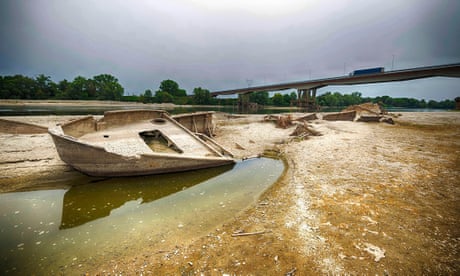
In places, the Loire can now be crossed on foot; France’s longest river has never flowed so slowly. The Rhine is fast becoming impassable to barge traffic. In Italy, the Po is 2 metres lower than normal, crippling crops. Serbia is dredging the Danube.

Across Europe, drought is reducing once-mighty rivers to trickles, with potentially dramatic consequences for industry, freight, energy and food production – just as supply shortages and price rises due to Russia’s invasion of Ukraine bite.

Driven by climate breakdown, an unusually dry winter and spring followed by record-breaking summer temperatures and repeated heatwaves have left Europe’s essential waterways under-replenished and, increasingly, overheated.

With no significant rainfall recorded for almost two months across western, central and southern Europe and none forecast in the near future, meteorologists say the drought could become the continent’s worst in more than 500 years.

“We haven’t analysed fully this year’s event because it is still ongoing,” said Andrea Toreti of the European Commission’s Joint Research Centre. “There were no other events in the past 500 [years] similar to the drought of 2018. But this year, I think, is worse.”

Germany’s Federal Institute of Hydrology (BfG) said the level of the Rhine, whose waters are used for freight transport, irrigation, manufacturing, power generation and drinking, will continue dropping until at least the beginning of next week.

On Friday the water at the critical Kaub marker 50km downstream from Mainz – which measures navigability, rather than the water depth – fell below 40cm, the level at which many shipping firms consider it is no longer economical for barges to operate. It could fall to nearer 30cm over the next few days, the BfG has said.

Many barges, which carry coal for power plants and vital raw materials for industrial giants such as steelmaker Thyssen and chemical giant BASF, are already operating at about 25% capacity to reduce their draft, raising shipping costs up to fivefold.

A vital part of northwest Europe’s economy for centuries, the 760 miles (1,233km) of the Rhine flow from Switzerland through Germany’s industrial heartland before reaching the North Sea at the megaport of Rotterdam.

A total halt in Rhine barge traffic would hit Germany’s – and Europe’s – economy hard: experts have calculated that a six-month suspension in 2018 cost around €5bn (£4.2bn), with low water levels forecast to cost Germany 0.2 points of economic growth this year.

While the EU has said boosting waterborne freight by 25% is one of the bloc’s green transition priorities, Germany is now working to divert it to rail and road – although between 40 and 100 trucks are needed to replace a standard barge load.

France’s rivers might not be such key freight arteries, but they do serve to cool the nuclear plants that produce 70% of the country’s electricity. As prices hit all-time highs, power giant EDF has been forced to reduce output because of the drought.

Strict rules regulate how far nuclear plants can raise river temperatures when they discharge cooling water – and if record low water levels and high air temperatures mean the river is already overheated, they have no option but to cut output. With Europe’s looming energy crisis mounting and the Garonne, Rhône and Loire rivers already too warm to allow cooling water to be discharged, the French nuclear regulator last week allowed five plants to temporarily break the rules.

In Italy, the flow of the parched Po, Italy’s longest river, has fallen to one-tenth of its usual rate, and water levels are 2 metres below normal. With no sustained rainfall in the region since November, corn and risotto rice production have been hard hit.

The Po valley accounts for between 30% and 40% of Italy’s agricultural production, but rice growers in particular have warned that up to 60% of their crop may be lost as paddy fields dry out and are spoiled by seawater sucked in by the low river level.

In the protected wetlands of the river’s delta, near Venice, its high temperature and sluggish flow have reduced the water’s oxygen content to the extent that an estimated 30% of clams growing in the lagoon have already been killed off.

Low river levels and high water temperatures can prove fatal to many species. In Bavaria, the Danube reached 25C last week and could hit 26.5C by mid-month, meaning its oxygen content would fall below six parts per million – fatal for trout.

Freight on the 2,850km of the Danube has also been heavily disrupted, prompting authorities in Serbia, Romania and Bulgaria to start dredging deeper channels while barges carrying mainly fuel for the power generators wait to advance.

Even Norway, which relies on hydropower for about 90% of its electricity generation, has said the unusually low levels of its reservoirs may ultimately oblige it to limit power exports.

Sunday, August 7, 2022

Martianization - Seca histórica atinge metade do México e leva a espiral de violência e desespero


Crise climática impacta chuvas, e dois terços do país enfrentam problemas no fornecimento de água


Maria Abi-HabibBryan Avelar

CIDADE DO MÉXICO | THE NEW YORK TIMES


​O México —ou grande parte do país— está ficando sem água. Uma seca extrema tem deixado as torneiras secas, e quase dois terços dos municípios enfrentam escassez que vem obrigando as pessoas a encarar horas em filas para entregas de água feitas pelo governo em alguns locais.

A falta d’água está tão grave que moradores já fizeram barreiras em rodovias e sequestraram funcionários para exigir mais carregamentos. Os números são mesmo assustadores: em julho, 8 dos 32 estados enfrentaram estiagem de extrema a moderada, levando 1.546 dos 2.463 municípios a enfrentar cortes no fornecimento, segundo a Comissão Nacional de Água.

Em meados de julho, a seca atingia 48% do território do México —no ano passado, a situação afetou 28% do país.

Vincular uma seca isolada à crise climática requer análise, mas cientistas não têm dúvida de que o aquecimento global pode alterar os padrões de chuva no mundo e está elevando a probabilidade de ocorrência de secas.

Do outro lado da fronteira norte, nos últimos anos a maior parte da metade ocidental dos EUA sofre com estiagem de moderada a severa. São as duas décadas mais secas na região em 1.200 anos.

A crise está especialmente aguda em Monterrey, um dos centros econômicos mais importantes do México, com uma região metropolitana de 5 milhões de habitantes. Alguns bairros estão sem água há 75 dias, levando escolas a fechar as portas antes das férias de verão. Um jornalista percorreu várias lojas à procura de água potável, incluindo um supermercado Walmart, em vão.

Baldes estão em falta no comércio ou são vendidos a preços astronômicos, enquanto os habitantes juntam recipientes para coletar a água distribuída por caminhões enviados aos bairros mais afetados. Alguns usam latas de lixo limpas, e crianças lutam para ajudar a carregar a água.

A crise afeta inclusive as regiões de alta renda. "Aqui a gente tem que sair à caça de água", diz Claudia Muñiz, 38, cuja família frequentemente tem passado uma semana sem água corrente. "Num momento de desespero, as pessoas explodem."

Monterrey fica no norte do México e viu sua população crescer nos últimos anos, acompanhando o boom econômico. O clima tipicamente árido da região não ajuda a suprir as necessidades da população, e a crise climática reduz as chuvas já escassas.

Hoje os moradores podem caminhar sobre o leito da represa da barragem de Cerro Prieto, que no passado era uma das maiores fontes de água da cidade e uma importante atração turística, com animados restaurantes à beira da água, pesca, passeios de barco e esqui aquático.

A chuva que caiu em julho em partes do estado de Nuevo León, que faz divisa com o Texas e cuja capital é Monterrey, representou apenas 10% da média mensal registrada desde 1960, segundo Juan Ignacio Barragán Villareal, diretor-geral da agência local de recursos hídricos. "Nem uma gota caiu no estado inteiro em março", diz. Foi o primeiro março sem chuvas desde que se começou a registrar esses dados, em 1960.

Hoje o governo distribui 9 milhões de litros de água por dia para 400 bairros. O motorista de caminhão-pipa Alejandro Casas conta que, quando começou na função há cinco anos, ajudava os bombeiros e era chamado uma ou duas vezes por mês para levar água a um local incendiado. Ele passava muitos dias de trabalho apenas olhando para o telefone.

Mas desde janeiro ele trabalha sem parar, fazendo até dez viagens por dia, para suprir cerca de 200 famílias a cada vez. Quando ele chega a um local, uma longa fila já serpenteia pelas ruas. Pessoas levam recipientes que comportam até 200 litros e passam a tarde sob o sol para receber água só à meia-noite —e ela pode ser a única entregue por até uma semana.

Ninguém policia as filas, por isso é comum ocorrerem brigas, com moradores de outras comunidades tentando se infiltrar. Em maio o caminhão de Casas foi assaltado por jovens que subiram no assento do passageiro e o ameaçaram, exigindo que ele levasse o veículo ao bairro deles. "Se a gente não fosse para onde eles queriam, iam nos sequestrar."

Casas seguiu a ordem, encheu os baldes dos moradores e foi libertado.

Maria de los Angeles, 45, nasceu e cresceu em Ciénega de Flores, cidade próxima a Monterrey. Ela diz que a crise está afetando sua família e seu negócio. "Nunca antes vi isso. Só temos água nas torneiras a cada quatro ou cinco dias", diz.

O viveiro de plantas de jardim é a única fonte de renda de sua família e requer mais água do que a que chega apenas ocasionalmente às torneiras. "Toda semana sou obrigada a comprar um tanque que me custa 1.200 pesos [R$ 300] de um fornecedor particular", diz. É metade de sua receita semanal. "Não aguento mais."

Pequenos e microempresários como ela estão frustrados por serem abandonados à própria sorte, enquanto as grandes indústrias podem operar quase normalmente: as fábricas conseguem receber 50 milhões de metros cúbicos de água por ano, devido a concessões federais que lhes garantem acesso especial aos aquíferos da cidade.

O governo está tendo dificuldade em responder à crise. Para tentar mitigar estiagens futuras, o estado está investindo US$ 97 milhões na construção de uma estação de tratamento de águas servidas e pretende comprar água de uma estação de dessalinização em construção num estado vizinho. Também gastou US$ 82 milhões para alugar mais caminhões, pagar motoristas adicionais e cavar mais poços.

O governador de Nuevo León, Samuel García, recentemente exortou o mundo a agir em conjunto para combater a crise climática. "Ela nos alcançou", escreveu no Twitter. "Hoje precisamos cuidar do ambiente, é uma questão de vida ou morte."

Tradução de Clara Allain


Drone footage shows severe drought hitting river in Brazil – video

  Drone footage from 17 September shows the Araguaia River drying up, as severe drought grips parts of Brazil. The country is preparing for ...