Showing posts with label Amazon deforestation. Show all posts

Friday, September 26, 2025

Native forest logging must end in order to reach Labor’s emissions reduction target, expert says. End old growth logging


Part of Tasmania’s old growth forests. The Climate Change Authority’s report has found that ceasing old-growth logging is a necessary step to meet the lower end of Australia’s emissions targets. Photograph: Rob Blakers/The Guardian

Amazon Brazil
Amazon Brazil

by 


 Murray Watt says ‘it’s not the government’s intention to stop old growth logging’ as Greens and academics press for total halt


The Albanese government is being urged to end old growth logging “at a minimum” in order to meet a 2035 emissions reduction target recommended by the Climate Change Authority.

One of Australia’s most respected forest scientists, Prof David Lindenmayer, of the Australian National University, has also written to the authority questioning why it did not go further in its advice and recommend an end to all native forest logging.

The authority’s report, released last week, said ceasing old growth logging and halving re-clearing rates would be one of the steps required to meet even the lower end of a goal to cut emissions by 62% to 70% by 2035.

The report found that ending old growth logging, reducing other types of native forest harvesting and planting new forests “where it makes sense” could deliver about 6% of the necessary emissions reductions.


Last Friday, a day after the government announced it had accepted that target range, the environment minister, Murray Watt, told ABC radio in Tasmania – where logging of old growth forest continues – “it’s not the government’s intention to stop old growth logging altogether”.

The Greens forests spokesperson, the Tasmanian senator Nick McKim, said the authority’s advice was clear that “even Labor’s bottom-of-the-range target of 62%” could not be met unless old growth logging, at a minimum, ceased.


“Labor needs to announce a date to end old growth logging, and if they’re not going to do that they need to explain where they are going to find the emissions reduction to make up the shortfall,” McKim said.

Some states, such as NSW, already have restrictions on logging identified and mapped old growth forest, which is forest that has either not been logged or cleared previously or where evidence of past disturbance is negligible. But logging of other high conservation value native forest continues.

The Greens position is that all native forest logging should end and it has called on the government to use forthcoming reforms to Australia’s environment laws to ban the practice.

McKim said ending native logging and reining in land-clearing would be one of the cheapest, fastest and most effective ways the government could cut emissions and protect biodiversity.

“You could end native forest logging literally in months and it would have a massive emissions benefit,” he said.

“It would actually save taxpayers money because it’s a heavily subsidised industry and what you’ve got to do is just transition communities.”

McKim pointed to some states where this was already happening, such as NSW, where the Minns government has announced a major economic transition package for workers and communities affected by a moratorium on logging within its planned great koala national park.

In a letter to the CCA’s chair, Matt Kean, this week, Lindenmayer wrote “the key issue here is the end [of] all native forest logging”. He wrote that scientific analysis showed “properly protecting native forests in Australia would make a highly significant contribution to the nation meeting its GHG (greenhouse gas) emissions reduction targets”.

In Tasmania alone, Lindenmayer wrote that native forest logging caused the equivalent of 1.1m cars worth of emissions every year.

“It’s blindingly obvious that we have to stop native forest logging altogether and it’s one of the most powerful short-term emissions reduction steps we can take,” he told Guardian Australia.


“There is also a massive economic benefit that would come from stopping native forest logging because the public wouldn’t have to support the massive subsidies that prop up the industry.”

A government spokesperson said McKim was “misinterpreting the CCA’s role”, which they said was to recommend a target to government, “not on plans to get there”.

They pointed back to remarks by the climate change and energy minister, Chris Bowen, to the ABC’s Insiders last Sunday, stating “there was one piece of advice the Climate Change Authority gave us”: the target of 62% to 70%.

“That’s the only recommendation before us, and we obviously decided to accept it,” Bowen said.

“So everything else the Climate Change Authority said doesn’t necessarily mean it’s your plan?” the host, David Speers, asked.

“Everything else – no. What they then did is in their report to me, quite rightly, is ran through some of the possibilities as to what achieving that might look like,” Bowen said.

In response to Lindenmayer’s concerns, the government spokesperson said the agriculture and land sector plan, one of six sector plans on Australia’s transition to net zero by 2050, “outlines support for a diverse landscape – balancing competing demands between carbon storage, nature repair and agriculture”.

A spokesperson for the Climate Change Authority said its analysis found “one way to achieve the 62% to 70% target involves ceasing clearing of old growth forests, halving re-clearing rates, and reducing native forest harvesting”.

“This is part of the Authority’s illustrative pathway for achieving the 62-70% target. There are other ways to achieve the same target, provided the equivalent level of abatement is made up across the economy,” it said.

Friday, July 18, 2025

Brazil passes ‘devastation bill’ that drastically weakens environmental law. President has 15 days to approve or veto legislation that critics say will lead to vast deforestation and destruction of Indigenous communities

Deforestation in Kaxarari Indigenous land in Rondônia State, Brazil, in February. Critics of the bill say it will heighten the risk of human-caused climate disasters. Photograph: Ueslei Marcelino/Reuters

Undesignated public forests (in orange), conservation units (in light green), indigenous lands (in dark green), and deforestation by 2021 (red dots)


in Rio de Janeiro


Brazilian lawmakers have passed a bill that drastically weakens the country’s environmental safeguards and is seen by many activists as the most significant setback for the country’s environmental legislation in the past 40 years.

The new law – widely referred to as the “devastation bill” and already approved by the senate in May – passed in congress in the early hours of Thursday by 267 votes to 116, despite opposition from more than 350 organisations and social movements.

It now goes to the president, Luiz Inácio Lula da Silva, who has 15 working days to either approve or veto it.

Even if he vetoes the legislation, there is a strong chance that the predominantly conservative congress will overturn that, triggering a likely battle in the supreme court, as legal experts argue that the new law is unconstitutional.


“Either way, its approval is a tragedy,” said Suely Araújo, public policy coordinator at the Climate Observatory civil society group, arguing that the legislation would, among other serious consequences, drive large-scale deforestation and heighten the risk of human-caused climate disasters.

“There’s no precedent for how damaging this law is,” she said, describing it, as have several other environmental organisations, as “the greatest setback to Brazil’s environmental legislation” since the 1980s, when licensing first became a legal requirement in the country.

One of the main points of criticism of the law is that it allows projects classified as having “medium” polluting potential to obtain an environmental licence through a self-declared online form – without prior impact studies or regulatory review. Previously, this fast-track process was limited to low-risk activities.

According to Araújo, this will affect about 90% of licensing procedures in Brazil, including those for mining companies and the vast majority of agricultural activities.

“We’re seeing the implosion of Brazil’s environmental licensing system, that is going to become full self-licensing, where a company just clicks a button and the permit gets printed,” said Araújo, who served as president of Brazil’s environmental protection agency, Ibama, from 2016 to 2018.

The law also states that agencies responsible for protecting the rights of Indigenous and quilombola communities will only have a say in licensing processes for projects located on officially recognised territories – excluding more than 30% of Indigenous lands and over 80% of quilombola areas that have been awaiting official titling for years.

“Many of these lands are already under dispute or being targeted by exploitative companies,” said Dinamam Tuxá, executive coordinator of the Articulation of Indigenous Peoples of Brazil (Apib), who described the law’s approval as “the legalisation of a process of extermination of Indigenous peoples”.

Tuxá says Lula should veto the bill, but recognises that in a predominantly opposition-led congress, the president’s decision is likely to be overturned. “That’s why civil society must remain organised to pressure lawmakers not to overturn the veto,” he said.

If the law does come into force, it is likely to trigger a wave of legal challenges, as activists and legal experts argue that it violates the constitution and previous rulings by the supreme court.

Some activists have criticised Lula’s administration for not doing enough to prevent the bill’s approval, and even for giving it a free pass, as reported by the news outlet Sumaúma. Resistance to the bill was primarily confined to the environment minister, Marina Silva, who described it as “the burial of environmental licensing”.

According to the Climate Observatory’s Araújo, the law also creates a major embarrassment for both Brazil and Lula just months before the country is to host Cop30 in the Amazon in November. “This law is a serious setback and will shape how Brazil is viewed by those who see it as a potential environmental leader,” she said.


Thursday, April 24, 2025

A Planned E.U. Rule Has Coffee Growers in Ethiopia Scrambling

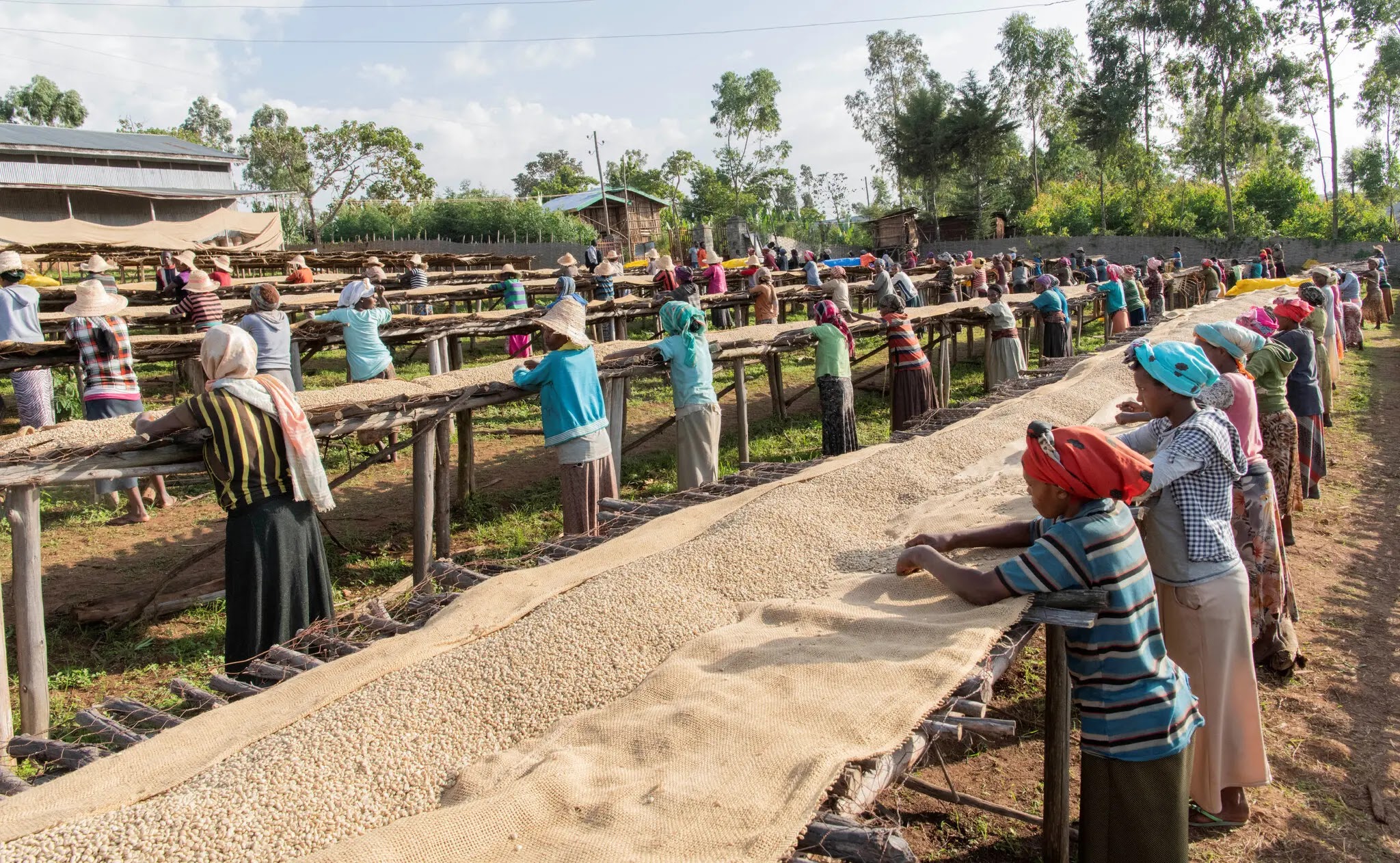
Farmers gathered ripe coffee cherries in the Sidama region of Ethiopia. Credit...Maheder Haileselassie/Reuters
 
The measure will require geolocation data to show that beans aren’t linked to deforestation. Farmers say they need more time to prepare.
 

Farmers in Africa that produce some of the world’s most prized coffee are in a scramble to comply with new European Union environmental rules that require them to document the origin of every shipment of beans.

The new measure, coming into force at the end of this year, is designed to prevent deforestation driven by agricultural expansion. To comply, farmers must provide geolocation data to show that their coffee was not grown on land where forests have recently been cut down.

After Dec. 31, any producers that cannot will lose access to the vast European market.

Europe consumes more coffee than any country or bloc in the world and experts say the new rule, formally known as the E.U. Deforestation Regulation, is a potentially powerful tool to promote sustainable agriculture and prevent forest destruction.

But it also represents what some are calling a “green squeeze” that imposes heavy burdens on millions of small farmers in developing countries that have contributed the least to climate change, and tests ability of policymakers to balance the needs of people and the needs of nature.

“Of course data is very important to us, but what we are just saying is we need support,” said Dejene Dadi, head of the Oromia Coffee Farmers Cooperative Union. “It’s very challenging and costly and we don’t have any help.”

Mr. Dadi said his group, the largest coffee growers’ cooperative in Ethiopia, with more than half a million members based in the central part of the country, probably could not prepare all its farms by the deadline without additional support.

Trainers have traversed the Oromia region for more than a year, collecting coordinates for maps and helping farmers with new technology. As of March, they had mapped 24,000 farms. European officials will verify shipments by cross-checking current geolocation data against base line satellite images and forest cover maps.

Mr. Dadi said the cost of mapping one farm was about $4.50. The cost of training is partly covered by a grant form the International Trade Center, a joint agency of the United Nations and the World Trade Organization that was created to help poor countries expand trade.

Ethiopia is the top coffee producer in Africa, and the crop accounts for about 35 percent of the country’s revenue. The arabica variety, smooth and mild with fruity and nutty notes, originated in the country’s southwestern highlands. More than a third of Ethiopia’s coffee goes to Europe.

Coffee accounts for about 35 percent of the Ethiopia’s revenue.Credit...Syspeo/SIPA, via Shutterstock


According to a French government report last year, E.U. consumption is responsible for 44 percent of coffee-related deforestation worldwide. Another report, by the World Resources Institute, an environmental group, found that nearly two million hectares of forest cover had been replaced by coffee plantations between 2001 and 2025. Indonesia, Brazil and Peru recorded some of the highest deforestation rates in that period.

Global leaders pledged in 2021 at a climate summit in Glasgow to end deforestation by 2030. The agreement underscored a growing awareness of the role of nature in tackling the climate crisis. Intact forests are natural storehouses of planet-warming carbon, keeping it out of the atmosphere, where, as carbon dioxide, it speeds warming by trapping the sun’s heat. When forests are cleared, those areas switch to releasing greenhouse gases. It also harms the forest’s biodiversity, its variety of life, by disrupting habitat.

The new E.U. rule also covers cattle, cocoa, palm oil, rubber and other crops. Coffee shipments without proper mapping data can be rejected or confiscated, and the importer can be fined.

But some experts say the measure is being implemented without the necessary support for farmers.

Jodie Keane, an economist at ODI Global, a research organization based in London, said the European Union and major coffee chains should do more to help small farmers.

“We all want to prevent deforestation,” Ms. Keane said. “But if you’re going to apply that standard to rural producers, you’re going to have to provide a lot of outreach, sensitization, you’re going to have to invest in learning how to do things differently so that they don’t just get dropped from the supply chain.”

Etelle Higonet, founder of Coffee Watch, a monitoring group, echoed that. “These are some of the richest companies in the world,” she said of European coffee chains. “Of course they could afford to do this.”

In an email, Johannes Dengler, a managing partner at Alois Dallmayr, one of the best-known coffee brands in Germany, acknowledged that the new rule was an “enormous challenge” for Ethiopia. He said Dallmayr was developing systems to assure compliance and was “working closely with our partners to find viable solutions.”

The office of the European Union commissioner for trade and economic security did not respond to requests for comment. In a news release on April 15 the bloc said that, based on feedback from partner countries, it had allocated 86 million euros, or about $97 million, to support compliance efforts.

Ethiopian coffee farmers take pride in their high-quality beans, a result of exceptional heirloom varieties, high altitudes and traditional farming practices.

In the southwestern Jimma Highlands, farmers like Zinabu Abadura say most growers follow a longstanding unwritten rule against cutting trees.

Mr. Abadura, who sells directly to informal middlemen, said his farm has not yet been mapped. Most farmers in his area live off their coffee proceeds and cannot afford disruptions or additional expenses. “Life will be difficult,” when the new European rule comes into force, he said.

Farm workers prepared coffee beans for roasting at a cooperative in Sidama.Credit...Maheder Haileselassie/Reuters


But while the new E.U. standards could reorder the Ethiopian coffee sector, analysts say, they probably will not halt sales.

Countries like China offer alternative, less-rigid markets. And Ethiopians themselves are big coffee drinkers. Hospitality is incomplete without a coffee ceremony, where hosts roast, grind and brew beans in front of their guests. About half of the country’s yearly coffee production stays at home.

But Tsegaye Anebo, who heads the Sidama Coffee Union, which represents 70,000 farmers, said pivoting to new markets would be disruptive in the short term. He noted that his region’s Sidamo variety, distinctive for its fruity tones, was a favorite in wealthy Europe. And that means premium prices.

Giving up on the E.U. market, he said, is not an option.

“We need the E.U.,” Mr. Anebo said. “But they also need us because they can’t find our coffee anywhere.”

Munira Abdelmenan contributed reporting.

Tuesday, October 8, 2024

Deforestation ‘roaring back’ despite 140-country vow to end destruction


Bird’s eye view of tropical rainforest deforestation. Indonesia’s deforestation alone spiked by 57% in a year, the report says. Photograph: WhitcombeRD/Getty/iStockPhoto

 Demand for beef, soy, palm oil and nickel hindering efforts to halt demolition by 2030, global report finds

 The destruction of global forests increased in 2023, and is higher than when 140 countries promised three years ago to halt deforestation by the end of the decade, an analysis shows.

The rising demolition of the forests puts ambitions to halt the climate crisis and stem the huge worldwide losses of wildlife even further from reach, the researchers warn.

Almost 6.4m hectares (16m acres) of forest were razed in 2023, according to the report. Even more forest – 62.6m ha – was degraded as road building, logging and forest fires took their toll. There were spikes in deforestation in Indonesia and Bolivia, driven by political changes and continued demand for commodities including beef, soy, palm oil, paper and nickel in rich countries.

The researchers said attempts at voluntary cuts on deforestation were not working and strong regulation and more funding for forest protection were needed.

Amazon Rainforest Deforestation


Amazon Rainforest Deforestation


The report highlighted a bright spot in the Brazilian Amazon, where President Luiz Inácio Lula da Silva’s new government cut deforestation by 62% in its first year.

“The bottom line is that, globally, deforestation has gotten worse, not better, since the beginning of the decade,” said Ivan Palmegiani, a consultant at the research group Climate Focus and lead author of the report.

“We’re only six years away from a critical global deadline to end deforestation, and forests continue to be chopped down, degraded, and set ablaze at alarming rates,” he said. “Righting the course is possible if all countries make it a priority, and especially if industrialised countries seriously reconsider their excessive consumption levels and support forest countries.”

Erin D Matson, a senior consultant at Climate Focus and co-author of the report, said: “When the right conditions are in place, countries see major progress. The next year, if economic or political conditions change, forest loss can come roaring back. We’re seeing this effect in the spiking deforestation in Indonesia and Bolivia. Ultimately, to meet global forest protection targets, we must make forest protection immune to political and economic whims.”

Aerial view of reforestation. Most countries backed the 2030 zero deforestation pledge at the UN Cop26 climate summit in 2021. Photograph: Jose Luis Raota/Getty Images


Most countries backed the 2030 zero deforestation pledge at the UN Cop26 climate summit in 2021. The 2024 forest declaration assessment, produced by a coalition of research and civil society organisations, assessed progress towards the goal using a baseline of the average deforestation between 2018 and 2020. It found progress was significantly off track, with the level of deforestation in 2023 almost 50% higher than steady progress towards zero would require.

Matson said: “Indonesia’s deforestation alone spiked by 57% in one year. This was in large part attributable to surging global demand for things like paper and mined metals like nickel.

“But it’s also clear that the Indonesian government took its foot off the gas. It experienced the steepest drop in deforestation of any tropical country from 2015-17 and 2020-22, so we have to hope that this setback is only temporary.” In 2023, Indonesia produced half the world’s nickel, a metal used in many green technologies.

“Brazil gives us an example of positive progress [in the Amazon] but deforestation in the Cerrado [tropical savanna] increased 68% year over year,” she said.


Amazon
Amazon


The country has also been ravaged by forest fires that are being made more likely and intense by the climate crisis. The report found that about 45m ha have burned in the past five years.

Other countries that made progress towards the 2030 deforestation target included Australia, Colombia, Paraguay, Venezuela and Vietnam. Outside the tropics, temperate forests in North America and Latin America recorded the greatest absolute levels of deforestation.

The researchers said funding for forest protection, strengthening the land rights of Indigenous people and reducing demand for commodities produced via deforestation were needed.

The EU has proposed ambitious regulations that would ban the sales of products linked to deforestation, such as coffee, chocolate, leather and furniture. However, on 3 October, the European Commission proposed a one-year delay “to phase in the system” after protests from countries including Australia, Brazil, Indonesia and Ivory Coast.

Matson said: “This pushback is largely driven by political pressures, and it’s a shame. We can’t rely on voluntary efforts – they have made very little progress over the last decade.”


Tuesday, October 1, 2024

Bolívia decreta "desastre nacional" por incêndios florestais

Fogo já consumiu mais de 7 milhões de hectares no distrito boliviano de Santa Cruz
 

 Governo do distrito de Santa Cruz, o mais afetado pelas queimadas, afirma que 7,2 milhões de hectares foram devastados; região faz fronteira com Mato Grosso e Mato Grosso do Sul, estados mais afetados pelo fogo. 


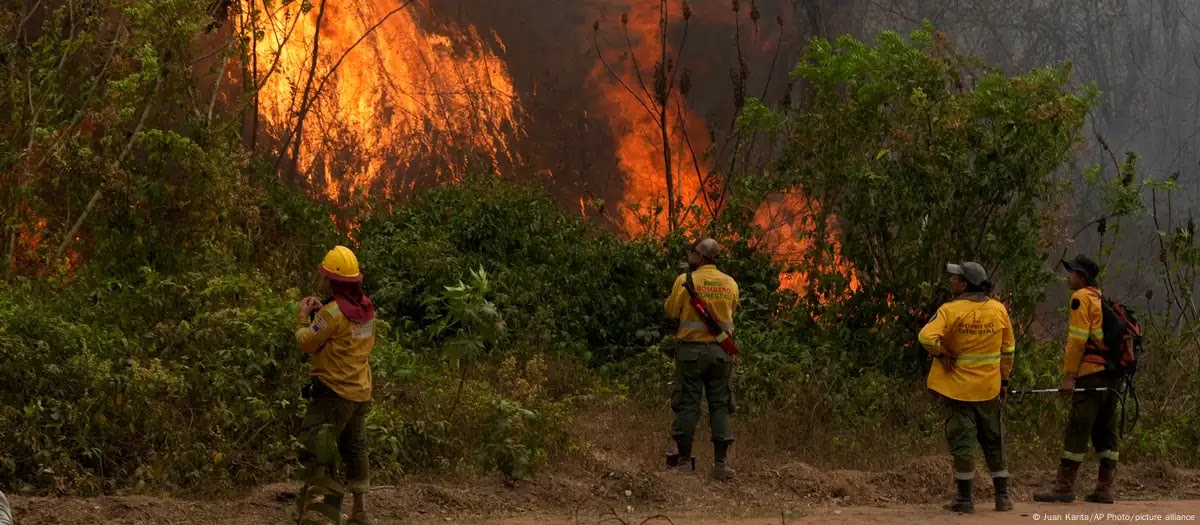
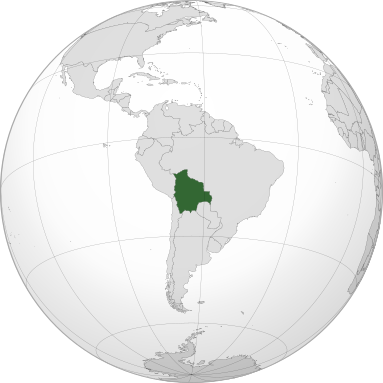
O governo da Bolívia decretou nesta segunda-feira (30/09) "desastre nacional" devido aos incêndios florestais sem precedentes que estão afetando principalmente Santa Cruz, o departamento mais rico e populoso do país.

O decreto visa facilitar o direcionamento de ajuda internacional e de recursos do governo federal para que governos locais tomem medidas para combater o avanço das queimadas e prestar socorro aos atingidos.

O presidente boliviano, Luis Arce, justificou a medida pela "magnitude do impacto dos danos causados pela presença de incêndios no território nacional".

Maior desastre ambiental de Santa Cruz

O gabinete do governador de Santa Cruz informou que 7,2 milhões de hectares já haviam sido consumidos somente nessa região até a semana passada, um número que excede os 4,2 milhões registrados em 2019.

De acordo com as autoridades departamentais, esse seria o "maior desastre ambiental" sofrido na região, que abriga 27% da população nacional. Outro departamento afetado é Beni, na Amazônia boliviana, no nordeste do país.

A queima de florestas é uma prática ancestral entre os agricultores bolivianos, que começa entre março e abril e continua até setembro e outubro. Neste ano, a seca, o baixo índice de chuvas e as mudanças climáticas causaram a propagação dos incêndios, informou o gabinete do governador de Santa Cruz.


América do Sul em chamas

A Bolívia faz fronteira com os estados do Acre, Rondônia, Mato Grosso e Mato Grosso do Sul, nos dois biomas que têm sido fortemente afetados pelos incêndios no Brasil – Amazônia e Pantanal.

Os incêndios florestais na América do Sul tem  intensificados pela mudança do clima, que causa estiagens e secas prolongadas. Em 2024, 58% do território brasileiro está afetado pela falta de chuva. Em aproximadamente um terço do país, a situação é de seca severa.

Operação contém o fogo no município de Corumbá, Mato Grosso do Sul


Dados do Programa Queimadas, do Instituto Nacional de Pesquisas Espaciais (Inpe), mostram que neste ano houve uma onda de incêndios na floresta amazônica, passando pelo Pantanal, até as florestas bolivianas, que quebrou o recorde de fogo para toda a América do Sul em mais de duas décadas.

Setembro já contabilizou mais de 80 mil focos de incêndio no Brasil, cerca de 30% acima da média histórica, registrada desde 1998 pelo Inpe.

Mato Grosso do Sul registrou um aumento de 601% nas queimadas em 2024 até setembro, totalizando 11.990 focos. Mato Grosso teve um crescimento de 217%, que resultou em 45 mil focos, sendo o estado recordista neste ano, ultrapassando o Pará.

O último relatório oficial do Poder Executivo, no início de setembro, advertia que 3,8 milhões de hectares de florestas e pastagens haviam sido destruídos no país.

A Polícia Federal (PF), o Supremo Tribunal Federal (STF) e o Ministério do Meio Ambiente e Mudança do Clima apontam que há indícios de que parte dos incêndios florestais no país pode ter ocorrido por meio de ações criminosas coordenadas.

O uso do fogo para práticas agrícolas no Pantanal e na maior parte da Amazônia está proibido e é crime, com pena de dois a quatro anos de prisão.

sf (AFP, EFE, Reuters, ABr, ots)


Wednesday, September 18, 2024

The fires that could reshape the Amazon

A firefighter battling flames in the Brasilia National Forest of Brazil on Sept. 4. Ueslei Marcelino/Reuters
 

 By Manuela Andreoni


Large parts of Brazil, a country that holds over a tenth of the world’s fresh water, are on fire. They include vast areas of the Amazon rainforest and the Pantanal, the world’s largest wetlands, as well as the Cerrado grasslands and the Atlantic forests along the country’s eastern coast.

The number of fires in the country has more than doubled compared with last year, burning an area the size of Costa Rica in August alone.

Smoke covered large parts of South America this month and blackened the skies of some of the region’s biggest cities, including Buenos Aires; São Paulo, Brazil; and La Paz, Bolivia. As if that weren’t dystopian enough, black rain from the soot produced by the fires has fallen over cities in several states in Brazil in the past few days.

In much of Brazil, fire season usually peaks this time of the year, as farmers set fire to pasture and burn recently deforested plots to clear them of unwanted vegetation. But blazes have unleashed a lot more destruction this year.

Though experts say many of the fires were very likely started by humans, the abundance of dry vegetation fueled immense blazes that grew out of control in extraordinary ways.

Almost half of the fires in the Amazon burned pristine forests, according to data from Brazil’s National Institute for Space Research. That is far from typical. It means fighting deforestation in the Amazon is no longer enough to stop fires.

This matters because it shows that the fire-control practices in some of the world’s most biodiverse places are not working. And that threatens myriad forms of life, including us. The collapse of the Amazon rainforest could release the equivalent of as much as 20 years’ worth of global carbon emissions into the atmosphere.

Deforestation and fires

The drought-depleted Madeira River, a tributary of the Amazon, in Humaita, Amazonas State, on Sept. 7. Edmar Barros/Associated Press


Deforestation is still a big problem in South America. The Cerrado grasslands, in the east of Brazil, continue to lose much of their tree cover as farmers plant soy crops that can cover areas as big as whole cities. And, while deforestation in the Amazon rainforest has slowed, it is still happening at a faster pace than the forest’s recovery rate.

Stopping deforestation should still be the priority, scientists told me. But, as the planet warms, other threats are growing.

A study from 2018 showed that, when there is drought in the Amazon, fires can increase even when deforestation goes down. That’s because drier vegetation in the form of standing trees continues to fuel the blazes.

“If fires are a direct consequence of deforestation, then a policy to fight deforestation should also be effective against fires,” said Luiz Aragão, a scientist at the space research institute and one of the authors of the study. “And what we are seeing is that it isn’t.”

Large parts of South America are under the worst category of drought. That’s partly because of natural climate patterns, such as the El Niño, which are associated with scarcer rains in the region. But global warming is probably making matters worse in the background.

Last year, scientists found that higher temperatures had made the drought in the Amazon more intense. It’s also likely that these weather patterns will change soon, as La Niña, which cools the Pacific and usually means more rain in this part of the world, sets in.

Ecosystems may change in dramatic ways


Part of the Brasília National Forest burning on Sept. 3. Eraldo Peres/Associated Press


 Looking years ahead, the situation is unlikely to improve. Humans are still burning fossil fuels that heat up the atmosphere, so extreme droughts like the current one are likely to become more frequent, scientists say.

“Maybe 2024 is the best year of the ones that are coming, as incredible as it may seem,” said Erika Berenguer, a senior research associate at the University of Oxford. “The climate models show a big share of the biome is going to become drier.”

Brazil’s environment minister, Marina Silva, recently told senators there that “we may lose the Pantanal by the end of the century,” explaining that dwindling rain and increasing heat are huge obstacles to the wetlands’ abitity to recharge to sustainable levels.

The Amazon is very likely to transform sharply if this trend continues. The forest didn’t evolve to burn like other ecosystems such as the boreal forests, Berenguer told me. The bark on its trees is thin, unlike that of redwood trees and sequoias, so even a little fire can kill them.

The types of Amazonian plants that can grow back after fires aren’t the majestic trees we associate with the rainforest, but scrubbier ones that grow and die fast and hold a lot less planet-warming carbon in their trunks.

“What the data shows is that even 30 years after fire, the burned forest still has 25 percent less carbon than a forest that never burned,” Berenguer told me.


Friday, September 6, 2024

Amazônia Ocidental é região mais poluída do mundo, aponta monitoramento


Fumaça de incêndios florestais colocaram região a frente de países como Índia, Paquistão e China, em termos de poluição 

 Guilherme Gamada CNN , em São Paulo

 No último mês, a Amazônia Ocidental passou a ser a região mais poluída do mundo, segundo a plataforma suíça de monitoramento do ar, IQAir. Os incêndios florestais intensificam a emissão de poluentes e a média de concentração de material particulado colocou a região à frente de países como Índia, Paquistão e China — que historicamente enfrentam problemas com a qualidade do ar.


Os meses de setembro e outubro tradicionalmente registram picos na poluição do ar na maioria das cidades do Brasil devido aos incêndios na Amazônia. Entretanto, os dados enviados a pedido da CNN mostram que, neste ano, cidades têm registrado índices de poluição acima da média para o mês de agosto.

Em Rondônia, a capital Porto Velho (RO) teve o mês de agosto deste ano quatro vezes mais poluído do que no ano passado. O ar do município foi classificado como “perigoso”, grau mais alto de poluição, por sete dias.


Nesta quinta-feira (05), a cidade está na faixa “muito insalubre”, com níveis de poluentes quase 36 vezes maiores do que o recomendado pela Organização Mundial da Saúde (OMS), de 5 µg/m3 (microgramas por metro cúbico).

O corredor de fumaça dos incêndios florestais leva a nuvem de poluição a centenas de quilômetros de distância do foco das queimadas. A cidade de São Paulo registrou um mês mais poluído para a média, assim como o Rio de Janeiro, que teve o ar duas vezes pior do que no ano passado.


No Acre, Rio Branco (AC), também registrou índices duas vezes piores do que em comparação com agosto do ano passado. O município era a capital mais poluída do Brasil nesta quarta-feira (4), com níveis mais de 26 vezes acima do recomendado.

A IQAir prevê que Porto Velho (RO), siga com o ar de “Insalubre” a “Muito Insalubre” nas próxima semana. O calor e a baixa umidade do ar agravam os efeitos da poluição atmosférica.


Tuesday, August 13, 2024

Parts of Canada’s Boreal Forest Are Burning Faster Than They Can Regrow


The delicate balance of one of the planet’s largest natural systems for storing carbon depends on the humble black spruce tree.


The dead black spruce looked like a collection of giant burned matchsticks standing tall above the gray landscape as far as Jennifer Baltzer could see. But here, at the edge of one of the largest areas of scorched forest that scientists have ever documented in Canada, what caught Dr. Baltzer’s attention was closer to the ground.

The spruce seedlings were gone.

Dr. Baltzer, a professor of forest ecology, was a few hundred miles below the Arctic Circle, where for over a decade she has studied the health of the black spruce and the boreal forests. It was a scorching late spring morning, and she and three of her students from Wilfrid Laurier University in Waterloo, Ontario, were in the Northwest Territories to document what could grow from the ashes of the record-breaking fire season that had ravaged the forest almost a year earlier.

“Wow, it’s kind of crazy in here,” Dr. Baltzer said as she inspected the blackened landscape. She had never seen trees burn this soon after a previous fire.

The boreal forests are the largest forests in the world, and in Western Canada they evolved to burn once every century or so. But this patch of forest had just burned for the second time in a decade. As a result, many trees would struggle here, she explained. The slow-growing black spruce didn’t stand a chance.

Where Canada’s Monster Fires Burned — and Re-Burned


More frequent, bigger wildfires, fueled by climate change, are a formidable challenge to the black spruce, a species that has dominated these landscapes for thousands of years. Their gradual decline, now accelerated by last year’s fire season, is one of the strongest pieces of evidence that the new age of wildfires aren’t just overwhelming people with the smoke and destructive blazes now raging across North America — they are overwhelming nature, too.

The dwindling number of black spruce trees, scientists say, is deeply transforming an ecosystem that is one of Earth’s biggest storage systems for planet-warming carbon dioxide, a crucial tool to keep the atmosphere from warming even more than it already has.

Last year’s fires engulfed a stretch of forest the size of the Netherlands for at least the second time in 50 years, according to an analysis by Natural Resources Canada, a federal government department.

What was troubling, Dr. Baltzer noted, is that fire isn’t supposed to make life harder for the black spruce tree. Quite the opposite.

Jennifer Baltzer, a professor of forest ecology, in a spruce stand that burned last year outside Behchoko, Northwest Territories.


Black spruce cones, which open and release their seeds with the help of fire.


Black spruce forests didn’t just evolve alongside fire, they depend on it. The tree is a natural bonfire of sorts. Its branches are covered with flammable resin that fuels the flames of forest fires right up to the tree’s crown. Fires help melt the waxy coating of black spruce cones until the trees release seeds onto the soil where seedlings can grow.

But if they burn too often, there aren’t enough viable seeds to reproduce. Burn too hot, and the seeds are killed. Burn too deeply, and the organic layer of soil where black spruce trees thrive, and which takes decades to accumulate, is gone.

In recent years, the black spruce failed to regenerate after fire in a fifth of the hundreds of sites Dr. Baltzer and other researchers monitored in North America’s boreal forests. And that was before the fire season of 2023.

The black spruce’s struggles are a gradual break to an ancient natural cycle, one that releases planet-warming carbon into the atmosphere as old trees burn, and then gradually returns that carbon to the land, in the form of new trees and new soil. Any imbalance in this tug of war between life and death can threaten the boreal forests’ ability to store heat-trapping carbon.

Where Black Spruce Dominates Canada’s Boreal Forest


Last summer, temperatures in Canada were more than 2.2 degrees Celsius, or 4 degrees Fahrenheit, above the historical average of the past few decades. Around the Northwest Territories, it was even hotter. The heat is largely why fires as severe as last year’s happened many years before scientists anticipated. Most climate projections didn’t expect these kinds of fires until later in the century, a new preprint study found.

“The entire bloody country was hot and dry at the same time,” said Marc-André Parisien, a senior researcher at the Canadian Forest Service and an author of the study. “If you would have told me that a few years ago, I’d be like no, that doesn’t really make sense.”

Forest fires are burning more than twice as much tree cover as they did 20 years ago. They have also become more intense and frequent, especially in the boreal forests, according to a recent study. Increasing temperatures, fueled by the burning of oil, gas and coal, are the biggest culprit.

 A wildfire burning south of Enterprise, Northwest Territories, last August. Jeff Mcintosh/The Canadian Press, via Associated Press


In the Northwest Territories, as Dr. Baltzer drove through the burned forests on her way to visit another site, she recalled the moment the scope of the 2023 tragedy became clear. She was reading headlines about the immense blazes when it hit her that the planet had briefly reached the temperature at which countries had agreed in the Paris Agreement to cap warming: 1.5 degrees Celsius, or 2.7 degrees Fahrenheit, above preindustrial levels.

Temperatures would need to be at that level for several years for the global target to be breached. But for a scientist who had spent much of her career tracking fire, the consequences of a planet that was warming this quickly were clear.

If the world continued on this trajectory, it didn’t matter how hard she or anyone worked to protect the boreal forests.

“Everything will burn,” she said.

‘The trees melted’

A single burned tree near Kakisa, Northwest Territories, an area that has burned twice in the last 10 years.

The scraggly, skinny black spruce trees may not be much to look at. But what lies in the soils below them is one of nature’s biggest gifts to living things, a vault of the forest’s past lives, in icy slow decomposition, that stores immense amounts of planet-warming carbon.

The researchers were on their way to document another area that had burned in 2023 when they walked into an ancient black spruce stand. As they stepped on the ground, it sank several inches below their feet. Then it bounced right back.

The cold temperatures of northern Canada slow down the microbes that eat the dead moss and leaves on the ground. Inches, or sometimes several feet, of organic matter remain on the soil even as new trees, moss and lichen, one of the caribou’s favorite foods, grow on top.

The black spruce is one of the few trees that can grow on such spongy soils. The acidic nature of the trees’ needles helps slow down decomposition and its bushy branches help catch snow, making soils colder during winter.

The black spruce is one of the few trees that can grow on such spongy soil.

As the researchers approached the burned patch, walking became harder. The ground was now full of enormous potholes covered by thin layers of singed plants. The black spruce trees, many more than a century old, had all fallen, their blackened roots sticking up to the sky, many of their seeds dead.

“It looks like the trees melted,” Dr. Baltzer said.

Austin McIntosh, a technician, and Kyle Fennig, a research assistant, grabbed a tool to measure how much of the soil had combusted. In some patches, more than half of the organic matter in the ground was gone.

Their measurements were perhaps a glimpse into the future of that ecosystem. The amount of carbon that soils hold after the spruce trees are gone can fall by up to 80 percent, a recent study showed. It then takes several decades for the forest to restore it.

Kyle Fennig, left, and Maya Provenzano, students at Wilfrid Laurier University, gathered data in a stand of black spruce that burned during the 2023 fire season, near Behchoko.


The top of a soil core sample is dotted with organic material, including Geopyxis carbonaria, pixie cup lichen and green polytricha moss.

When fires kill off black spruce trees, they are often replaced by other native trees, such as birch or aspen. These species survive in part because they grow a lot faster. But because they drop their leaves every year, which stops mosses from growing, the soil around these trees doesn’t store as much carbon.

Some researchers have found these fast-growing, less flammable trees can help protect black spruce seedlings. But researchers fear that the era of more frequent fires has broken that balance because spruce trees are killed off too quickly.

When Dr. Baltzer pulled on one section of burned soil, as if it were a thick wool rug, there was ice below. But it wouldn’t stay that way for long, she told the team. Now that the organic layer protecting the frozen soil was gone, it would thaw quickly, completely changing this corner of the ecosystem. What would happen next would depend on how wet the soil would become.

“I would expect this to get wetter,” she said. Maybe other trees, like larch, could grow here then. “But possibly not black spruce.”

At scale, the implications of how well the black spruce fares in places like this could change how scientists expect global warming to play out in the future. Put together, the soils of the Arctic and the boreal forests, which stretch from North America to Asia and Europe, store almost twice as much carbon as now exists in the atmosphere.


‘No more water’

Chief Fred Sangris of the community of Ndilo.

For the Dene First Nations, which have lived in the boreal forests of the Northwest Territories for centuries, the menacing forces of the new age of wildfires are a consequence of the deep transformations they have watched unfold around them for years.

Chief Fred Sangris, of the community of Ndilo on the edge of Yellowknife, the territorial capital, has seen the permafrost melt into large ponds, and ancient trees sink as their roots lost their grip on the mushy soils. He noticed new islands emerging when the water levels at the Great Slave Lake sank to record lows. And he felt the peat soils, once as soft as mattresses, dry up and harden.

As Chief Sangris walked in the old-growth forests of Dettah, the hamlet where he grew up some 15 miles south of Yellowknife, he couldn’t find any of the black spruce gum that the Dene people use to make teas that help treat upset stomachs. The trees had all turned gray.

“These trees are dying because there’s no more water,” he said, as the soil crackled below his feet. “We’ve never seen anything like this.”

The ecosystem that is a central part of much of Dene culture had changed before Chief Sangris’s eyes. He grew up collecting berries, fishing and hunting caribou in these lands. But caribou populations have long been declining and finding ripe berries in drier forests has become harder.

More than half the population in the Northwest Territories’ 42,000 people are Indigenous. First Nations officials are now pushing for a bigger role in shaping policy on topics like fire management and evacuation strategies.

They are worried about protecting communities that had never been under wildfire threat. The Dene hamlets of Dettah, Behchoko and Ndilo were evacuated for the first time last year. So was Yellowknife, a city of 20,000 that has historically been a safe harbor to communities deeper in the forest.

The burned remains of a gallery and gift shop in Enterprise

A section of forest that burned in last year’s fires is visible from the road between Kakisa and Enterprise.

Weeks after the trip to the Northwest Territories, Dr. Baltzer said, the images of the burned forests were still in her mind. She felt confident that the data her team collected would help manage wildlife and protect First Nations communities. Given how huge the boreal forests are, her research could help shed light on which parts of the ecosystem were most important to protect.

The research is also poised to help improve the global models that forecast how climate change will affect the planet. Estimates from a United Nations panel of experts project that, sometime in the next decade, global temperatures will rise to a sustained level of 1.5 degrees Celsius above preindustrial levels, from the current level of about 1.2 or 1.3 degrees. If temperatures rise above that, scientists say, the effects of catastrophic heat waves, flooding, drought, crop failures and species extinction will become significantly harder for humanity to handle.

Extreme fires like last year’s that ravage enormous tracts of forests are “completely absent from the current climate models,” said Philippe Ciais, a researcher at the Laboratory of Climate and Environmental Sciences, near Paris, who tracks carbon dioxide emissions.

Because of that, he said, “the models are probably too optimistic.”

As he stood at the edge of the lake by Dettah, Chief Sangris watched small fishing boats cross the blue waters, glistening in the sun. He recounted his community’s efforts to adapt to the changes around them across several generations. They built fire breaks, found evacuation routes, fought mining interests and developed programs to grow more food locally so they wouldn’t need to rely on the forest as much as they have in the past. Their goal was to stay on their ancestral land.

“You put your canoe here, you’re in the wilderness,” he said. “We’re not moving. This is our home.”


Wildfire now nine miles from French city of Bordeaux, mayor warns

  Firefighters in Gironde are facing an "unprecedented" situation as they battle a blaze that "has a life of its own", ...