Wednesday, May 14, 2025

European firms ramping up lobbying for climate action, report finds. Research shows companies ‘aligned’ with strategies to meet climate goals have risen from 3% in 2019 to 23% in 2025


The report found more than half of the European companies analysed were at least ‘partially aligned’ with EU climate policy. Photograph: Sean Gallup/Getty Images


European companies are increasingly lobbying for strong climate action, research has found, in a “profound shift” that analysts say challenges the narrative that businesses see green rules as a threat to profits.

The share of companies whose corporate lobbying is “aligned” with pathways to meet global climate goals rose from 3% in 2019 to 23% in 2025, according to an analysis of 200 of the largest European companies by InfluenceMap, while the share of companies who were deemed “misaligned” fell from 34% to 14%.

The report found more than half of the companies were at least “partially aligned” with pathways to stop the planet from heating 1.5C above preindustrial levels by the end of the century.

“Those vocally organising to oppose the energy transition achieve outsized importance across public debate,” said Venetia Roxburgh, an analyst at InfluenceMap, a nonprofit that tracks corporate lobbying. “However, this research demonstrates that there is a larger, quieter majority that are supportive of decarbonisation and driving progress through climate policy.”


The researchers tracked business engagement on climate policy through channels ranging from corporate disclosures to EU consultation documents to social media posts. They gave more weight to statements from managers and formal consultations on specific policies, and placed more importance on recent pieces of evidence.

They found “an increasingly substantial portion of the corporate sector” was engaging in positive climate advocacy.

In 2019, when the European Commission announced its Green Deal, only one in four companies were lobbying partly in line with Paris Agreement goals of keeping the planet from heating 1.5C (2.7F), the report found. By 2025, that share had doubled.

The researchers found industry associations were lagging behind individual companies. The share of aligned or partly aligned associations rose from 2% in 2019 to 12% in 2025, far below the share of similarly supportive companies.

The disparity could arise from industry associations prioritising the views of the loudest opponents of climate policy, though it could also be the result of companies channelling unsavoury lobbying requests through trade groups.

“Industry associations in the EU appear to be fighting a losing battle against the tide of positive corporate action on climate policies,” said Roxburgh. “[They] need to urgently reassess their priorities if they are to continue to act as true representatives of the majority of their membership.”

The worst-scoring companies in the ranking, weighted by their level of engagement on policy, were the Polish utility PGE; the Austrian oil and gas producer OMV; the Spanish oil and gas producer Repsol; the Spanish transmission system operator Enagás; and the German airline Lufthansa.

Enagás, which InfluenceMap cited as supporting the long-term role of fossil gas in energy and transport and advocating to weaken measures for methane emission leak detection and repair, said its climate policy is committed to reaching net zero emissions by 2040 – not including the emissions from customers using its products – and by 2050 overall. It added that it had embraced the EU’s methane regulation, for which it had received the highest rating from the International Methane Emissions Observatory.

Lufthansa, which InfluenceMap cited as lobbying against the EU mandate for sustainable aviation fuels and the full inclusion of aviation in the EU Emissions Trading System, said it did not oppose either policy but was calling for “competition-neutral implementation”.

PGE, OMV and Repsol did not respond to a request for comment.

The European Commission has put “competitiveness” at the heart of its agenda since its new mandate began in December, in a partial reversal of its Green Deal after elections in 2024 that saw sizeable gains for the far right and losses for the greens.

Environmental groups have criticised the new focus on simplification as a cover for deregulation that will allow companies to pollute more.


Today


Tuesday, May 13, 2025

‘A horror movie’: sharks and octopuses among 200 species killed by toxic algae off South Australia


A dead shark found on a beach in South Australia is among dozens of marine species killed by a toxic algal bloom. Photograph: L Cameron


 Karenia mikimotoi algae can suffocate fish, cause haemorrhaging and act as a neurotoxin, one expert says


More than 200 marine species, including deepwater sharks, leafy sea dragons and octopuses, have been killed by a toxic algal bloom that has been affecting South Australia’s coastline since March.

Nearly half (47%) of the dead species were ray-finned fish and a quarter (26%) were sharks and rays, according to OzFish analysis of 1,400 citizen scientist reports.

Cephalopods – such as squid, cuttlefish and octopuses – accounted for 7%, while decapods – crabs, lobsters and prawns – made up 6% of species reported dead or washed up on beaches.

The OzFish South Australian project manager, Brad Martin, said the harmful bloom – of Karenia mikimotoi algae – was like a toxic blanket that smothered marine life.


“It can suffocate fish from their gills, cause haemorrhaging by attacking their red blood cells, and act as a neurotoxin and attack the fish’s nervous system and brain, causing unusual behaviour,” he said.

“This is why some fish and sharks are acting so strangely and why many of the dead have a red tinge – it is like a horror movie for fish.”

According to the state’s environment department, the algal bloom was being driven by an ongoing marine heatwave – with water temperatures 2.5C hotter than usual – as well as relatively calm marine conditions with little wind and small swells.

While not toxic to humans, the algae could cause skin irritations and respiratory symptoms, and caused mass mortalities in marine life.

The algae was first identified in mid March on the state’s Fleurieu Peninsula and had since expanded to coastlines across the south-east, the Gulf St Vincent, the Yorke Peninsula and Kangaroo Island, Martin said.


OzFish, an organisation dedicated to restoring waterways and fish habitats, was concerned about the long-term impact on fisheries, given the bloom had killed fish at all ages – from fingerlings, or baby fish, up to full-grown breeding fish – as well as their food sources.

Several oyster farms and the commercial harvesting of pipis have been temporarily closed due to the outbreak, which has been unprecedented for South Australia, its environment minister, Susan Close, said.

“We’re talking about a very large algal bloom with a significant impact on marine life,” she said, with some parts of the outbreak going 20 metres deep.

Marine biologist Prof Shauna Murray from the University of Technology Sydney – who identified the algae under the microscope and by analysing its DNA – said there were about 100 species of harmful algae, each with a different toxic effect.


While still not well understood, Karenia mikimotoi was thought to produce a reactive oxygen that caused gill cell damage in fish – which meant they could not breathe, Murray said.

While the current bloom extended for more than 150km, it was not the worst in Australia’s history. In 2013, a bloom of a different species, Alexandrium catenella, had “covered the entire east coast of Tasmania and shut down their aquaculture and seafood industries for about four months”, she said.

Large blooms could also reduce the amount of oxygen in the water, said Prof Martina Doblin, a UTS oceanographer who specialises in algal blooms.

Karenia mikimotoi is an unusual algae that could feed on sunlight as well as other organisms, she said. And it is these characteristics, combined with unusually high and stable water temperatures, that enabled the algal bloom to become so large and sustained.

“In low abundance, it is part of the natural food web. But in high abundance, it can become very problematic,” Doblin said.

Such events were rare, but they can be devastating for local economies, she said. Improved early warning systems and management had the potential to limit the damage.

Strong westerly winds were ultimately needed to dissipate the algae, according to a spokesperson for SA’s environment department. “However, persistent high-pressure systems affecting southern Australia have delayed these winds,” they said.


Saturday, May 10, 2025

Across America, Big Cities Are Sinking. Here’s Why. A major reason is too much groundwater is being pumped out, new research shows, threatening buildings and infrastructure nationwide.


A new analysis of America’s 28 largest population centers found that all but three are sinking overall, and in many cases significantly.

Several of the most affected areas are in Texas, particularly around Fort Worth and Houston. But the problem is nationwide, affecting cities as scattered as Seattle, Detroit and Charlotte, N.C.


The sinking of land, also called subsidence, can worsen the effects of sea-level rise, intensify flooding and strain the very foundations of urban infrastructure.

The new research, published in the scientific journal Nature Cities, built on previous work using satellite measurements to paint a detailed picture of rising and falling land. It also closely examined the connection between changes in land elevation and changes in groundwater, using data from individual monitoring wells.

Water pumped from wells isn’t something that people think about often. “You just turn on your tap, do what you need to do, and you go on your way,” said Leonard Ohenhen, a researcher at Columbia University’s Lamont-Doherty Earth Observatory and lead author of the study.

But extracting more water than can be replenished “can have a direct relationship with what happens on the surface,” he said. “You can cause the ground to sink significantly."


A 2023 New York Times investigation found that unsustainable pumping of water from underground aquifers can be a major cause of sinking land.

Other factors also influence land elevation. For example, a vast expanse of bedrock beneath parts of the country, pressed downward by enormous glaciers during the last ice age, is slowly rebounding back into place. But over time it creates a sort of see-saw effect that today is adding 1 to 2 millimeters per year to subsidence rates in much of the northern United States.


Texas draws immense amounts of groundwater for agriculture, industry and the public water supply. The extraction of oil and gas, including the growing use of “monster fracks,” can also cause the land surface to slump.

Climate change can worsen the issue. Hotter temperatures and more extreme droughts, particularly in the West, dry out soil, streams and reservoirs, leading people to pump larger quantities of freshwater from underground.

Americans have also been moving in droves to some of the hottest and driest parts of the country. In the past few decades, metro areas in Texas have ballooned in population and sprawl.

Groundwater depletion was the main cause of subsidence in Houston between the 1950s and 70s, when nearly all water usage came from the ground, said Bob Wang, a professor of geophysics at the University of Houston. Cracked roads and buildings were a common sight.

Several subsidence-management districts were established in the area to address the issue. Among other things, groundwater use was reduced and instead more water was taken from surface-water sources such as rivers. Subsidence has since slowed in the city center.

However, when new neighborhoods developed to support growing populations, the most affordable source of water was often what people could pump from below.


Subsidence is in itself a hazard. But when adjacent land sinks at different rates, or when sinking occurs next to land that’s rising, it can cause roads and buildings to crack. Though this process happens slowly, in millimeters per year, over time it can create added stress to infrastructure in areas where flooding, earthquakes or sea level rise are already a problem.

Extreme weather adds to the risk. When surface soils expand during extreme rainfall, then compact during prolonged droughts, it can lead to structural damage. “In the Houston area, foundation repair is a very good business,” said Dr. Wang.

Cities along the coast, which are often built on soft soil or marshland like Houston, can be particularly vulnerable. But the research paper also looked at inland cities facing similar sinking challenges.

 Phoenix, a desert city, has a long history of groundwater depletion but has managed to turn things around. After the state of Arizona implemented its 1980 Groundwater Management Act, management districts were established and many conservation rules were put in place.


Still, the legacy of overpumping still affects the area. One reason is that, once groundwater is pumped out, it can be difficult if not impossible for some aquifers to recharge and refill to their earlier levels. In other words, it’s very hard to reverse land that has already settled.

Subsidence can still occur “even as groundwater levels recover, because the pore spaces in the sub-surface that were once being held open by groundwater are now just filled with air,” said Brian Conway, a principal hydrogeologist at the Arizona Department of Water Resources. Those spaces sometimes can be refilled with water, but sometimes they compress and can’t be recharged.

In Phoenix, managed recharge has helped to fill those pore spaces, replenishing underground reservoirs. While subsidence still occurs, it’s a far cry from the rates that caused a record 18 feet of elevation drop in Phoenix between the 1950s and 1990s.

Outside the city, however, land is still sinking as fast as ever.

Wednesday, May 7, 2025

More than 40% of electricity used in Australia’s main power grid at start of year was renewable


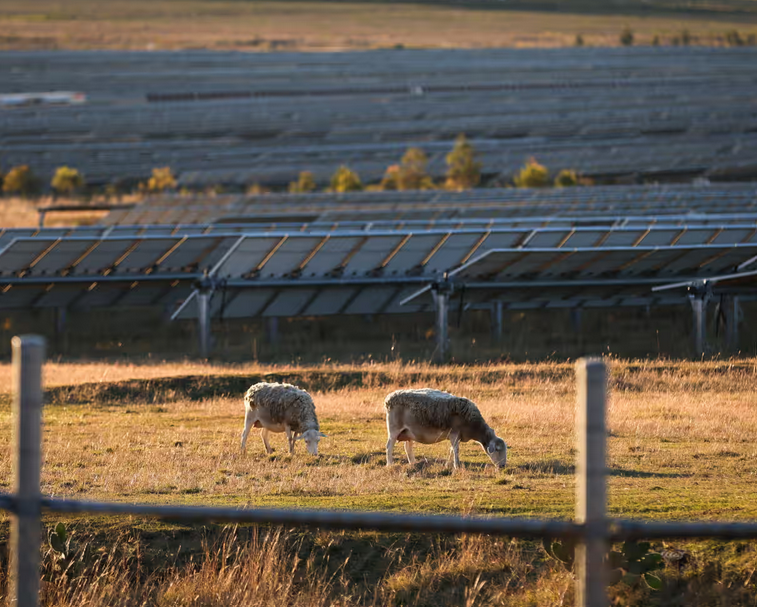
Electricity was up 16% from rooftop solar panels, 18% from windfarms and 10% from large solar farms. Photograph: Aston Brown/The Guardian


 Data suggests pollution from energy is falling again after previously stalling, but experts say faster growth needed to achieve Labor goal of 82% renewable electricity by 2030

by 


Renewable energy generation rose substantially in Australia’s main power grid over the past year, producing 43% of electricity used across the five eastern states and the ACT between January and March.

The increase – from 39% last year – came as generation from black and brown coal-fired power plants fell to its lowest level on record for the first quarter, in part due to ageing stations being unavailable due to outages. Gas-fired electricity generation was also down.

The Australian Energy Market Operator said the shift from fossil fuels to zero emissions sources drove a 5.1% drop in greenhouse gas emissions from electricity on the east coast.


Electricity was up 16% from rooftop solar panels, 18% from windfarms and 10% from large solar farms. Output from battery storage surged 86% as several large batteries were connected to the grid.

Total demand for electricity hit a new record for the quarter, mainly due to people in Victoria and South Australia using air conditioners more. But demand for electricity from big generators and farms fell slightly as rooftop solar continued to play a larger role. More than 4m homes across the country have solar systems.

The data suggests that a recent pause in the expansion of large-scale renewable energy may be over, and that a stalled long-term decline in climate pollution from the electricity sector may have resumed. Experts said growth would need to accelerate to push the country towards the Albanese government’s goal of 82% of electricity coming from renewables by 2030.

 Average wholesale electricity prices were down 6% from the final quarter last year, but still 9% higher than the first quarter of 2024. The year-on-year increase was mainly driven by a big jump in wholesale prices in Tasmania, where the cost of hydro generation surged.


Average prices across the mainland eastern states varied, but fell overall by 2.5%. A hike in the cost of coal and hydro energy was mostly offset by the increased use of cheap solar and wind.

Stephanie Bashir, the chief executive of Nexa Advisory, said renewable generation and batteries were having “a positive impact on the system dynamics, wholesale prices and emissions reductions”.

“That’s good for power security, reliability, and affordability,” she said. “What we need right now from the majority-led Albanese government is ambition to accelerate this momentum.

“Transmission lines remain the missing link in the transition – we must unblock progress. Regional Australia matters … we need to ensure we are supporting our regions to reap the benefits and bringing them with us on the journey. Do this and we can keep the lights on while getting on with the ultimate objective of becoming a renewable energy superpower.”

The Climate Council’s Greg Bourne said the data showed “power use is increasing and renewables are meeting the challenge”.

“Renewables will keep breaking records as Australia’s wholesale energy becomes cleaner, more affordable, and more reliable,” he said.


Building capacity

The Albanese government won office in 2022 assuming that solar and wind developers would continue to build rapidly as long as authorities “rewired the nation” through a $20bn commitment to build transmission lines and interstate connections required to harness clean energy.


By November 2023 it acknowledged this was not the case as investment in major developments dried up, and the climate change and energy minister, Chris Bowen, announced a large expansion of a taxpayer-underwriting program – known as the capacity investment scheme – to meet the government’s 82% renewable energy goal.

He said Labor would underwrite 23 gigawatts of new solar and windfarms and 9GW of new storage between 2024 and 2027. Fossil fuel energy was not eligible.

The government commitment is to guarantee minimum revenue for developers for the electricity they generate. Taxpayers will pay the difference if the commercial return falls below this rate. Auctions for underwriting contracts are held every six months.

The capacity investment scheme was not initially enshrined in legislation, but became law in February after a request from the Greens in return for support for an unrelated bill.

Johanna Bowyer, an analyst with the Institute for Energy Economics and Financial Analysis, said the rising renewable energy contribution, particularly when the sun is high in the middle of the day, meant wholesale electricity prices were zero or negative 18% of the time.

She said large-scale batteries now earned 88% of their revenue by buying and storing cheap solar and wind energy during the day and selling it when prices were higher in the evening. The remaining 12% of revenue was earned by providing the frequency needed to stabilise the grid.


Wednesday, April 30, 2025

India and Pakistan already sweltering in ‘new normal’ heatwave conditions. Temperatures south Asians dread each year arrive early as experts talk of ever shorter transition to summer-like heat


A volunteer sprays water on a passerby's face to cool him off on an unusually hot April day in Karachi, Pakistan. Photograph: Asif Hassan/AFP/Getty Images

 Penelope MacRae in Delhi


 The summer conditions south Asian countries dread each year have arrived alarmingly early, and it’s only April. Much of India and Pakistan is already sweltering in heatwave conditions, in what scientists say is fast becoming the “new normal”.

Temperatures in the region typically climb through May, peaking in June before the monsoon brings relief. But this year, the heat has come early. “As far as Asia and the Indian subcontinent are concerned, there was a quick transition from a short window of spring conditions to summer-like heat,” said GP Sharma, the meteorology president of Skymet, India’s leading private forecaster.

South Asia, home to 1.9 billion people, is particularly vulnerable. Many live in areas highly exposed to extreme heat and lack access to basic cooling, healthcare or water.


In Delhi, where spring usually offers a short spell of mild temperatures, thermometers have risen past 40C in April – “up to 5C above the seasonal average” – according to a report by ClimaMeter, a platform that tracks extreme weather events.

“Human-driven climate change” is to blame for the “dangerous” kind of heat seen in recent weeks, it said.

“These spring heatwaves are not anomalies. They’re signals. We need to move beyond awareness into action,” said Gianmarco Mengaldo, a climate expert at the National University of Singapore and co-author of the report.

Delhi authorities urged schools to cancel afternoon assemblies on Tuesday and issued emergency guidelines to ensure water breaks and stocks of oral rehydration salts in first aid kits, and to treat any signs of heat stress immediately.

Delhi commuters on their way to work on an unusually hot April day. Photograph: Harish Tyagi/EPA

Temperatures in Jaipur, the capital of Rajasthan, hit 44C, triggering heatstroke reports among construction workers and farmers. Other states are also grappling with intense heat.

The Indian Meteorological Department has reported an “above-normal number of heatwave days”. Temperatures are expected to climb steadily across the subcontinent, with the highest readings forecast for Wednesday and Thursday.

Pakistan is also reeling. In the city of Shaheed Benazirabad in Sindh province, the mercury has soared to 50C – nearly 8.5C above the April average. In other parts of the country, temperatures have hovered in the high 40s.

“What was once considered rare has become alarmingly common, as climate change accelerates the frequency and severity of such events,” said an editorial in the Pakistani newspaper Dawn. The country “remains woefully unprepared for the escalating climate crisis”, it said.

Urban heat is making things worse. Data comparing 1950–1986 with 1987–2023 shows that cities such as Delhi and Islamabad are now up to 3C hotter on average than nearby rural areas.

Children cool off in water from a leaking pipeline in Hyderabad, Pakistan. Photograph: Akram Shahid/AFP/Getty Images

“When it comes to heatwaves, the question is no longer if they are linked to climate change, but what kind of thresholds we are reaching,” said Mengaldo. “Preparedness is essential. But right now, our infrastructure is not well adapted.”

Natural climate variability such as the El Niño cycle can affect regional weather, but it is now in a neutral phase.

ClimaMeter said: “Compared to pre-1986 levels, similar meteorological conditions now produce temperatures up to 4C higher – almost entirely due to human-driven climate change.”


South Asia is not alone. “In the northern hemisphere spring months, we are already seeing conditions in parts of the Middle East that are incompatible with human life,” said Mengaldo.

“This is very serious for the populations … we also expect summer temperatures in Spain and France to reach unprecedented levels in the next few years,” he said. “Many of the events predicted for 2050 or 2070 are already happening. We underestimated the speed of change. What we’re seeing now is an acceleration – a failure of our predictive models.”

David Faranda, a senior climate scientist with the French National Centre for Scientific Research and co-author of the report, said: “The only sustainable solution is to stop burning fossil fuels and reduce emissions. Without drastically reducing emissions and building climate resilience through better insulation, use of green energy, and other moves, the implications are alarming.”

“Even if we act now, the climate system will take decades – sometimes over a century – to cool down,” Mengaldo added. “The sea level rise is already locked in for hundreds of years.”

Both researchers stressed economic inequality and infrastructure played a critical role in determining who survives extreme heat. “There are different temperature thresholds – actual temperature, [humidity index] and others,” said Mengaldo. “Economic levels play a huge role in how people can cope and sustain themselves.”

Delhi has updated its heat action plan, focusing on vulnerable groups such as elderly people, construction workers, and street vendors. But implementation is inconsistent.

Faranda said adaptation was increasingly unaffordable for many heat-prone countries, with electricity grids buckling and causing widespread power cuts. “When multiple events occur, there’s often no escape,” he said.

Mengaldo highlighted the need for innovation: “We need better-insulated housing, materials that prevent energy loss, and architectural designs that promote natural cooling. These can significantly reduce energy demand during extreme heat.”

Faranda also said people must change their lifestyles. “Energy demand keeps increasing. If we want to survive the coming decades, we must not only build more renewables but also reduce energy consumption overall: through lifestyle changes, efficient architecture, and better materials.”

Thursday, April 24, 2025

A Planned E.U. Rule Has Coffee Growers in Ethiopia Scrambling

Farmers gathered ripe coffee cherries in the Sidama region of Ethiopia. Credit...Maheder Haileselassie/Reuters
 
The measure will require geolocation data to show that beans aren’t linked to deforestation. Farmers say they need more time to prepare.
 

Farmers in Africa that produce some of the world’s most prized coffee are in a scramble to comply with new European Union environmental rules that require them to document the origin of every shipment of beans.

The new measure, coming into force at the end of this year, is designed to prevent deforestation driven by agricultural expansion. To comply, farmers must provide geolocation data to show that their coffee was not grown on land where forests have recently been cut down.

After Dec. 31, any producers that cannot will lose access to the vast European market.

Europe consumes more coffee than any country or bloc in the world and experts say the new rule, formally known as the E.U. Deforestation Regulation, is a potentially powerful tool to promote sustainable agriculture and prevent forest destruction.

But it also represents what some are calling a “green squeeze” that imposes heavy burdens on millions of small farmers in developing countries that have contributed the least to climate change, and tests ability of policymakers to balance the needs of people and the needs of nature.

“Of course data is very important to us, but what we are just saying is we need support,” said Dejene Dadi, head of the Oromia Coffee Farmers Cooperative Union. “It’s very challenging and costly and we don’t have any help.”

Mr. Dadi said his group, the largest coffee growers’ cooperative in Ethiopia, with more than half a million members based in the central part of the country, probably could not prepare all its farms by the deadline without additional support.

Trainers have traversed the Oromia region for more than a year, collecting coordinates for maps and helping farmers with new technology. As of March, they had mapped 24,000 farms. European officials will verify shipments by cross-checking current geolocation data against base line satellite images and forest cover maps.

Mr. Dadi said the cost of mapping one farm was about $4.50. The cost of training is partly covered by a grant form the International Trade Center, a joint agency of the United Nations and the World Trade Organization that was created to help poor countries expand trade.

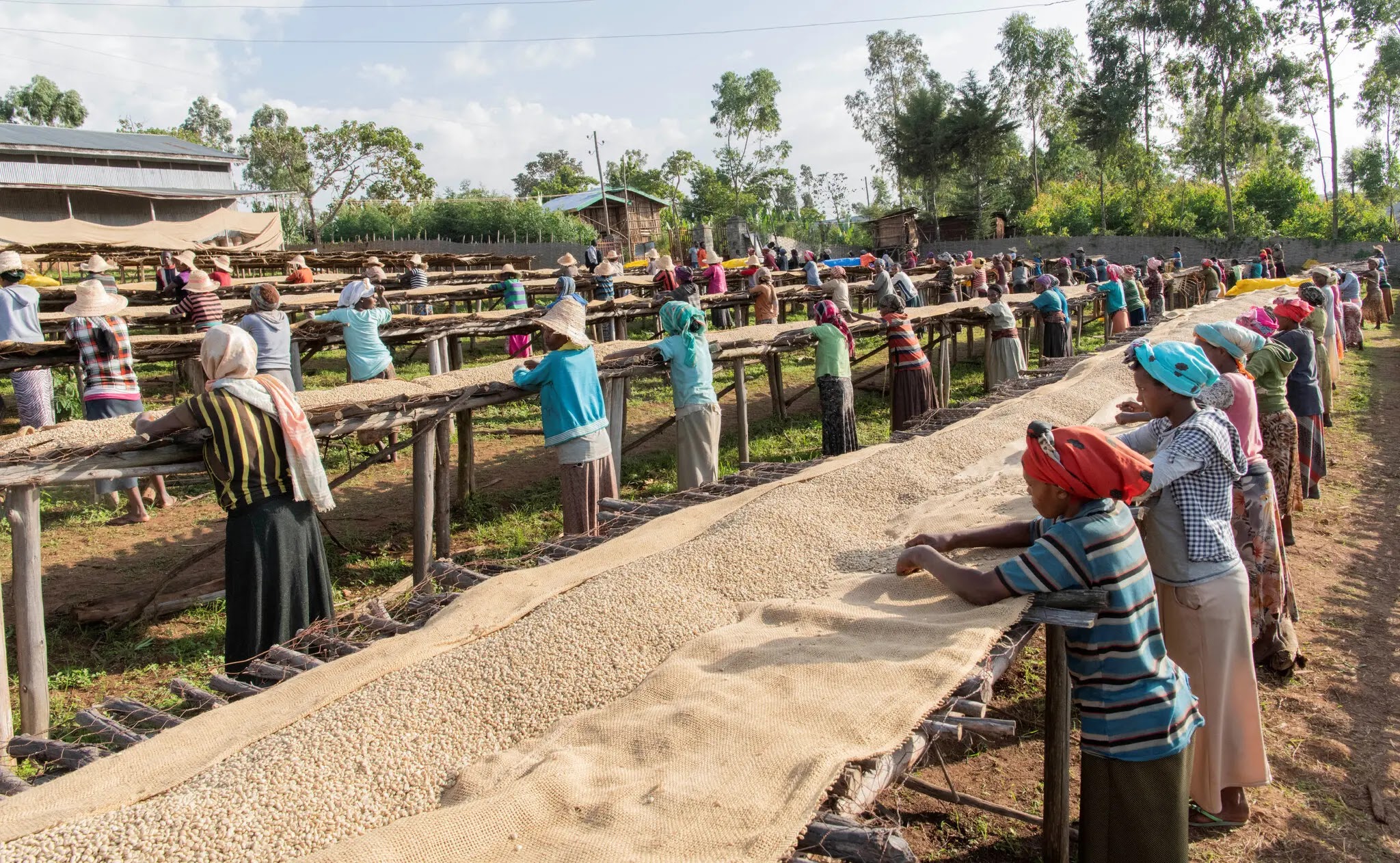
Ethiopia is the top coffee producer in Africa, and the crop accounts for about 35 percent of the country’s revenue. The arabica variety, smooth and mild with fruity and nutty notes, originated in the country’s southwestern highlands. More than a third of Ethiopia’s coffee goes to Europe.

Coffee accounts for about 35 percent of the Ethiopia’s revenue.Credit...Syspeo/SIPA, via Shutterstock


According to a French government report last year, E.U. consumption is responsible for 44 percent of coffee-related deforestation worldwide. Another report, by the World Resources Institute, an environmental group, found that nearly two million hectares of forest cover had been replaced by coffee plantations between 2001 and 2025. Indonesia, Brazil and Peru recorded some of the highest deforestation rates in that period.

Global leaders pledged in 2021 at a climate summit in Glasgow to end deforestation by 2030. The agreement underscored a growing awareness of the role of nature in tackling the climate crisis. Intact forests are natural storehouses of planet-warming carbon, keeping it out of the atmosphere, where, as carbon dioxide, it speeds warming by trapping the sun’s heat. When forests are cleared, those areas switch to releasing greenhouse gases. It also harms the forest’s biodiversity, its variety of life, by disrupting habitat.

The new E.U. rule also covers cattle, cocoa, palm oil, rubber and other crops. Coffee shipments without proper mapping data can be rejected or confiscated, and the importer can be fined.

But some experts say the measure is being implemented without the necessary support for farmers.

Jodie Keane, an economist at ODI Global, a research organization based in London, said the European Union and major coffee chains should do more to help small farmers.

“We all want to prevent deforestation,” Ms. Keane said. “But if you’re going to apply that standard to rural producers, you’re going to have to provide a lot of outreach, sensitization, you’re going to have to invest in learning how to do things differently so that they don’t just get dropped from the supply chain.”

Etelle Higonet, founder of Coffee Watch, a monitoring group, echoed that. “These are some of the richest companies in the world,” she said of European coffee chains. “Of course they could afford to do this.”

In an email, Johannes Dengler, a managing partner at Alois Dallmayr, one of the best-known coffee brands in Germany, acknowledged that the new rule was an “enormous challenge” for Ethiopia. He said Dallmayr was developing systems to assure compliance and was “working closely with our partners to find viable solutions.”

The office of the European Union commissioner for trade and economic security did not respond to requests for comment. In a news release on April 15 the bloc said that, based on feedback from partner countries, it had allocated 86 million euros, or about $97 million, to support compliance efforts.

Ethiopian coffee farmers take pride in their high-quality beans, a result of exceptional heirloom varieties, high altitudes and traditional farming practices.

In the southwestern Jimma Highlands, farmers like Zinabu Abadura say most growers follow a longstanding unwritten rule against cutting trees.

Mr. Abadura, who sells directly to informal middlemen, said his farm has not yet been mapped. Most farmers in his area live off their coffee proceeds and cannot afford disruptions or additional expenses. “Life will be difficult,” when the new European rule comes into force, he said.

Farm workers prepared coffee beans for roasting at a cooperative in Sidama.Credit...Maheder Haileselassie/Reuters


But while the new E.U. standards could reorder the Ethiopian coffee sector, analysts say, they probably will not halt sales.

Countries like China offer alternative, less-rigid markets. And Ethiopians themselves are big coffee drinkers. Hospitality is incomplete without a coffee ceremony, where hosts roast, grind and brew beans in front of their guests. About half of the country’s yearly coffee production stays at home.

But Tsegaye Anebo, who heads the Sidama Coffee Union, which represents 70,000 farmers, said pivoting to new markets would be disruptive in the short term. He noted that his region’s Sidamo variety, distinctive for its fruity tones, was a favorite in wealthy Europe. And that means premium prices.

Giving up on the E.U. market, he said, is not an option.

“We need the E.U.,” Mr. Anebo said. “But they also need us because they can’t find our coffee anywhere.”

Munira Abdelmenan contributed reporting.

Why living downstream from a glacier has become a deadly liability

  A mud-covered street in Nepal's Nuwakot district on August 26, 2026. A massive flood and landslide disaster on the Nepal-Tibet borde...